
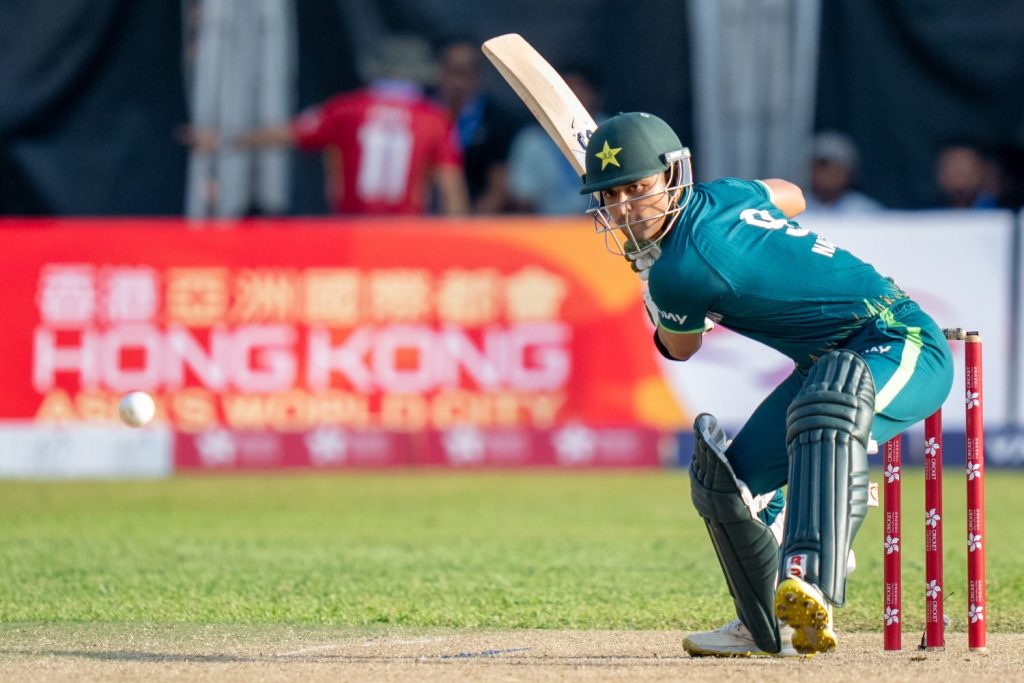
Short, explosive formats have transformed cricket over the past two decades, feeding an appetite for constant action, opening the game to new audiences and pushing aside the old assumption that a proper contest should take an entire day—or five. T20 has become the emblem of that revolution, with its shorter matches, big hitting, international stars and unabashed emphasis on entertainment. Yet more than a decade before the first official T20 match, at a small ground in Kowloon, the Hong Kong Cricket Sixes was already staging a version of the game built around many of the same ideas. So did Hong Kong see cricket’s future first?
Spend long enough talking to Papu Butani, one of the men who founded the Hong Kong Sixes, and you may leave convinced that it did. A Hong Kong jeweller and accomplished cricketer, Butani first encountered six-a-side cricket when a team from Hong Kong travelled to Bangkok in 1985. At a time when international cricket consisted almost entirely of five-day Tests and one-day matches, the condensed format turned many of cricket’s conventions upside down. Six players per side, ultra-short innings and attacking batting made restraint almost pointless. The objective was simple: score, and score quickly. Butani returned to Hong Kong convinced the idea could become something bigger. With local promoters Ken and Brian Catton on board and the backing of what is now Cricket Hong Kong, China, Kowloon Cricket Club (KCC) was chosen as the venue, and plans began for the first Hong Kong Sixes. “Ken was tough. He would look after the tournament side of things. But I was the one to bring in the players … and the money,” Butani recalls. “I said if there was a loss, it’s mine. Profits? We share with everyone.” But while the Bangkok version remained relatively low-key, Butani had grander ambitions—and the determination to make them happen. “I went to England, Australia and New Zealand to beg them to give me good players—and to pay them what the players asked for, not what the board gave to them,” says Butani, now 79. Butani’s plan worked: the stars came. And so did the spectacle.
Sachin Tendulkar, Brian Lara and Shane Warne are among the greats to have played in the tournament over the years, almost within touching distance of spectators at KCC. The event’s compact scale created an intimacy rarely found in international cricket: players leaned over fences to chat with fans, while the two-day schedule left ample time to experience another of Hong Kong’s attractions: its nightlife. “So of course they came, the big stars, and they really enjoyed it here,” says Butani. “Two days of cricket. Lots of fun. Some of these boys used to go to the nightclubs all night, then come here to the KCC at eight o’clock, take a wash and go and work.” Former tournament director Glyn Davies, who spent 11 years with the event, remembers the same heady mix of cricket and nightlife. “There was good prize money on offer, and it was a weekend in Hong Kong,” he says. “The England side were infamous for not using the hotel except for changing. They enjoyed the whole weekend, and the cricket was sometimes an interference.” The revelry was part of the appeal, but so was the format itself. “You have to remember, [at that time] there was nothing between 50-over cricket and Test cricket,” Davies says. “There was no short form of the game. We were in a rather niche market at that time.” And yet, that niche produced some extraordinary sporting moments.
At the inaugural tournament in October 1992, Hong Kong found themselves facing Pakistan, the newly crowned one-day world champions and equipped with two of the fastest and most intimidating bowlers of their generation, Wasim Akram and Waqar Younis. Hong Kong’s largely amateur side were given little chance. Incredibly, they won. “Yes, they had a couple of ‘medium-pacers’ called Waqar and Wasim,” laughs former Hong Kong captain Pat Fordham. “Wow, what a team. And we beat them! We beat them!” Fordham even elected to face them wearing a floppy hat rather than a helmet. “I took a bit of a risk, thinking that, as the hosts and clearly amateur players, they wouldn’t bounce us in a Sixes tournament,” he says. “Luckily, they didn’t. Because otherwise they would have killed us.” It was the kind of upset the format seemed designed to encourage. Matches were short enough to disrupt the usual order; one explosive innings or a bad over could change everything. Cricket stripped down to its most volatile elements suddenly made the improbable possible. The tournament grew into what Wisden described as a “pocket-sized World Cup”. Yet for all its innovation, star power and early success, the Hong Kong Sixes never became the global property its founders imagined. Instead, its history became frustratingly stop-start.
The event ran from 1992 until 1997, returned between 2001 and 2012, resurfaced briefly in 2017 and was then revived again in 2024. There was no single reason behind those interruptions. Disputes between the tournament’s organisers brought the first run to an end. Later, the event struggled with sponsorship and with the economics of staging major cricket in a city with few suitable venues. Meanwhile, the rest of cricket began to change. The first official T20 matches arrived in 2003, and the new format featured many of the qualities the Sixes had been showcasing for years: shorter games, attacking batting, international stars, constant action and a product that could be packaged easily for television and sponsors.
Then came the Indian Premier League. Launched in 2008, the IPL took short-form cricket into another commercial universe, building franchises around global stars and turning T20 into one of the most powerful forces in the sport. The parallels with the Sixes were obvious. So was the difference in scale. “There were a few things that made [the Hong Kong Sixes] lose the relevance it had all those years ago,” says Anuraag Bhatnagar, a board member and director of commercial and marketing at Cricket Hong Kong, China. “There were struggles to get the necessary corporate sponsorship, because the lack of large grounds in Hong Kong makes profit-making difficult. And one of the major ones is the advent of T20 cricket, because when we started the Sixes in 1992 there was no format like that … Towards the mid-2010s is when things started getting a little tougher because we didn’t have enough corporate interest. We were competing with all these franchise leagues that were mushrooming all over the world.”
There’s an irony in that history. Hong Kong had been experimenting with short-form, entertainment-driven cricket before the idea became mainstream, yet when the commercial boom arrived, it happened elsewhere. However, that doesn’t necessarily mean the Sixes could ever have become the IPL. Its extreme brevity is part of its charm, but also makes it harder to sustain the narratives, rivalries and commercial ecosystem of a full league. Hong Kong’s small domestic market and limited venues presented obstacles that India, England and Australia didn’t have to overcome. But the tournament’s history raises an intriguing question: was the Hong Kong Sixes always destined to remain a niche format, or did it simply arrive before cricket was ready for it?
More than 30 years after its debut, the tournament is getting another chance to find out. The Sixes returned in 2024, and its latest revival has coincided with a wider attempt to take the tournament beyond Hong Kong. In September, JSW Sports—part of India’s JSW Group and co-owner of IPL franchise Delhi Capitals—announced an exclusive commercial partnership with Cricket Hong Kong, China. For an event whose early appeal foreshadowed elements of modern franchise cricket, the connection is striking. “This is a natural extension of everything we’ve built in Indian sport, and we’re excited to bring that same rigour and ambition to a global stage in close collaboration with Cricket Hong Kong, China,” JSW Sports CEO Divyanshu Singh said on announcing the agreement. “The tournament already has a storied legacy in the six-a-side format; our focus, together with Cricket Hong Kong, China, will be on scaling it further—growing its audience, strengthening its commercial value, and helping shape it into a truly global series.” There are signs of momentum. The 2025 edition featured 12 national teams and, according to organisers, attracted more than 10,500 attendees across three days. The 2026 tournament is scheduled for October 30 to November 1 at Tin Kwong Road Recreation Ground.
The sporting landscape has changed too. Cricket will return to the Olympic Games in Los Angeles in 2028, while its inclusion in the Asian Games has helped bring the sport before countries and audiences outside its traditional strongholds. For Bhatnagar, that creates an opportunity not simply to revive the Sixes but to expand it. “Now that cricket is a medal sport at the LA Olympics in 2028, and it’s a sport in the Asian Games, there is renewed interest from all the different countries,” he says. “With the right partners, network and reach, it can be something really, really large. We don’t want to stop here. The vision is to transform this into a global Sixes series, much along the lines of rugby sevens.” Whether that ambition can be realised remains to be seen. The modern cricket calendar is crowded, franchise leagues compete fiercely for players and attention, and T20 has long since absorbed many of the qualities that once made the Sixes feel radical. But perhaps being too early was always the Hong Kong Sixes’ biggest problem.
When the tournament began in the early 1990s, cricket had neither the commercial machinery nor the cultural appetite that now surrounds short-form cricket. What was once a rip-roaring, eccentric weekend tournament in Hong Kong now seems, with three decades of hindsight, remarkably prescient. Butani eventually stepped away from organising the tournament, although not from cricket. When we meet for coffee at KCC, he enthusiastically produces evidence of his own playing exploits, including an impressive five-wicket haul he took at the age of 75. He finally stopped playing two years later. His belief in the Sixes, however, has not dimmed. “We were looking global back then,” he says. “And it should still be going global now.”