
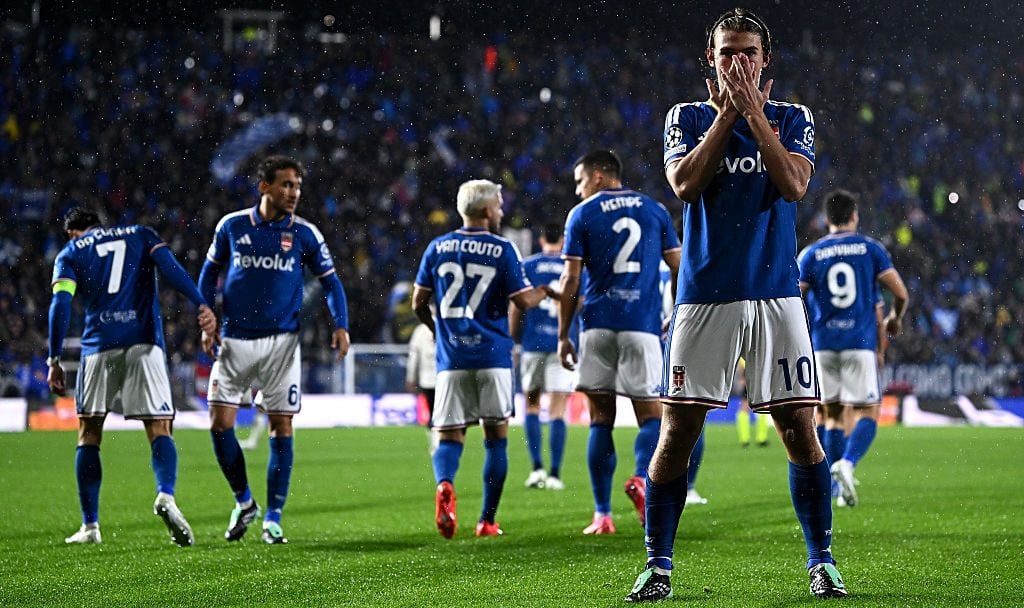
Once upon a time, there was Como under Pecchia and Amoruso, a brief and ultimately fleeting spell in Serie A at the turn of the millennium. The season was 2002–03, and in England it was Manchester United who won the Premier League. Who else. Sir Alex Ferguson’s juggernaut, with Beckham, Scholes, Van Nistelrooy and talent to spare. An entirely different world, you might say. And yet the two clubs had never been so close, at least in terms of the divisions they occupied, and would not be again for years. While the Red Devils were later riding high on the back of Rooney and Cristiano Ronaldo, Como were struggling in Serie D. They went bust, climbed back up, went bust again. Then came the relaunch in 2017, the year United won the Europa League, the last international trophy of their illustrious history. A long preamble, perhaps, but necessary to appreciate the scale of what unfolded on Wednesday night at the Stadio Sinigaglia. Como 4, Manchester United 1. Or, if you prefer, Como 4 — Manchester United 1. Rearrange the numbers on the scoreboard; the result remains the same. In their first-ever Champions League campaign, Como have humbled one of the competition’s most prestigious clubs on the strength of their players’ talent alone.
The point is not simply that Como beat Manchester United — yes, it bears repeating, if only to savour the sound of it. In a one-off game, in modern football, even in the same competition, anything can happen. But Como did more than beat United. They took them apart. Cesc Fàbregas gave Michael Carrick a footballing lesson. The contest remained even just long enough for Dalot to curl a shot narrowly wide and Nico Paz to find the top corner with one of his own. After that, it was all Como, their football fluid and relentless, particularly in the second half. The crowd could barely keep up with Nico and his teammates, producing one sumptuous move after another. Only in stoppage time, more through carelessness than any genuine surge of pride, did Zirkzee find the consolation goal.
Good for the statistics. In historical terms — the clubs’ respective pasts, their prestige, the whole lot — this is a match that has no business existing outside a video game. From a financial and sporting perspective, though, Como putting United to the sword should hardly come as a surprise. United are a long way from their former glories, to put it mildly, and in recent years each season seems to have brought a fresh disaster. But Como are no Grimsby Town, the League Two side who knocked Fernandes and company out of the EFL Cup last season against all reasonable expectation. This Como side can go toe to toe with a club of United’s standing.
The transfer figures tell their own story, even if they do not tell the whole one. Como’s squad has a combined market value of more than €560 million, making the Lombardy club an emerging force in European football, though still some way short of United’s €928 million. The difference lies partly in how that money is spent, and in the judgement of Como’s sporting directors, working closely with Fàbregas. In the latest transfer window, Como’s net spend — money spent minus money recouped — came to almost €130 million, including the obligatory purchase clauses for Moise Kean and Kaiki Bruno. United’s figure was around €123 million, helped by the fee received for Hojlund. On paper, there is little between them.
And yet the two clubs could hardly be further apart. One spends compulsively, dazzled by glamour; the other thinks carefully, fills the gaps and builds. Como used their money to strengthen every area of an already capable, youthful squad, bringing in five or six new starters who made an immediate impact and fitted straight into the system. At Old Trafford, by contrast, United went all-in on just three players: Tielemans, Andrey Santos and Carlos Baleba. Baleba, the Cameroonian midfielder, was the worst player on the pitch against Como and was taken off at half-time, with Santos coming on in his place. It made no difference. By an irony that will not have been lost on anyone, the two cost United €132 million. An extraordinary sum, and a measure of the financial excess that has come to define the Premier League transfer market, where spending shows little sign of slowing. The league may still be the best in the world. Manchester United are another matter. They could learn a thing or two from Como. The 4–1 will be remembered, but the lesson runs deeper.