
The 50+1 rule is one of the defining features of German football. It is complex, but the principle is straightforward: all professional clubs in Germany, with a few long-established and clearly defined exceptions, must remain majority-controlled by their members — hence 50+1. An investor, particularly a foreign one, cannot simply arrive and take direct, exclusive control of a club and its team. Over time, naturally, and in light of what has happened elsewhere, the structure has come under scrutiny more than once. But the DFL has always reaffirmed it. Now it has done so again, this time at the request of the clubs themselves, which are expected to confirm the rule unanimously.
The issue returned to the centre of the debate after the Bundeskartellamt, Germany’s Federal Cartel Office, issued its final assessment on 12 August. The competition authority found that 50+1 is, in principle, compatible with competition law. At the same time, it called for a number of changes to make the system more coherent and, above all, harder to challenge on legal grounds. The rule also provides that when a club separates its professional team and transfers it to a corporate entity, the club and its members must retain control of a majority of the voting rights. This is what prevents an outside investor from taking full control of a football company and, according to the Bundesliga, preserves a direct link between the teams and their membership.
The Bundeskartellamt therefore regards 50+1 as a restriction on competition, while accepting that it can be justified by the aim of ensuring that supporters and a broad section of society have a role in the life of the clubs. The problem is less the rule itself than the way it is applied. That is where the competition authority has asked the Bundesliga to intervene. The changes concern above all the exemptions granted to clubs that financially support their corporate entities, the scope for member participation and a number of organisational rules within the league. The Bundeskartellamt has now left the Bundesliga with the task of finding a solution that everyone can accept.
The final decision will rest with the 36 clubs of the Bundesliga and 2. Bundesliga. In assembly, they will decide how the rule is to work in practice and how the authority’s recommendations are to be reflected in the statutes. The first step is expected in December. The executive committee wants the clubs to reaffirm that 50+1 should remain a fundamental principle of German professional football. The aim is to reach a common position, rather than have one part of the Bundesliga move in one direction while another challenges it. This is not a new question: in March 2018, the clubs had already voted by a majority to retain 50+1, while also calling for greater legal certainty around the rule. For now, caution is the priority. In the first half of 2027, the executive committee is expected to present the Ligaverband with a final proposal for applying the rule uniformly across all clubs. The idea is to reach a solution that the entire system can support and avoid a long legal battle.
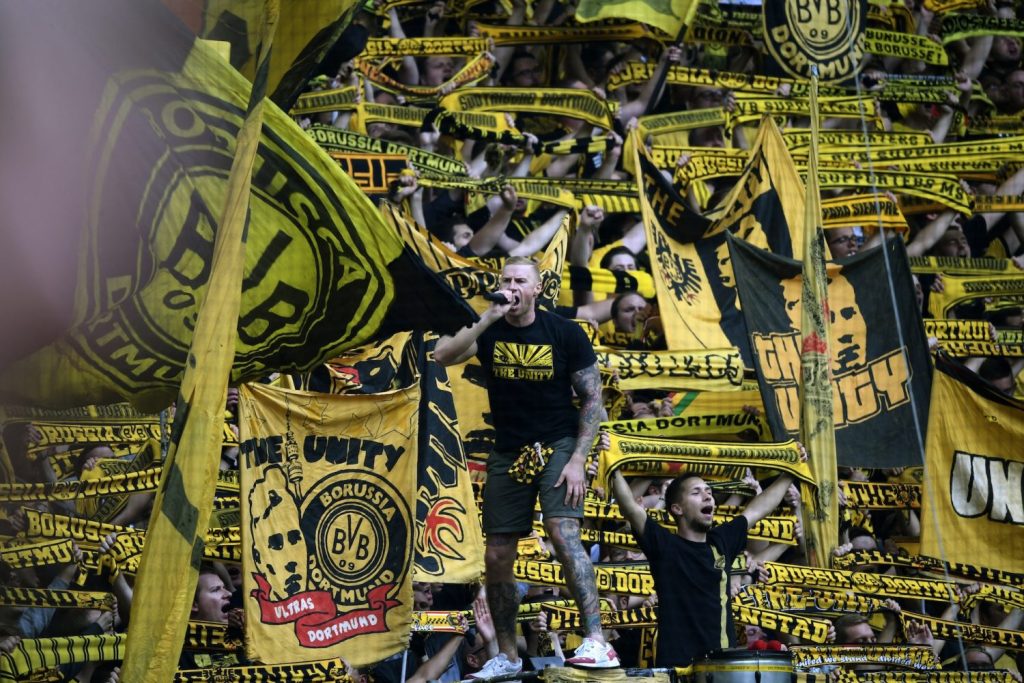
That is the outcome the Bundesliga most wants to avoid. A rushed decision could instead put the legal certainty of 50+1 itself at risk. Further discussions between the clubs are therefore expected over the coming months, with all sides urged to proceed carefully. The stakes are not only legal. For German supporters, 50+1 has long been one of the defining elements of their football. The principle that the club should have the final say has been defended repeatedly in the stands and in protests against attempts to open the door wider to investors. The clearest recent example came in 2024, when Bundesliga supporters stopped the proposed entry of an investor into the DFL after a wave of protests. What began as an economic question quickly became a battle over the philosophy behind 50+1. Now the Bundesliga wants to prevent that tension from turning into a wider battle, inside and outside the courts. The rule will remain, but it will have to be rewritten and applied in a way that can withstand the challenges still to come. That is the delicate balance German football will have to find over the coming months.