
In one of the world’s most exclusive cities, Dubai, one of the world’s biggest mass-participation races takes place. The Dubai Run draws 300,000 people and, for a few hours, even closes Sheikh Zayed Road, the main artery of the United Arab Emirates. It is a striking image of the place sport now occupies in Dubai’s growth story. As El Mundo has reported, oil transformed what was once a village between the desert and the Indian Ocean into an ultra-modern metropolis within a few decades. Today, though, the oil industry accounts for less than 1% of the emirate’s GDP. The economy has diversified and now rests largely on tourism, trade and real estate. And when it comes to opening Dubai to the rest of the world, few things have the same reach as sport. Not even the recent crisis surrounding the war in Iran brought that strategy to a halt. While the Middle East was shaken by tensions, and even the Burj Khalifa, the world’s tallest building, was potentially exposed to the threat of drones, sporting events in Dubai continued.
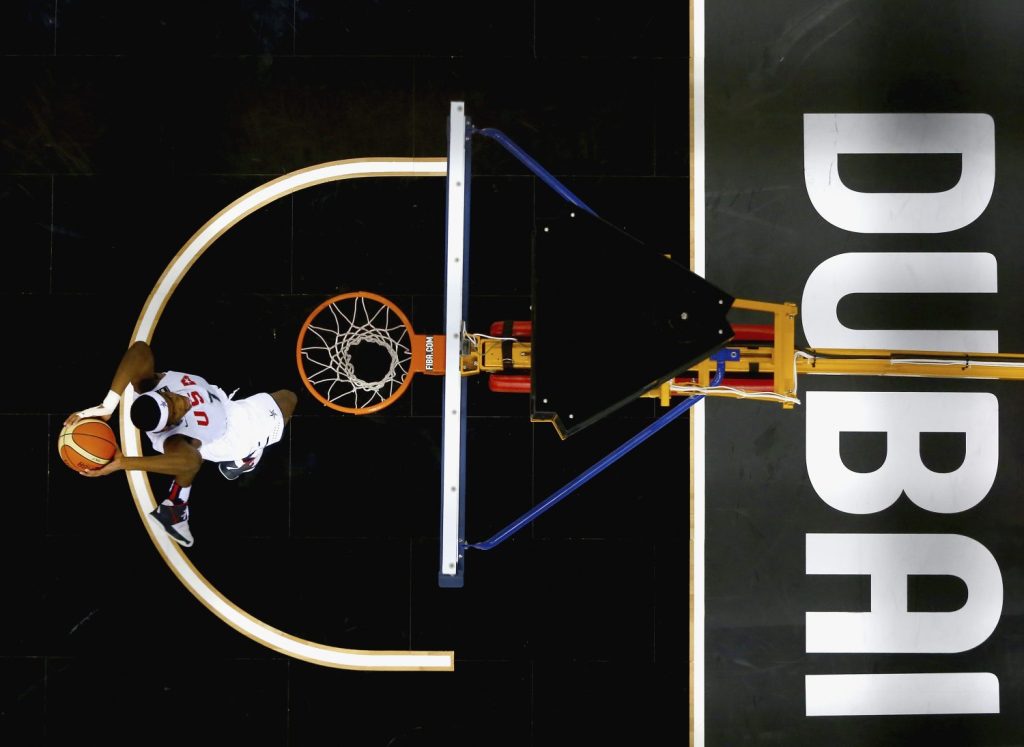
“During the crisis, we had many events already scheduled, both indoors and outdoors,” Eisa Sharif Al Marzooqi, director of the Dubai Sports Council’s Sports Events Department, told El Mundo. “We made sure everything went ahead as planned. Thanks to our strong community, we worked to ensure people’s safety and make sure everyone was safe.” Dubai Basketball have just hosted and beaten both Real Madrid and Barcelona in the EuroLeague at Coca-Cola Arena, with some of the best-known names in sport in the front row, from tennis player Paula Badosa to Mario Balotelli. Football teams play in front of full stands, while padel remains one of the city’s most popular sports, helped by tournaments featuring several legends. Golf, tennis, triathlon and rugby also have their place in an increasingly busy calendar. In a few weeks, the Dubai Fitness Challenge will return for its tenth edition. The idea is simple: 30 consecutive days, with at least 30 minutes of physical activity every day. The message is aimed first at the local population, 90% of whom are expatriates, but also at the millions of tourists who arrive in the emirate every year.
“With the current strategy, sport’s contribution to Dubai’s GDP is 10 billion. Our goal is to almost double that by 2033, exceeding 18 billion,” Al Marzooqi says. The project also depends on cooperation between the public and private sectors, helped by a particularly favourable tax system, and on the names Dubai has attracted from the sporting world. Andrés Iniesta has become coach of Gulf United, a club in the UAE second division, while Andrea Pirlo led United FC into the Pro League last year. Michel Salgado has his own football project, Fursan Hispania FC Academy. Rio Ferdinand, together with his wife Kate, is involved in several initiatives encouraging people to make physical activity part of everyday life. According to Al Marzooqi, all of them have chosen Dubai not simply as a place to work, but as a home. That is one of the emirate’s ambitions: to keep growing, and to make more and more people choose to settle there.
The strategy is set out in the Dubai 2033 agenda, a development plan in which sport has a clear place. The aim is to bring more and more people into physical activity through four pillars: talent, community, events and clubs. Today, around 1.6 million people actively take part in sporting activities in Dubai. By 2033, the target is 2.6 million. But participation is only part of it: the emirate also wants its sporting events to attract bigger crowds. “We want to exceed four million people taking part in sporting events in Dubai,” Al Marzooqi says. Another goal is to fully professionalise coaches and technical staff, creating “a proper ecosystem, with guidance and high-quality training”. Then there are the Dubai School Games, an inter-school competition involving schools across the city, with 8,000 students already taking part. “This year we want to reach 20,000 children.”
Turning sport into a strategic economic and social sector also requires infrastructure and major international events. The futuristic swimming pool at Hamdan Sports Complex hosted the 2010 World Swimming Championships. “We have public clubs such as Al Wasl and Shabab Al Ahli and, through the private sector, facilities such as a cricket stadium, this Hamdan Sports Complex and Coca-Cola Arena,” Al Marzooqi says. The international calendar includes the Dubai Sevens in rugby, Dubai Premier Padel and the DP World Tour Championship in golf. “We have very strong infrastructure and a large number of golf courses. We also host HYROX here at the Dubai Exhibition Centre, and recently announced that the FIBA 3×3 basketball tournament will also take place in November.”
Then comes the biggest question: the Olympic Games. Is Dubai really thinking about a bid? “All countries dream of hosting the Olympic Games. They are something incredible, they bring people together,” Al Marzooqi says. For now, there is no bid. But the message from Dubai is clear enough: sport is no longer simply entertainment. It has become one of the ways the emirate wants to shape what comes next — and make money. In a city born from the desert, that too is part of the project.