
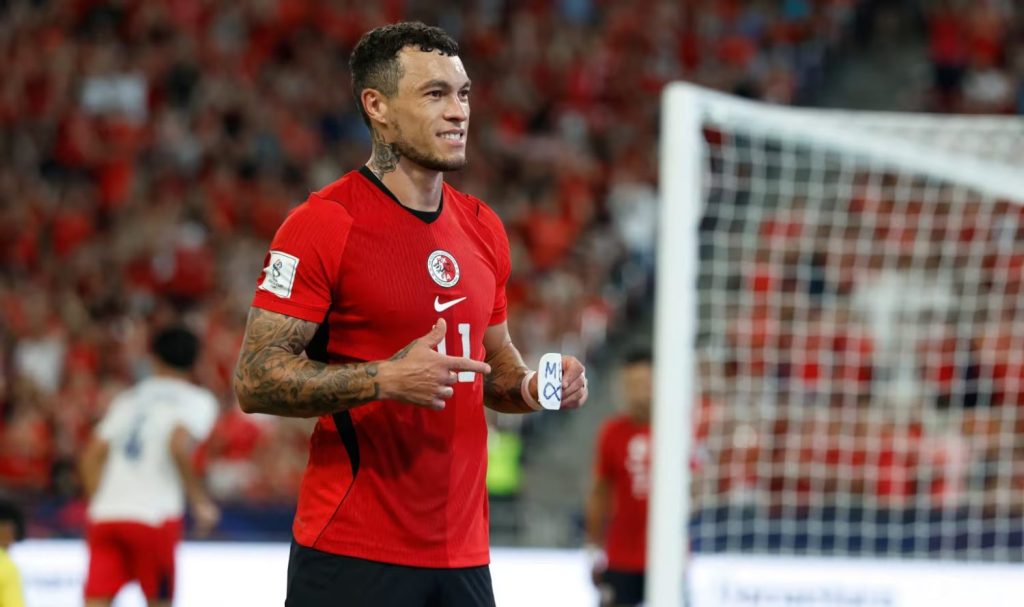
Attacking ten men packed into the final thirty metres is one of the most tedious and frustrating tasks in modern football. There is nothing poetic about patience: playing these matches is manual labour, a physical battle against time and a pitch that seems to shrink with every pass. Hong Kong’s 2-0 win over Brunei, which sent them into the final of the FIFA ASEAN Challenge Cup against Cambodia, was exactly that. There were none of the fireworks or virtuoso touches of the 4-0 win over Laos in the opening game, just more than an hour spent trying to prise open a door bolted shut without losing their heads.
The Hong Kong crowd spent the first half holding its breath, watching the ball move from right to left around Brunei’s defensive block. The danger in these matches is not only the counter-attack; it is the anxiety that comes with knowing you have to win. Roberto Losada built the game around circulating the ball, asking Everton Camargo to stay wide on the right, almost on the touchline, to draw the double team and stretch the opposition. The breakthrough, in the 60th minute, was nothing spectacular. It came from an intelligent run by Philip Chan Siu Kwan, one of those midfielders who seem to know where the next pass will end up a moment before the defence does.
Then, almost at full time, Matt Orr converted a penalty to settle the game. Two matches, six goals scored, none conceded in the 2026 FIFA ASEAN Challenge Cup — the “second division” of the FIFA tournament featuring teams from Southeast Asia. But the numbers matter less than how Hong Kong came through a game that could have tested everyone’s nerves. The home side — all the matches in the competition have been played at Kowloon’s two stadiums, Kai Tak Stadium and Mong Kok Stadium — kept playing, shifting the block, waiting for the right moment without allowing urgency to become chaos.
And then there was everything around the game. Playing at the new Kai Tak Stadium, built on the site where planes once came in low over the rooftops of Kowloon, changes the feel of a night like this. Seeing 20,000 people inside for a group-stage game against Brunei says something about how football is beginning to matter in the city, not simply as a sport but as a space of belonging. The transformation is visible on the pitch, too: on one side are players who grew up on local pitches, like Philip Chan; on the other, naturalised players such as Everton and Dudu. In between is a city that has always worked in layers, through hybrid identities and different backgrounds, with people and cultures meeting and rubbing against one another without any single version taking over.
Hong Kong seems to have found another way to make people talk about the city through football. October 3, against Cambodia, will be another story. Cambodia runs, embraces and even encourages chaos, playing with an aggression that makes it harder to control the pace with the same patience. For Losada, it will also be a tougher test because it will force Hong Kong to find out what remains of its identity when the game stops unfolding on its terms. So far, though, this team has shown that it possesses the gift of patience. Against a wall of ten men, sometimes patience is no small thing.