
As well as being a major occasion for Manchester, Oasis’s eleven concerts at the Etihad represent a huge economic opportunity for City. The band alone will generate revenue that would be difficult for the club to match in a normal summer, another sign of how football stadiums are changing. During the months when the football stops, Europe’s biggest arenas are increasingly becoming concert venues. The reason is simple: an empty stadium still costs money. If it can instead welcome tens of thousands of people, sell beer, food, hospitality and merchandise, it becomes a machine for generating revenue even when there is no football.
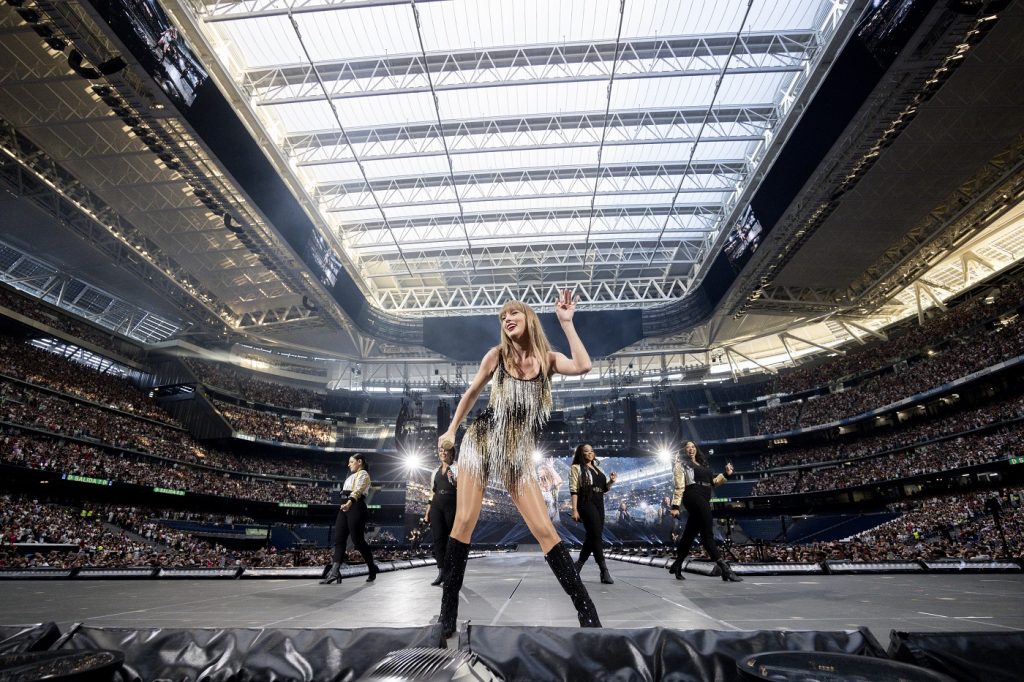
Tottenham is the clearest example. Over the past two years, the club has hosted 29 concerts, with artists including Beyoncé, Lady Gaga and Jay-Z taking over Spurs’ home, which opened in 2019. Liverpool has followed the same route: over the past two summers, Anfield has opened its doors for eight nights of music, including Bruce Springsteen, Dua Lipa and Foo Fighters. In Manchester, setting aside the years when the Etihad was undergoing expansion work, concerts have become an established part of the club’s development strategy. Ed Sheeran, Coldplay and One Direction are just some of the artists to have played at City’s stadium. Arsenal, Newcastle United, Aston Villa, Sunderland and Ipswich Town have followed suit. Almost half of the 20 Premier League clubs have staged at least one concert in the past three years. The same is true in Spain.
The live music business, meanwhile, has grown into a vast industry. According to the annual report from LIVE, the organisation representing operators, venues and companies in the live entertainment sector, the British market generated around £7.6 billion in revenue in 2025. As reported by The Athletic, SJM, the promoter behind Oasis’s latest tour, recorded £487 million in revenue in its most recent financial year, a figure comparable to that of a top Premier League club.
Stadium concerts are hardly a new phenomenon. But clubs have realised that they can take an increasingly important share of a market in which audiences are willing to pay ever higher prices for live experiences. Much of it comes down to what people spend once they are inside. Ticket revenue generally goes to the organisers and artists. Food and drink are different: that revenue stays with the club. The margin on every pint sold can quickly run into millions.
The comparison with a football match is revealing. In England, during a game, around two pints are bought for every five spectators on average. And for much of the time they spend at the stadium, supporters cannot drink. At a major concert, by contrast, the audience can stay inside for six hours, eating and drinking throughout the evening. Drinks also tend to cost more. Then there is hospitality. Clubs take most, if not all, of the revenue generated by premium seating. Manchester City, for example, will control the premium offering for all eleven Oasis nights at the Etihad. It has already put packages on sale for its own customers before the general sale even opened, with some costing more than £1,000 per person.
There are also stadium hire fees, which in some cases can be waived if an artist is big enough to guarantee a sell-out, along with smaller but still significant sources of revenue: parking, merchandise and other services. None is especially significant on its own, but together they add up. A 50,000-seat stadium can generate between €1.5 million and €1.9 million from a single concert. With multiple dates, there is another advantage: there is no need to dismantle everything after one night. In the case of Oasis, eleven concerts at the Etihad mean putting up the stage once and leaving it in place for almost a month. The initial costs can therefore be spread across a much larger number of shows.
The transformation is not limited to European football. The biggest American sports franchises have built arenas and stadiums costing billions of dollars with major touring artists in mind. The same is happening in Asia. In Singapore, for example, Kallang Stadium can hold up to 63,000 people for concerts and hosted Taylor Swift for the six dates of her tour, her only shows in Southeast Asia. New stadiums are increasingly being designed with this dual purpose in mind. Birmingham City’s plans for a 62,000-seat stadium explicitly include the possibility of hosting “international concerts”. Manchester United’s proposed new 100,000-seat stadium could also become a venue for events that are difficult to stage at Old Trafford today, particularly because of access problems. It is no coincidence.