
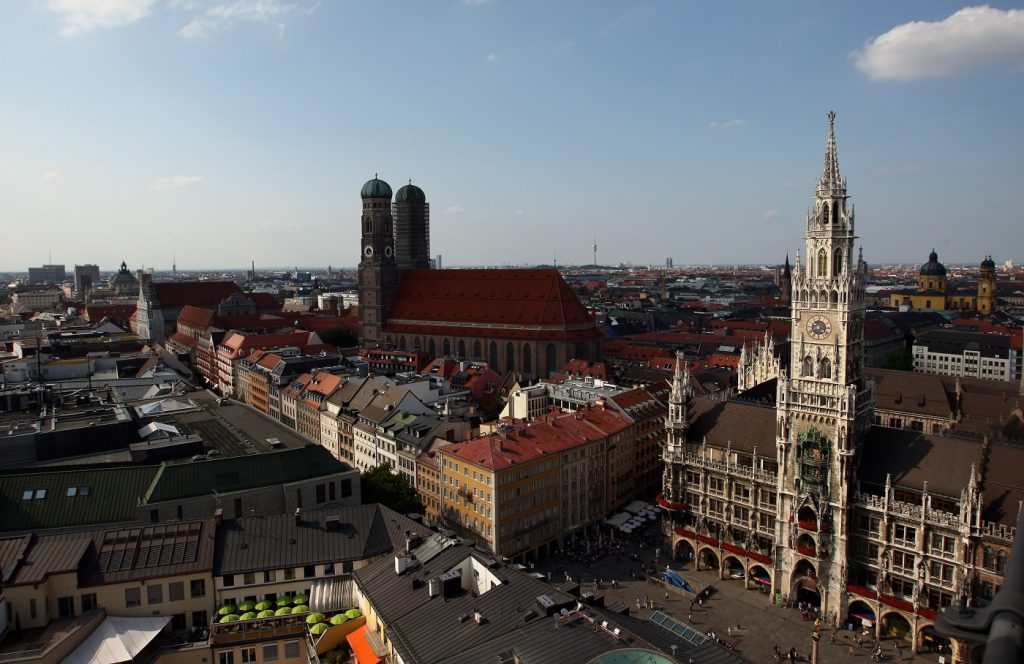
After 74 years, the Summer Olympics could return to Germany, in Munich. The Bavarian capital, unfortunately, will always be linked to the history of the Games, with a lowercase h, but also to History with a capital H, because of the Palestinian attack on the Israeli delegation at the 1972 Olympics, the last Games held on German soil. Now the country’s Olympic committee is ready to try again, having officially announced Munich’s bid for one of the next three editions, in 2036, 2040 or 2044.
The decision ended a race that began with three candidates and, in its final hours, was reduced to two. Berlin withdrew on Thursday, leaving Munich and the Rhine-Ruhr region, led by Cologne, in contention. In the end, the DOSB chose Bavaria, giving Munich the chance to bring the Games back to Germany. The city must also put behind it the disappointment of its failed bids for the 2018 and 2022 Winter Olympics. Now it is trying again, this time for the Summer Games, with a project that aims to keep a large share of the competitions in Bavaria.
Not everything, however, would remain within the region. Stuttgart would host the football tournament, while sailing would take place in Kiel, in the north of the country. The idea is to make use of existing facilities and spread the events across Germany, with the Games making use of what is already there rather than being confined to a single region.
The choice comes at a particular moment for Germany, which in recent months has spent a great deal of time discussing not only whether it should host an Olympics again, but also which city could best represent the country. Berlin had initially been part of the race before withdrawing. Its departure turned the contest into a duel between Munich and Rhine-Ruhr. The new sports minister, Ronald Rauhe, an Olympic champion in canoeing, had called for a bid that could give Germany its best chance of success on the international stage.
“We have a task to fulfil and we have to enter the race with the city or region that gives Germany the greatest chance of success,” Rauhe said on the eve of the decision. “The final word belongs to sport, and I am convinced it will be taken with a great sense of responsibility.” President Frank-Walter Steinmeier has also backed the project, describing the Games as an opportunity for Germany to “show that it is a land of opportunity”.
The Rhine-Ruhr bid had the advantage of a densely populated region and a long sporting tradition. In recent weeks, the governor of North Rhine-Westphalia had also pointed to its commercial potential, with as many as 17.6 million tickets to be sold during the Games, a figure without precedent in Olympic history. Munich, though, now carries Germany’s bid. The next question is when. Germany can aim for 2036, 2040 or 2044.
For Rauhe, 2040 has a particular meaning. That edition would come 50 years after German reunification, an anniversary that, for the minister, is not simply a date on the calendar but something deeply personal. “2040 would be my preferred date. It comes from my personal history, from the fact that I am a Berlin boy. As a child, I experienced what happens when a wall falls, when people come together again and two groups that had been separated become a community once more.”
It is difficult to separate sport from memory in Rauhe’s words. Born and raised in Berlin, he sees a German Olympics in 2040 as a way of marking half a century since the country’s division came to an end. But the date comes later. First there is the bid, then the international contest, and finally the decision on which edition to pursue. Rauhe’s priority is simpler: to bring the Games back to Germany.
“In the end, there is one thing that matters more than anything else: bringing the Olympic and Paralympic Games back to our country. It doesn’t matter when.” Germany will begin again in Munich, a city that already knows the weight and the allure of the Olympics and that, more than half a century after the last time, is ready to try once more.