
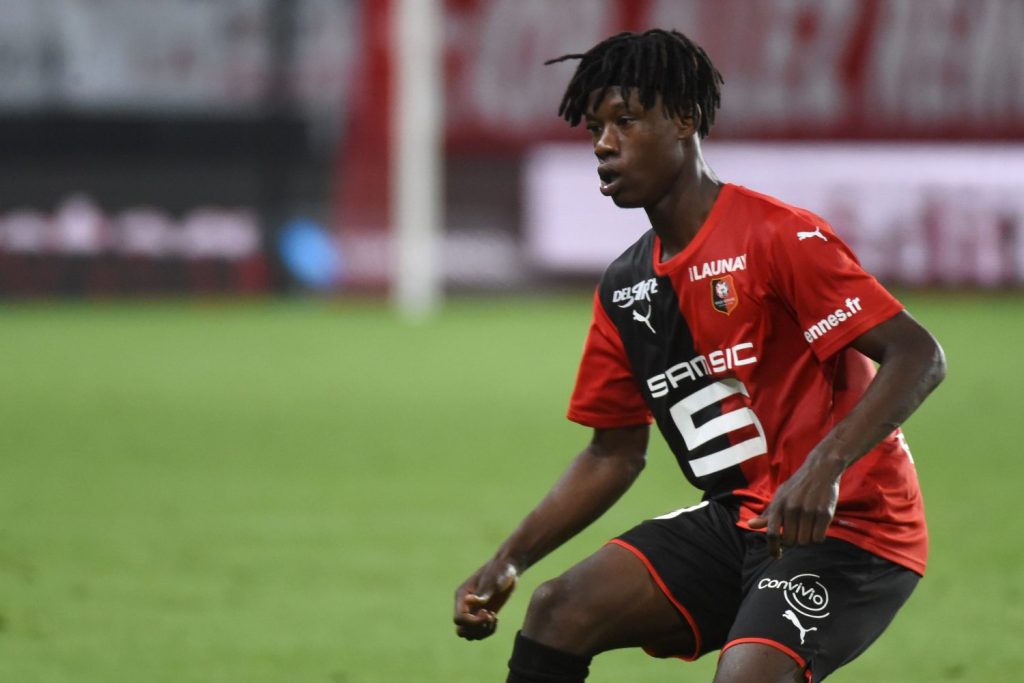
Zinédine Zidane is inevitably the great attraction of this new era for the French national team. Very few managers in the history of football have been quite so great, quite so iconic, first as players and then in the dugout, and there is enormous interest in Les Bleus, also because — and this is hardly a secondary detail — we are talking about a national side packed with outstanding players, as well as talents still emerging. Among them, incredibly enough, although perhaps only partly so, there are a great many who came through Rennes. Seven of them, in fact, just under a third of the 23 players called up by Zidane for the opening Nations League fixtures: Eduardo Camavinga (now at Real Madrid), Lucas Da Cunha (Como), Ousmane Dembélé (PSG), Andy Diouf (Inter), Désiré Doué (PSG), Jeremy Jacquet (Liverpool) and Adrien Truffert (Bournemouth).
All seven were born between 2001 and 2005, a detail that underlines the remarkable growth of Rennes’ youth system in recent years. But how does this academy of wonders actually work? And how is it possible that a club that is not exactly one of Europe’s elite, wealthy though it is — the club is owned by the Pinault family, whose interests include some of the world’s most famous luxury brands — can produce so much talent? It all starts with scouting: Rennes once looked only to the talent in its own region, but over time it built a network of 40 scouts who follow youth tournaments across France. Football education goes hand in hand with school. Every player who enters the academy must continue attending secondary school, and the graduation rate among Rennes academy players is, unsurprisingly, 100 per cent. The aspiring footballers divide their lives between the pitches at the Henri Guérin training centre, better known as La Piverdière, and the private ETP (École Technique Privée) Odorico school, which was built inside the academy itself. They study in classes of fewer than ten students, taught by 22 dedicated teachers for around 20 hours a week.
From a purely technical standpoint, the Rennes academy is structured in stages: it begins with technical training, particularly for the youngest players, before moving on to physical preparation and tactical understanding. All of this work takes place on pitches named after some of the finest players in the club’s history — Sylvain Wiltord, Yoann Gourcuff and Eduardo Camavinga among them — creating a sense of belonging, an identity inevitably tied to that of the first team. Then, of course, the ultimate destination is a move to richer, more ambitious clubs, but in the meantime the cycle — technical as well as financial — keeps repeating itself, much the same as ever. It allows Rennes to remain competitive and to produce more players for the French national team than any other club — PSG, for instance, has brought through three players called up to the senior side — while now being represented in a France team coached by Zinédine Zidane. Not bad. Not bad at all.