
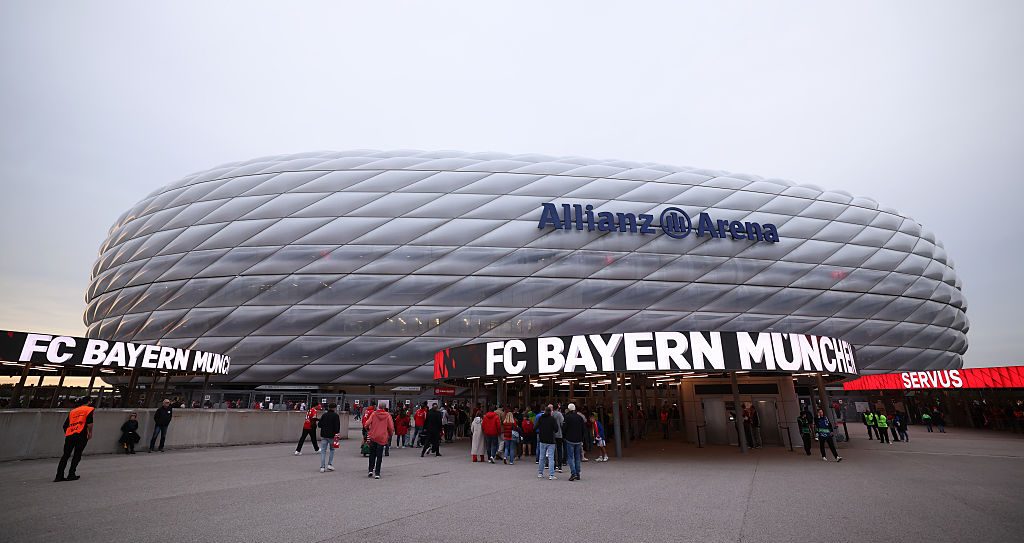
Back to Bayern’s home. The Allianz Arena will host the Champions League final for the sixth time in its history, the third since the stadium became the Allianz Arena in Munich. A regular at the competition’s climax, it has hosted the final Bayern lost in 2012, in a thrilling conclusion against Chelsea, and then again in 2025, when PSG inflicted a historic 5–0 defeat on Inter. Next time? Already in 2028. For lack of alternatives, frankly, and that says plenty about the state of Europe’s sporting infrastructure. Because while Italy is notoriously stuck in the Middle Ages, the rest of the continent is hardly offering a wealth of cutting-edge alternatives either.
The decision to award the Champions League final to the Allianz Arena — and, in UEFA’s defence, this is worth stressing — also came because Munich was so far the only city to put itself forward to host the event. The others? Nowhere to be seen, for one reason or another. In Spain, Barcelona’s Camp Nou is still putting the finishing touches to its extensive redevelopment, and is therefore aiming for a grand return with the 2029 final. The 2027 final will be staged at Madrid’s Wanda Metropolitano. And as for the Bernabéu, well: quite apart from the recent renovations, relations between Ceferin and Florentino have been at rock bottom since the Super League affair, which hardly helps on the diplomatic front.
Italy’s major stadiums, from the Olimpico to San Siro, are considered obsolete. Other iconic European grounds — Paris, Berlin, Athens, Istanbul — are gradually losing their appeal because of their athletics tracks, a drawback in terms of what modern football now demands. Several highly regarded British venues, from Old Trafford to Cardiff’s Millennium Stadium, also come with logistical reservations of their own, from airport links and public transport to hotel capacity, which are less substantial than those available in the major capitals.
UEFA has four key criteria for determining the venue of a Champions League final: a 105×68-metre natural-grass pitch, a minimum capacity of 70,000, which can be waived down to 63,000, excellent access to infrastructure to facilitate the arrival of spectators and officials, and suitably modern multifunctional spaces within the stadium — VIP areas, fan zones, adequate media facilities. It is above all the final two factors that present the greatest difficulties, under the supervision of European football’s governing body, which does not always give the green light to modernise the respective grounds.
And in the end, the reliable choice that still manages to stay ahead of the curve is Bayern Munich’s Allianz Arena. In 2028, too.