
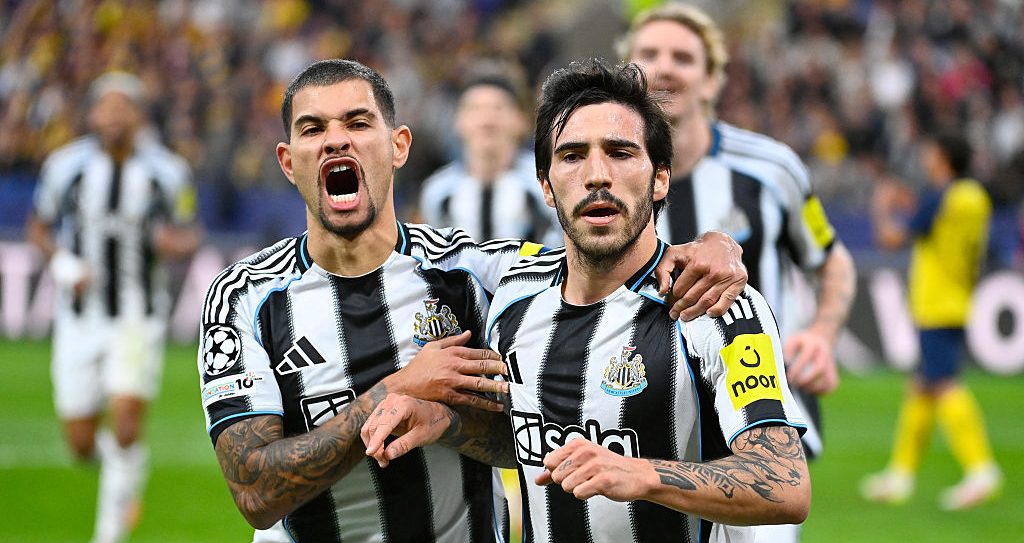
Magpies fans will have to get used to it. Despite being owned by PIF, one of the richest sovereign wealth funds in the world, Newcastle will continue to sell their best players. It is a necessity dictated by a new operating model, designed to comply with the financial regulations of the Premier League and UEFA while also trying to turn the club into a side capable of competing consistently at the top of English and European football. As reported by the Telegraph, after losing Alexander Isak, Anthony Gordon, Sandro Tonali and Bruno Guimarães in the space of just 12 months, sporting director Ross Wilson has warned that further departures will be inevitable in the coming transfer windows. Newcastle are not obliged to sell, but they will certainly consider offers next January and in June.
This summer, the club brought in around €250 million from player sales, using part of that money to fund the arrival of eight new players, with a net spend of around €35 million. The numbers, then, do not require another immediate sale. There is, however, an awareness of Newcastle’s place in the hierarchy of European football and, above all, of the distance that still separates them from the richest clubs. Having breached UEFA’s spending rules last season, Newcastle know they cannot always offer the same wages as their wealthiest rivals, nor can they guarantee the same chance of winning trophies.
“These are situations every club has to deal with,” Wilson explained, having completed his first summer window at Newcastle with a balance that has left supporters broadly satisfied, despite all the upheaval the club has gone through. “We are working within a regulatory framework that does not just apply to the club, but to everyone. So it is not a choice, it is what we have to do. If you don’t, then you have to keep the squad you have forever. Players will get older, they will win less, and eventually they will leave on free transfers. If you want to be a successful Premier League team, you have to sell players. If you don’t, you probably won’t be a successful team. Especially at a time when the club’s revenues are growing rapidly thanks to the work of chief executive David Hopkinson and his team. But without this process, if you don’t sell players, you risk becoming stuck.”
The shift towards a new transfer model has led the club to deliberately target younger players with significant room for development, in the knowledge that, if they establish themselves, they could eventually be sold on for substantial profits. This is also where Newcastle’s grand project becomes harder to square. The club has said it wants to be consistently competing for the major trophies by 2030, but the prospect of losing some of its best players every year could leave many wondering how sustainable that ambition really is. Bournemouth, Brentford and Brighton have achieved important results through a similar model, but they started with more modest ambitions and have never become a genuine threat to the dominance of Arsenal, Manchester City and Liverpool.
“We hope the new signings will be with us on our journey towards 2030,” Wilson said. “But we also have a model based on buying and selling players. Who knows what the squad will look like in 2030? I’m sure there will be players in the 2030 team who are not part of the 2026/27 squad. And I hope that’s the case. Of course we want to have players here who share our journey. But equally, if the journey of some of them progresses at an incredible speed, they could end up somewhere else. That’s normal. It’s part of football.”
The first summer of the new era was anything but straightforward. There were difficulties and setbacks. The departures of Gordon and Tonali had been planned and prepared for, while captain Bruno Guimarães’ move to Arsenal and Eddie Howe’s resignation had not been expected. Howe left exhausted and disillusioned. Guimarães’ desire to force through his departure was the final straw. By the beginning of August, Newcastle appeared to be in genuine crisis after missing out on several of their main targets, including Victor Muñoz, James Trafford and Johan Manzambi.
The club, though, managed to recover. The late arrivals of full-back Amar Dedic, midfielder Nico González and Matias Fernández Pardo brought quality and optimism, while Wilson emerged with credit for having handled an extremely difficult situation effectively. The fees received for Gordon, Tonali and Guimarães were close to the upper end of their market values and helped finance the rebuild. There are more questions around some of the younger players. Almost €100 million was invested in reserve goalkeeper Ewen Jaouen, who cost €22 million, winger Bazoumana Touré, signed for €48 million and seemingly not yet physically ready for the Premier League, and midfielder Aladji Bamba, bought for €35 million but never selected to start and left on the bench without making an appearance in three of the first four games of the season.
Newcastle also had to find a new manager, and appear to have found a convincing solution in Matthias Jaissle. In that sense, the club managed to make the most of a situation that was far from ideal. Eighteen-year-old Sean Steur, signed from Ajax, looks to have the qualities to become a star, while goalkeeper Lukas Hornicek has also made a promising start to his Newcastle career.
“There never seemed to be chaos inside the club,” Wilson insisted. “It would make no sense to pretend otherwise. We did not want to lose Bruno Guimarães. It was genuinely disappointing to reach that point, even though we are pleased with the final financial outcome. Everything else that happened during the window was part of the plan. That does not mean every player who arrived was the number one name on our list, but that never happens in a transfer window. Of course we were disappointed on a couple of occasions, but that’s normal. I had a very clear idea of the identity I wanted to give Newcastle United and our ownership shared it. The key was to reach the end of the window, not the beginning or halfway through it, and be able to say that we had genuinely found our identity. This does not mean everything is perfect or that we are completely satisfied, but we are happy with where we have ended up: the structure of the squad, its identity and the identity of the manager. We are not patting ourselves on the back and saying anything more than that, but we needed the courage to move forward after the Eddie Howe era.”
There remains one question: how realistic is the 2030 project? The ambition of competing consistently for the biggest English and European trophies by 2030 looks extremely ambitious. Perhaps even unrealistic. No club has managed to win trophies consistently or compete for the Premier League title while selling its best players every summer. Newcastle are ambitious newcomers, determined to challenge the established order, the outsider trying to fight opponents who are richer and more powerful. The visceral football culture of the North East is also, according to Hopkinson, something the club wants to export and develop on a global scale.
As revenues increase, the need to sell players will diminish because the Magpies will be able to offer better contracts. If they can establish themselves in the top six over the next two years — having already finished in the top seven three times in four seasons under Howe — the next step, regular Champions League football, could look considerably less complicated. The problem is that while Newcastle’s revenues grow, nobody else is standing still. The gap is narrowing, but it is likely to remain at least £100 million a year compared with clubs such as Arsenal, Liverpool, Manchester City and Manchester United.
The choice of Matthias Jaissle, meanwhile, is easier to understand. Everyone has remarked on the energy the manager has brought to the players and the club since arriving a month ago. “Matthias was not the only manager we spoke to, but he was our first choice,” Wilson admitted. “We had started working on this project a long time ago and knew what type of manager and what type of football we wanted. So it was very clear that Matthias, if we could reach an agreement, would be someone who was extremely interesting to us. I spoke to him on the phone and it was a really positive conversation. Then I met him and, completely by chance, while I was on the phone to him, Hopkinson said to me: ‘You sound really excited about this choice.’ And I replied: ‘You’re probably right.’”