
For a few years now, the Grand Slams have gone well beyond the singles and doubles matches, the men’s and women’s draws. The fact that they are played in increasingly glamorous settings has only accelerated the transformation: tournaments have become enormous machines for money and entertainment, and food is part of that too. It could hardly be otherwise. Between social events, parties and presentations, there are countless opportunities for high-end catering, to the point that the US Open has become one of New York’s great showcases for food.
As the Spanish newspaper Mundo Deportivo noted, during the 2026 edition the more than 75,000 spectators who fill Flushing Meadows each day are surrounded by an exceptionally broad culinary offering, ranging from Mexican to Korean and Japanese cuisine, alongside some decidedly surprising choices. There are simpler options too, including mostly raw vegetables, as well as a series of traditional dishes drawn from cuisines around the world. Among the dishes that have attracted the most attention is the special offering from COQODAQ, the Korean fried-chicken restaurant owned by restaurateur Simon Kim. The dish comes with six nuggets, Petrossian caviar, crème fraîche and chives, for the decidedly non-popular price of $100. The special returns for a third consecutive year, alongside some new additions, including KIMBOP’s rice rolls, Alex Guarnaschelli’s vodka-sauce pasta and the dishes from pastaRAMEN, which bring Italian and Japanese cooking together.
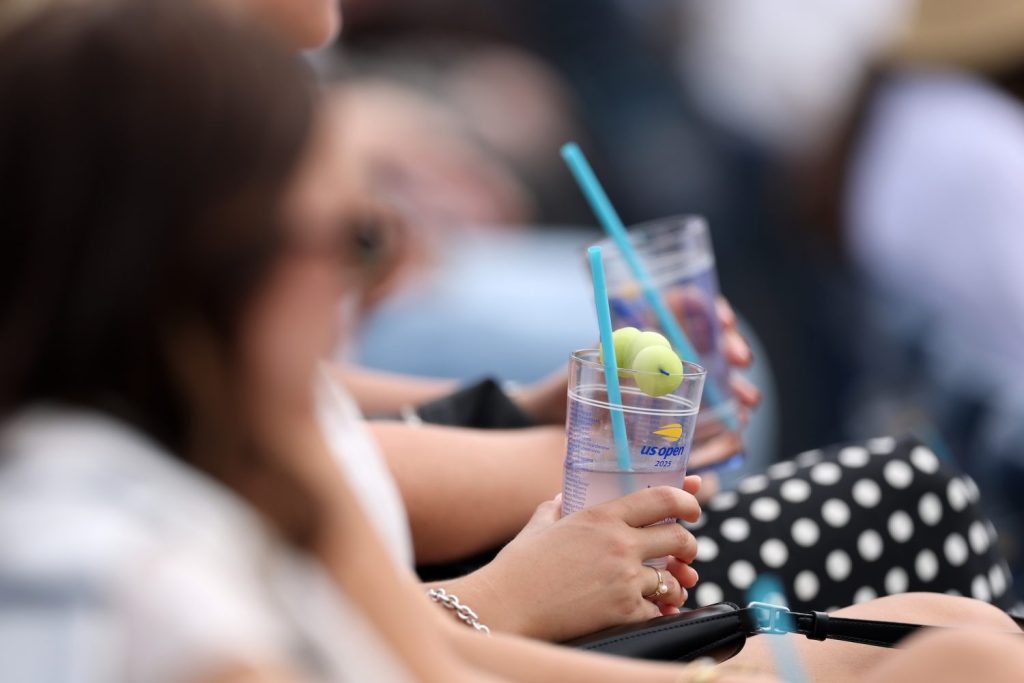
The tournament’s biggest food attraction, however, remains the Honey Deuce, the official cocktail of the US Open. Made with Grey Goose vodka, lemonade and raspberry liqueur, it is served with three melon balls that resemble small tennis balls. It does not come cheap: each glass costs $23 and comes in a collectible cup, a detail that has helped make it one of the tournament’s most photographed and shared products. In 2025, 738,459 Honey Deuces were sold, generating around $17 million in revenue. This year, forecasts point to 800,000 glasses being sold, which would bring gross sales to $18.4 million. The US Open is no longer simply one of the biggest events on the global tennis calendar, but also a major food event and a significant business built around the courts of Flushing Meadows.