
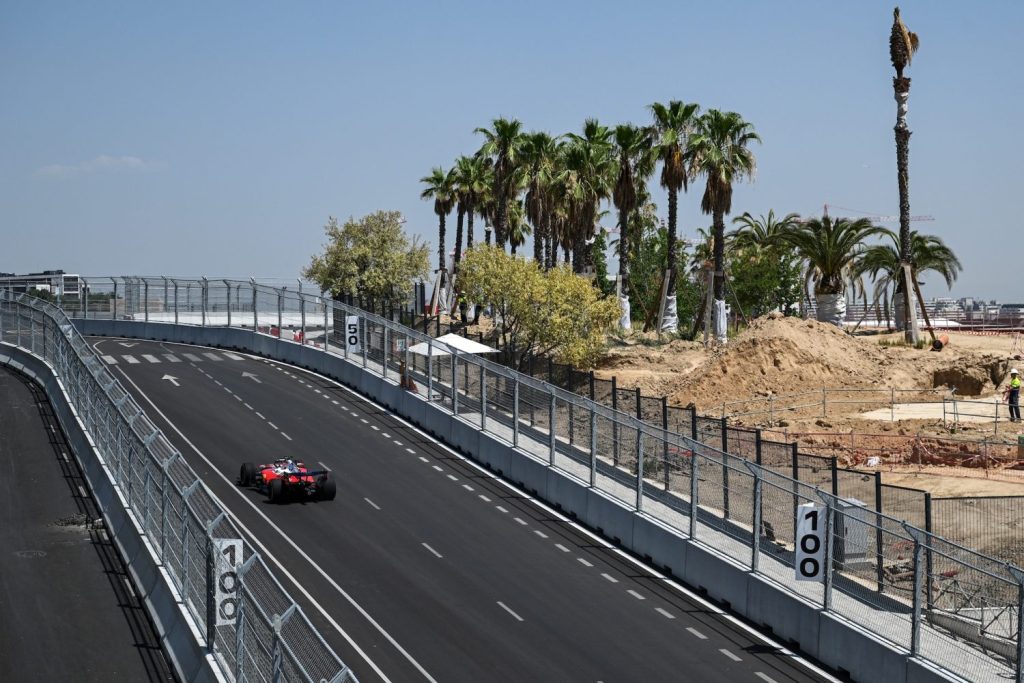
There is huge anticipation in Spain and around the world for the first Madrid Formula One Grand Prix, scheduled for the weekend of September 11–13. The new semi-urban circuit, known as the Madring, has already made a strong impression on the drivers who have had the chance to try it. In particular, those competing in Formula 3, F1’s support category: Bruno del Pino, the 20-year-old Van Amersfoort Racing driver, said that “the track is really good, although every mistake can cost you dearly; that makes it even more fun, it fills you with adrenaline and pushes you to concentrate as hard as possible”; Freddie Slater, the 18-year-old Trident driver and current championship leader, went even further, describing Madrid as “one of the best circuits I’ve ever driven: it’s a track full of character, like Macau or Monaco”. All the circuits mentioned by Slater are urban or semi-urban. That is the other side of the story. For some time now, the Madring has been the subject of controversy among people living in the area – the circuit has been built in the north-east of the capital, between Hortaleza and Barajas. And with the event now just around the corner, things are not getting any better. According to a report in Marca, an organised group of residents has raised a number of concerns. The first is the noise recorded during pre-race testing, which reached 100 dB, well above the 60 dB limit. Certified sensors will now be installed to collect technical evidence ahead of possible legal action against IFEMA, the consortium responsible for the Grand Prix and the circuit.
The problems reported by residents go well beyond the three days of racing. The construction of the facilities needed for the GP has also generated significant noise, while traffic restrictions have, according to local residents, had a negative impact on life in the neighbourhood. The diversions began in April and will remain in place until October. Residents are also questioning the economic benefits of the event. They are sceptical about the boost it could bring to the area, arguing that the 350,000 spectators expected for the races will spend their money inside the circuit rather than at businesses in the surrounding neighbourhood. Finally, there is the issue of accommodation. Rising prices will come at the expense of long-time residents, while the surge in short-term rentals for the GP is also expected to have a negative impact on the neighbourhood’s economy.