
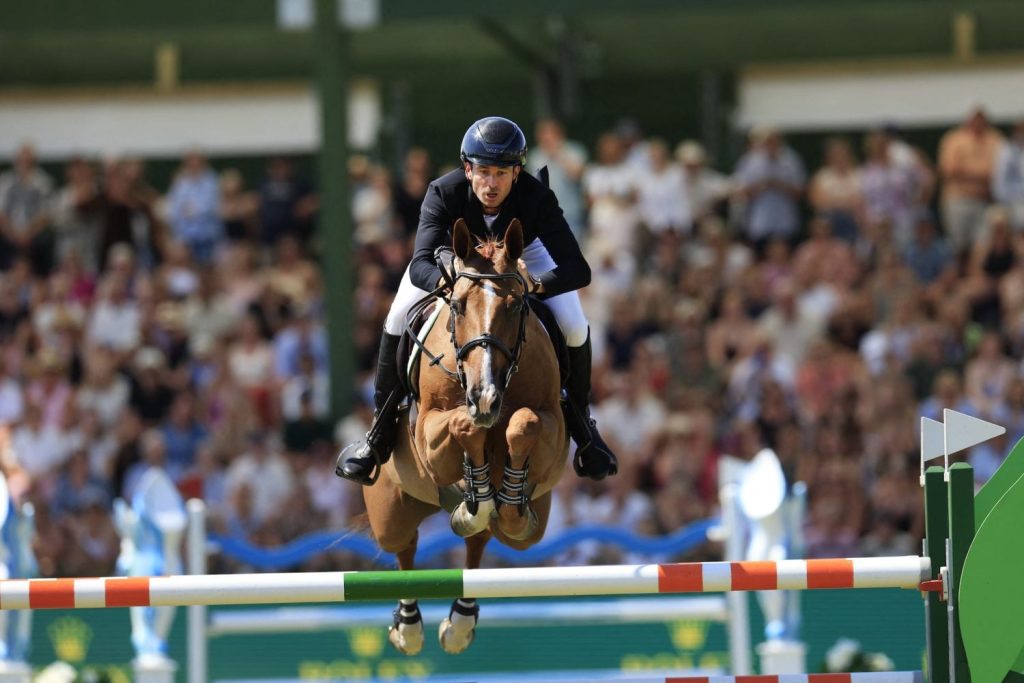
Frank McCourt, president of Olympique de Marseille, believes show jumping is the most commercially underrated sport in the world. He is putting $300 million behind the idea that one of the oldest sports around can become a major global product. As reported by Bloomberg, the 72-year-old owner of OM, who made his fortune in real estate and once owned baseball’s Los Angeles Dodgers, has backed the Premier Jumping League, a new competition due to launch in 2027. The ambition is to turn show jumping into an international franchise sport, with recognisable teams and a season that gives the audience something to follow from one event to the next.
Competitive show jumping has been around since the mid-19th century. It has built prestigious competitions, attracted large audiences and drawn serious investment. McCourt’s view is that it has never developed the commercial ecosystem that exists around other professional sports. There are no recognisable teams, no enduring rivalries, no real season-long structure around which a following can grow. The Premier Jumping League is built around those missing pieces. The plan is for 16 teams. Two have already been sold, both for $50 million, with another two expected to be sold in the first year. The remaining 12 will initially be leased. The franchises will then select the world’s leading riders through a draft, bringing a familiar feature of American professional sport into show jumping.
To attract the best riders, McCourt has committed $300 million in prize money over the league’s first three years, funded directly by him. The move comes as investors and wealthy individuals continue to look towards sports that have yet to reach their commercial potential. The formula is familiar: take a niche competition and build around it a product that can generate revenue from broadcast rights, sponsorship and franchises. TGL, the indoor golf league backed by Tiger Woods, has taken a similar route.
Equestrian sport has attracted increasingly large amounts of capital, too. Investment has risen sharply over the past decade, while the most prestigious horses regularly sell for more than $10 million. Prize money has not kept pace, according to McCourt. That leaves riders with relatively modest earnings and makes a career at the highest level difficult to sustain without other sources of income, whether through training, running a stable or relying on wealthy backers. The Premier Jumping League is intended to change that. McCourt developed the project with hospitality entrepreneurs Neil Moffitt and Nick McCabe. They are not trying to change the sport itself so much as build a different structure around it, borrowing from professional leagues that have already figured out how to create a following. Formula One is the clearest reference: a championship spread across several months, identifiable teams, a regular calendar, a draft and a story that carries from one race to the next.
The league will offer $100 million in prize money each season for its first three years. It would represent a dramatic shift in the economics of show jumping. The Global Champions circuit, which includes the individual Longines Global Champions Tour and the team-based Global Champions League, distributed more than €36 million last season. The founders believe that the difference could allow more riders to make a living from competition alone, rather than depending on other work or wealthy backers to sustain a career at the top of the sport. There are already signs that investors are interested. In June, American investor and racing driver Jason McCarthy, whose daughter competes in show jumping at youth level, bought the first franchise at a valuation of $50 million. McCourt’s plan also depends on television. The competitions will be available free to viewers on a platform that has yet to be announced, with the hope of building a much larger audience before turning that audience into commercial value through sponsorship, tickets and hospitality.
Moffitt and McCabe’s background in luxury hospitality could become another part of the proposition. Top-level show jumping already draws an affluent crowd, the founders say, but the experience around the competition has often lagged behind the audience it attracts. Food and drink, VIP areas, the overall setting — all of it can be pushed further. The harder part may be getting enough world-class riders and horses into the same competition. The international calendar is already crowded, while established circuits have a strong hold on the sport. That leaves the league with a familiar problem in professional sport: getting people to care about who is competing, not just what they are competing in. The horses, the riders, the rivalries. Formula One has benefited from that shift, as have other sports trying to move beyond their traditional audiences. Sometimes the sport comes first. Sometimes it is the people inside it who make you want to watch.