
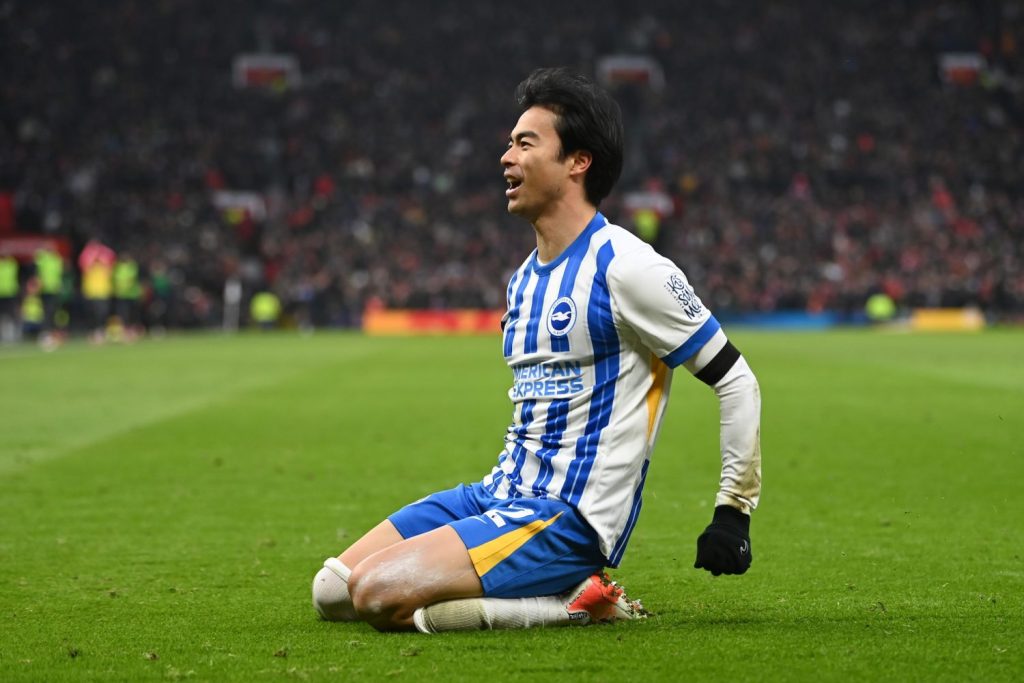
The World Cup is often a litmus test of where a national team stands. In 2002, the tournament in South Korea and Japan rewarded the former above all: beyond that controversial fourth-place finish – to put it mildly – came a generational dividend that would bring plenty of satisfaction in the years that followed, with a footballing impact unlike anything seen before, extending all the way to the Premier League. When Park Ji-Sung joined Manchester United in 2005, a mania took hold in Seoul and beyond, creating a connection with English football, in terms of players, that would last for two decades and continually find new protagonists: Son Heung-Min above all. That legacy has now come to an end, with South Korea facing the prospect of having no player in the Premier League for the first time since then. And Japan is taking that space at a remarkable pace.
The World Cup is where the shift is most visible: Japan are now a highly competitive side, by some distance the strongest in Asia. Before the American edition, they had come off two respectable last-16 exits. This time, on paper, there was a step backwards – out in the round of 32 – but the result is deceptive. Japan held the Netherlands to a draw, recorded the biggest win in their World Cup history against Tunisia, and were only denied by Brazil in the 90th minute after giving the Seleção a scare for long spells – certainly not Brazil at their best, but Brazil all the same. Not exactly a campaign to be dismissed. Yet, as further evidence of the change in level and mentality taking place in Tokyo and beyond, head coach Hajime Moriyasu announced that he would nevertheless step down. Think about it: a few years ago, a 2-1 defeat to the Seleção would have been enough for the Japanese to return home as heroes. Now, putting up a good fight is no longer enough. A broad programme of renewal and talent development is under way across the country, with the aim of winning the World Cup before the end of the century. Method, infrastructure and a clear sense of direction. The things South Korea now lacks, having become trapped in its own happy past.
“There are more than 100 Japanese players now playing in Europe,” Park himself warned, now charged with helping revive the fortunes of his national team in a new executive role. “We need to be braver. The gap is getting bigger.” And the Premier League offers an eloquent illustration once again: after Hwang Hee-Chan’s relegation with Wolverhampton, there are no South Koreans left to fly the flag. Japan, meanwhile, keeps advancing, from Mitoma to Kamada, from Tomiyasu to Tanaka and Endo. There will be at least ten of them in the Premier League next season – the culmination of a movement that is increasingly present at the highest levels, from the Championship to Europe’s other major leagues. Against zero on the other side of the Sea of Japan. “The end of an era,” the Guardian called it. And the beginning of another.