
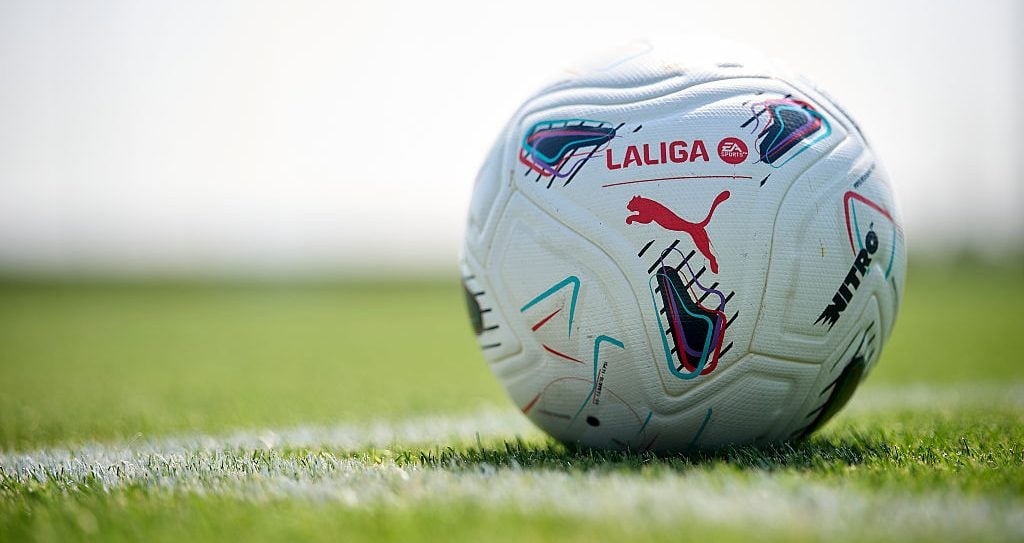
The countdown to the new Liga season is over: Alavés-Getafe opened the 2026/27 campaign. And in the first game of the season, a rather special ball was used, one that will now feature in every match. It is a new Puma model equipped with Kinexon technology: an internal sensor measures the force exerted on the ball at every contact, using a combination of an accelerometer and a gyroscope. In other words, it is now possible to provide and receive real-time data on the power and effect of players’ shots with unprecedented precision.
The unexpected side effect? Since the sensor is electrically powered, the ball needs to be charged. Like a mobile phone, essentially: a full charge takes up to 90 minutes and provides around five hours of battery life. Liga officials, AS reports, have also explained how the system works: “The ball sends the information it collects to the twelve antennas in the stadiums to ensure coverage. Depending on the venue, three are positioned at each end and one on each side. The ball transmits 560 signals per second.”
That is a lot of data, revealing details about “speed, ball contact and shooting” that have never been available before. “We will be able to obtain a series of new parameters that will be useful to coaching staff, referees and commentators.” This is not simply a luxury for spectators and statistics enthusiasts. In Spain, they insist that Kinexon technology could change the quality of the game, and some of its dynamics, for good. “We have made the ball speak: these levels of precision and sophistication had never been reached before.” It could also help settle disputes on the pitch. Some incidents at the last World Cup, for instance, dragged on into endless controversy – from the disallowed goal that eliminated Croatia to the extraordinary spidercam episode in Norway-England – might never have happened. The accuracy of the sensors inside the ball would be enough to settle even the most difficult cases, including those involving the slightest of touches.
Liga has been testing the new balls for several months and has drawn up a logistics plan designed to leave little to chance: 14 will be provided for each match, and it is the referee’s responsibility to make sure they are all charged before kick-off. According to those working on the system, “ball boys will not disappear, but they will be responsible for placing the balls at specifically designated points around the perimeter to prevent time being wasted.” And as for the sheer volume of information, there is no need to overwhelm spectators with statistics: “We will not flood them with data, but offer it ready to use at the moment when it matters: this ball will help make football more understandable.” That, at least, is the hope.