
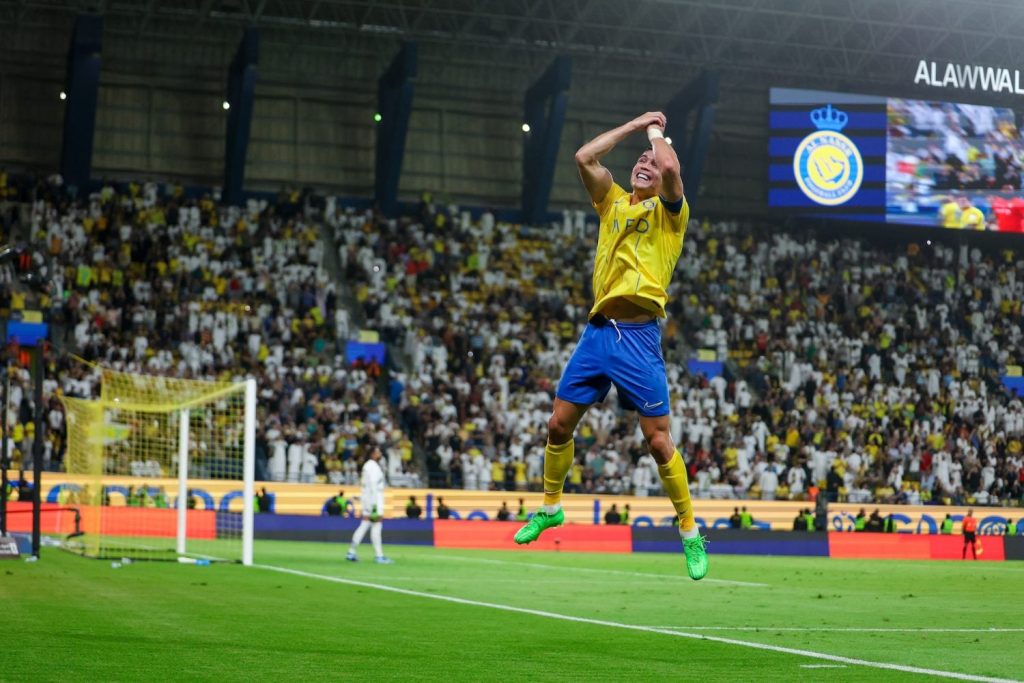
Is this the end of an era? Perhaps it is still too early to say. But the signs are there: the Saudi Arabian transfer market is no longer moving at the same pace, nor is it reaching the extraordinary figures that defined the summer of 2023. That was the moment when PIF’s vast spending brought some of the biggest names in world football to the Saudi Pro League. Cristiano Ronaldo, Firmino, Fabinho, Kessié, Milinković-Savić, Benzema. Then came João Félix, Theo Hernández, Coman and many others. Every window seemed to carry the possibility of another global name arriving, another statement being made. Now that momentum has slowed. In the 2026 summer transfer window, only two signings by Saudi clubs have exceeded €10 million. Francisco Trincão moved from Sporting Lisbon to Al-Ahli for just over €40 million, while Al-Hilal won the race for Cryscencio Summerville, paying West Ham €64.5 million despite competition from Roma.
Behind the quieter market lies a broader change. As reported by El Pais, in recent months, PIF — the sovereign wealth fund controlled by the Saudi royal family — has made a series of decisions pointing towards a different phase, including a gradual withdrawal from the LIV Golf circuit and the cancellation of plans for artificial ski slopes and a luxury resort intended to host the 2034 Asian Winter Games. Football remains part of that vision. The difference is in the method. Sustainability, spending control and infrastructure have replaced the pursuit of immediate impact as the central themes. The 2034 World Cup remains the horizon, but the change is already visible in the Saudi Pro League, where even foreign ownership has begun to appear: Al-Kholood is now controlled by American entrepreneur Ben Harburg.
The first signs of a different ownership landscape arrived a year ago, when 70 per cent of Al-Hilal was sold by PIF to a holding company linked to a member of the royal family for around €400 million. They have been followed by a search for greater financial discipline. The current transfer window reflects that approach. The Saudi market remains open until 12 October, but with the new season approaching, spending has remained relatively restrained, slightly above €180 million. Al-Ittihad are looking to reduce their wage bill. After the departures of Karim Benzema and N’Golo Kanté last season, and without replacements on comparable salaries, the club has continued to lower costs. The same applies to Al-Nassr. After accumulating debts of more than €200 million and receiving official warnings, including suspensions involving some executives, the club no longer operates with the same freedom that followed Cristiano Ronaldo’s arrival.
The Portuguese forward, who earns more than €200 million per year, staged an unprecedented protest last February by remaining out of the squad for three matches. According to reports in Portugal, Ronaldo was unhappy with what he considered preferential treatment from the sovereign fund towards other leading Saudi clubs. Since his arrival, Al-Nassr have invested around €400 million in transfer fees alone. Today, with Cristiano Ronaldo, Sadio Mané, Kingsley Coman, João Félix, Jhon Durán, Wesley Gassova and Íñigo Martínez still in the squad, the club carries a wage bill close to €450 million. Even that has not guaranteed complete freedom in the market. The club were unable to complete the signing of Samú Costa from Mallorca in a deal worth around €22 million.
At the same time, PIF executives continue to look at the future of club ownership, assessing possible buyers for Al-Ittihad and Al-Nassr. Al-Hilal remain engaged in a difficult pursuit of Luis Díaz, trying to convince both the player and Bayern Munich to accept a move to Riyadh. The figures show the scale of the change. In the 2023/24 season, Saudi Pro League clubs spent €974 million on transfers. The following year, that figure fell to €614 million, before rising again to €786 million last season. The new approach from the sovereign fund, together with growing geopolitical uncertainty in the region, has brought a more cautious rhythm.
The rethink extends beyond Saudi Arabia. PIF is also considering a possible sale of its majority stake in Newcastle United, where Eddie Howe recently resigned after the departure of several key players. Even in England, the project no longer carries the same sense of acceleration that defined the first years after the takeover. Saudi Arabia has not left football behind. The investment has simply moved elsewhere. PIF has strengthened its presence through major commercial and sponsorship agreements with FIFA, already visible at the 2025 Club World Cup and the latest World Cup. Until at least 2034, football will remain one of the pillars of Saudi Arabia’s strategy. The difference is that the next phase will be built less around the arrival of famous names and more around the structures behind them.