
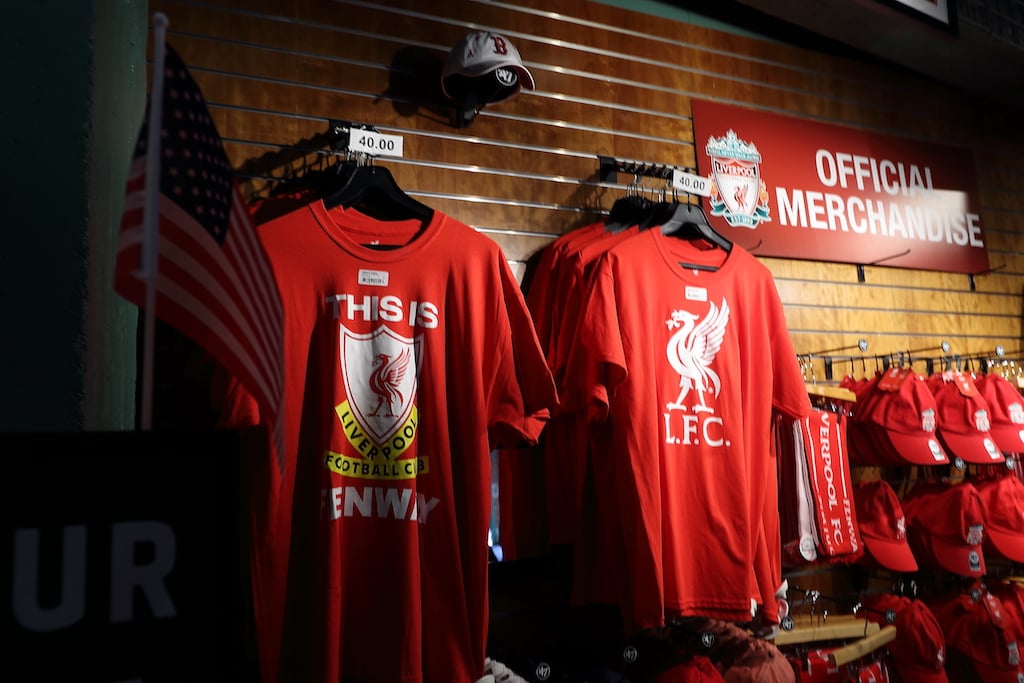
Liverpool’s gaze is turning increasingly towards the United States. After completing their two-week summer tour on Sunday evening, the club is already working to strengthen its presence across the Atlantic, with plans for a new phase of commercial expansion: a network of permanent official stores in the US. Ben Latty, Liverpool’s chief commercial officer, confirmed the idea in an interview with Sportico, revealing that the club is exploring the possibility of opening several branded outlets across America. The project is still taking shape. The cities have yet to be selected, while Liverpool is weighing whether to run the stores directly or operate through an external licensing partner. The club’s sales team has already visited several major US cities, though no timetable has been announced.
The move sits within Liverpool’s wider ambition to reach 40 physical stores by 2030. The Reds currently have 26 locations across the United Kingdom, Hong Kong, Singapore, Indonesia, South Africa, Denmark and Ireland. The latest additions opened between May and June in London and Bali, with the club aiming to move beyond 30 stores by the end of the 2026-27 season. A permanent US presence would be something new for the Premier League. Some of Europe’s biggest clubs have already moved into the American retail market — Paris Saint-Germain has a store on Fifth Avenue in New York, while Manchester City has previously experimented with pop-up locations — but no club from England’s top flight currently operates a permanent outlet in the country.
Merchandising, both through physical retail and online sales, has become one of the central pillars of Liverpool’s commercial growth. It is the club’s second-largest commercial revenue stream, behind sponsorship. Together, the two areas generated £324 million ($428 million) in the 2024-25 season, almost 40% more than the £233 million recorded three years earlier. Among Premier League clubs, only Manchester City and Manchester United have generated higher commercial revenues. The rest of Liverpool’s business remains on an upward trajectory. In 2024-25, the club recorded total revenues of £704 million ($929 million), the highest figure in the Premier League, supported by matchday income and broadcasting rights. Yet those areas offer less room for expansion than before, while earnings from European competition remain tied to what happens on the pitch. The search for new commercial growth comes at a time when Premier League clubs face rising costs and stricter financial controls. Building and maintaining a competitive squad has become increasingly expensive, making new revenue streams a central part of long-term planning.
The United States is already Liverpool’s largest market outside the United Kingdom, accounting for 26% of international merchandise sales. The club estimates that around 26 million supporters follow the Reds in the country, according to comments made by chief executive Billy Hogan through Liverpool’s official channels. A permanent retail network would bring the club closer to that audience, reducing shipping costs, shortening delivery times and creating a more direct relationship with supporters. Liverpool may also soon enter a new financial phase. Majority owner Fenway Sports Group is reportedly discussing the sale of up to 30% of the club to a consortium led by British entrepreneur Amit Bhatia, in a deal that would value Liverpool at around $6 billion. The group is also expected to include Amazon founder Jeff Bezos and Facebook co-founder Eduardo Saverin. Alongside that, Liverpool is preparing the launch of a completely redesigned e-commerce platform in the coming weeks, another step in building a global retail operation around one of football’s largest international followings.