
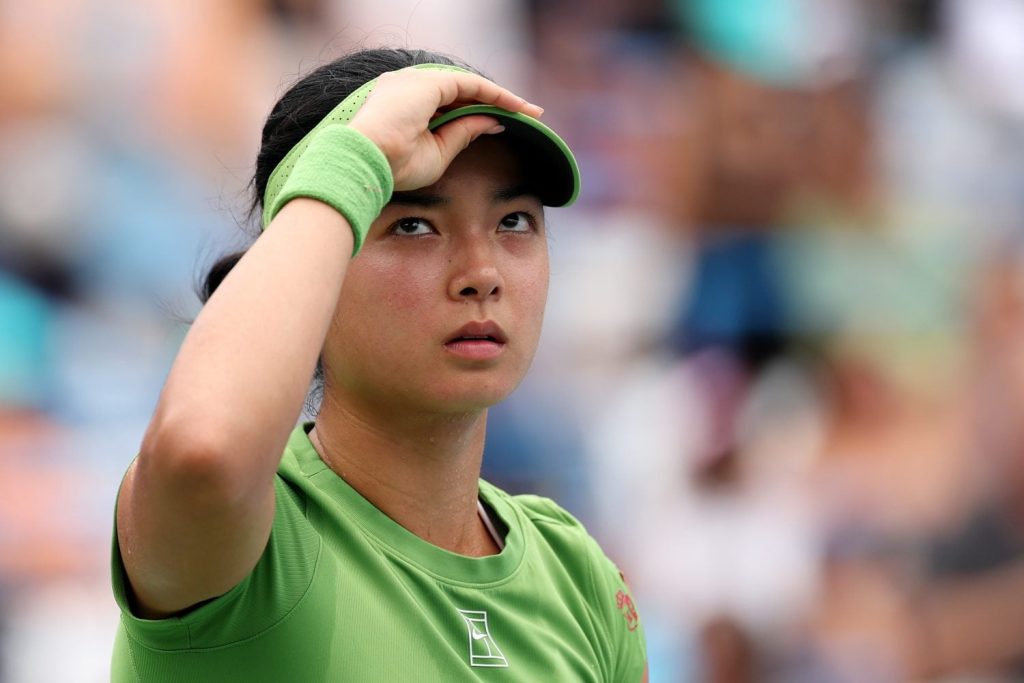
Alex Eala had been building towards this moment for months. Washington simply confirmed what the tennis world had begun to understand: she is the new name in women’s tennis. An entire country is behind her. The Philippines has more than 100 million people, and Eala has become a figure who carries expectations well beyond the usual demands of the sport. That attention is a gift, but it is also a weight. At 21, she is playing with an audience unlike almost anyone else on tour. In Washington, she seemed completely comfortable with it. Elina Svitolina in the quarter-finals. Naomi Osaka in the semi-finals. Jessica Pegula in the final. A rain delay. A home crowd behind Pegula. None of it changed the outcome.
Eala keeps bringing people with her. The tennis is the first explanation: aggressive, physical, built around speed and power. But there is something else at work. Over the past year she has become more than a rising player. She has become a symbol, a commercial force, and a reason for thousands of people to pay attention wherever she goes. Every tournament now feels like a gathering place for Filipino supporters around the world. The first glimpse came at the Australian Open in January. Making her main-draw debut in Melbourne, Eala found herself playing on an outside court that quickly became too small for the interest around her. Hundreds, perhaps thousands, of fans came to watch. Many never got inside. The crowds were simply too large.
“One of the first moments when I really realised what was happening was this year in Melbourne,” Eala said. “The Middle East swing opened my eyes as well.” The organisers noticed. According to Sportico, the DC Open had already understood during the spring that Eala’s popularity was growing quickly. Tournament president Mark Ein saw the opportunity early. “Our team told us: ‘This is something that is spreading. We have to bring Alex to the capital.’ Having her here has been one of the best things that has happened this year.” Then she won the tournament.
The numbers from the week matched the feeling around it. More than 80 per cent of the enquiries received by the ticket office before the opening rounds were connected to Eala’s matches. The main stadium filled with Philippine flags. The atmosphere was louder and more emotional than a typical tennis crowd, occasionally moving beyond the sport’s usual boundaries, with applause even following mistakes on serve from her opponents. After matches, dozens of supporters stayed with her during Tennis Channel’s outdoor interviews, continuing to sing and cheer. “Sometimes I forget the impact I can have and I never expect so many people to support me,” Eala admitted. “Every time, I am surprised.” The achievement is historic in every sense. No Filipina had ever reached the WTA top 30. No Filipina had ever won a WTA singles title. Eala changed both of those things, becoming the first player from her country to break through at this level and giving a nation of 118 million people a sporting figure recognised far beyond its borders. Then there are the millions of Filipinos living abroad, following her from every corner of the world.
The attention has followed her away from tennis too. Sponsorships have already brought her at least $10 million, despite the fact she is not among the ten highest-paid players on tour. Her social media following is even more unusual: 1.6 million Instagram followers, a figure surpassed among active players only by Serena Williams, Venus Williams, Aryna Sabalenka, Iga Świątek, Emma Raducanu, Naomi Osaka and Elina Svitolina. The last two months have changed the scale of her career. On the grass in Berlin, she beat Australian Open champion Elena Rybakina in straight sets. At Wimbledon, she eliminated defending champion Iga Świątek without dropping a set. Then came Washington, where she continued the run by beating former Grand Slam finalists Zheng Qinwen and Leylah Fernandez before defeating second seed Svitolina. The DC Open had already sold out in each of the previous six editions. This year, something shifted. Eala brought a different audience with her, thousands of people who might never have followed the tournament otherwise, and perhaps never tennis itself. The flags, the crowds, the attention: all of it points to the same thing. A player from a country that had never had this kind of tennis figure now has one. And everyone is watching.