
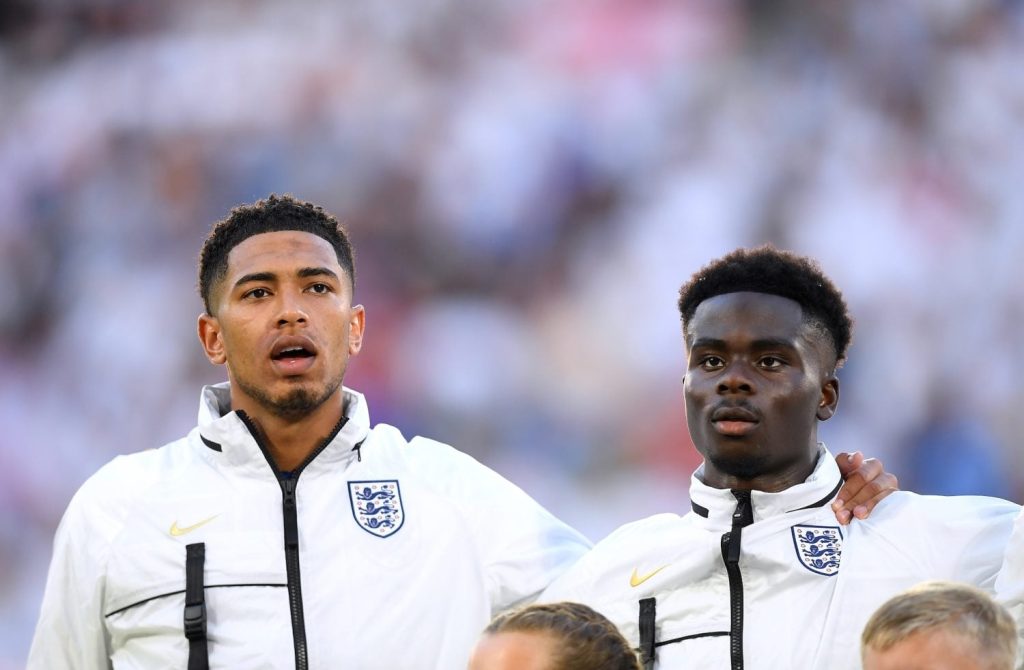
One of the most beautiful anthems in the world, sung with pride at the first and last minute of both halves of every England football match, entirely a cappella. And yet the reputation of “God Save the King” (or the Queen, depending on who sits on the throne) has begun to waver. The Commonwealth Games are currently taking place in Glasgow, bringing together the countries that retain historic, cultural and commercial ties with the United Kingdom. Alongside the four Home Nations – England, Scotland, Wales and Northern Ireland. In recent days, as England collected gold medals, an old question returned. One that resurfaces every few years: is it time for English teams to have their own national anthem? The argument is not new. But the success of English athletes and teams – while the United Kingdom continues to compete as one at the Olympic Games – has reopened a conversation about identity, tradition and the place of sport in national life.
At the Commonwealth Games, English athletes standing on the top step of the podium are accompanied by “Jerusalem”, the famous hymn drawn from William Blake’s poem of the same name. Written at the beginning of the nineteenth century, it became a patriotic song during the First World War. The choice dates back to 2010, when a YouGov poll among Team England supporters gave Jerusalem 52.5 per cent of the vote. God Save the King finished last, with just 12 per cent, behind “Land of Hope and Glory”, Edward Elgar’s composition that had accompanied the English team at the Commonwealth Games until then. The Commonwealth Games remain the exception. Across most international competitions, England’s national teams – football first among them – continue to use “God Save the King”, the anthem that represents the United Kingdom whenever it competes under a single flag. A different story from Scotland and Wales, where football teams have long walked out to “Flower of Scotland” and “Hen Wlad Fy Nhadau” (“Land of My Fathers”), songs that have become inseparable from their national identities.
The British anthem, created in 1745 as a tribute to George II during the Jacobite uprising, remains one of the country’s most recognisable symbols. It is also one of its most debated. The criticisms are familiar: a simple musical structure, a repetitive rhythm, and a curious omission. The lyrics never mention England or the United Kingdom. Its one undeniable advantage, many would say, is its brevity. During the 2026 World Cup, The Athletic ranked it as the least appreciated anthem among the participating nations.
English supporters have long created their own alternatives. In rugby union, crowds sing “Swing Low, Sweet Chariot”, the African American spiritual that emerged among enslaved communities in the United States in the second half of the nineteenth century. In football, the song that carries the hopes and disappointments of generations is “Football’s Coming Home”, the soundtrack to England’s major tournaments. Then there is “Jerusalem”. It is the anthem of Test cricket, performed before the start of each day’s play thanks to a tradition introduced in 2004 by the Barmy Army, the famous group of travelling England supporters. It is also regularly heard before major rugby league fixtures. Compared with “God Save the King”, “Jerusalem” feels broader, more alive. It moves between solemnity and intensity. Its words carry a different emotional force: the “dark satanic mills” and the “green and pleasant land” have long belonged to the English imagination, while England itself appears explicitly in the second verse.
The issue is simple. “God Save the King” belongs to the United Kingdom, not England alone. In the 1980s it was played twice before England–Scotland rugby matches, often greeted with whistles from the crowd – particularly from Scottish supporters. In the 1990s, as devolution reshaped the United Kingdom and created the Scottish Parliament and the Welsh Senedd, Scotland and Wales adopted separate anthems for their national teams. Their sporting identities became more distinct. England never followed. There was no equivalent constitutional moment. No clear break. No single event that forced the question. But the feeling that something is missing has grown. “It doesn’t really represent us,” says Herbie Taylor, a member of the England Travel Club who followed the national team at the World Cup in North America. “It is the anthem of Great Britain, not England. When Scotland sings its anthem, you feel a very strong identity. We have nothing like that.” Whether the discussion becomes something more remains unclear. The 2010 YouGov poll involved fewer than 2,000 people and was never considered enough to overturn a tradition so deeply rooted. In 2016, Labour MP Toby Perkins introduced a bill proposing a sporting anthem for England. Parliament never reached the stage of debating it.