
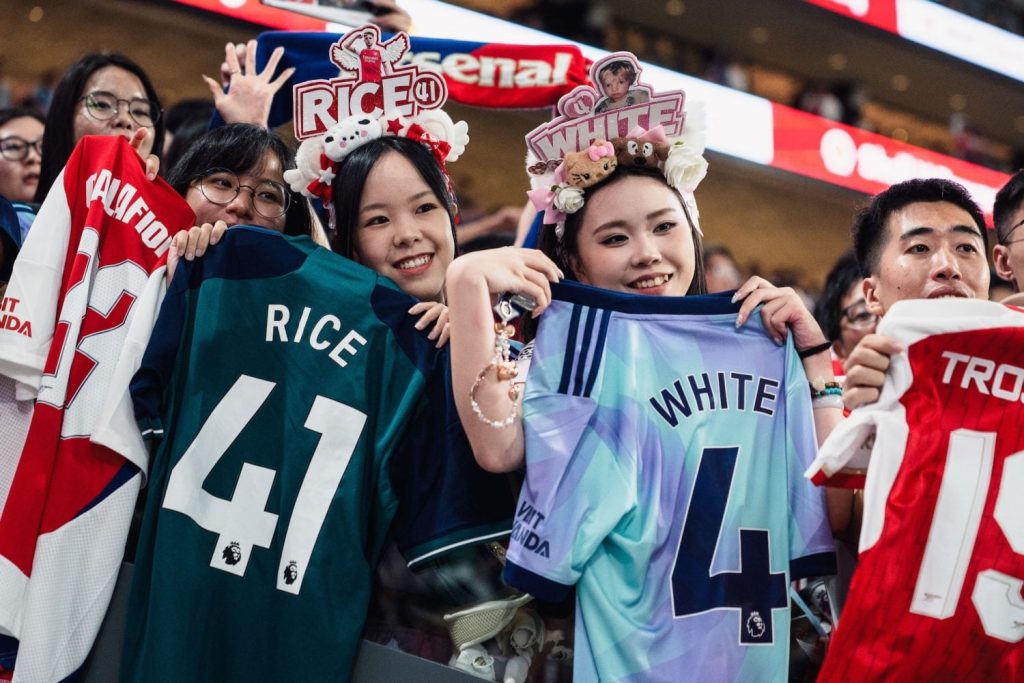
A football festival featuring four Champions League winners is taking place in Hong Kong, a move that experts believe will further establish the city as a global sports hub. The festival, featuring three high-profile matches, comes on the heels of the FIFA World Cup, drawing attention from football enthusiasts around the world. The festival’s marquee events include two games between Manchester City and Inter Milan, followed by a match where Chelsea face Juventus. Additionally, a separate exhibition game between German champions Bayern Munich and English Premier League side Aston Villa is part of the Audi Football Summit.
The inaugural edition of the city’s football festival last year set a high bar, with sold-out matches held at the Kai Tak Stadium featuring Liverpool versus AC Milan and the North London derby between Arsenal and Tottenham Hotspur – significantly, the first such match hosted outside the United Kingdom. With the return of this festival, Hong Kong aims to reclaim its reputation for hosting major international football events. Beyond the excitement on the pitch, the six European clubs involved explored significant commercial opportunities in the city. Manchester City and Chelsea hosted training sessions at the 50,000-capacity Kai Tak Stadium, allowing fans to witness their favorite players up close. Additionally, FC Bayern are running an official pop-up store at the Kai Tak shopping mall, where fans can purchase jerseys, jackets, and memorabilia until the end of August.
Ahead of the festival, football fans were in eager anticipation. “I’m super excited since Chelsea have a new manager,” said Riku Kato, an 18-year-old Chelsea supporter who travelled from Mallorca. He expressed a keen interest in seeing how new manager Xabi Alonso would shape the team’s strategy. Neither Manchester City nor FC Bayern Munich responded to requests for comment, while Chelsea declined to comment due to their contractual media tour obligations. Experts point out that Hong Kong has long been a vital sports hub in Asia, and the recent opening of the Kai Tak Stadium has only strengthened the city’s capability to host major international sporting events. Moreover, Hong Kong’s proximity to the key market of mainland China positions it strongly to attract teams looking to expand their fanbase. “Hong Kong has been a hub for international football for many years,” remarked Ron Cheng, a teaching assistant at the University of Hong Kong who specializes in sports history. He cited a memorable 2003 match where Real Madrid’s star-studded “Galácticos” lineup, which captivated a crowd of 40,000 at Hong Kong Stadium.
Each year, the city also hosts the annual Lunar New Year Cup, a tournament that usually coincides with Chinese New Year. Notably, a 2005 match saw Brazil triumph 7-1 over Hong Kong, with goals from Robinho, Ronaldinho, and a signature freekick from Roberto Carlos, highlighting Hong Kong’s rich history of hosting football’s elite. Simone Bianco, from Hong Kong Polytechnic University’s School of Hotel and Tourism Management, echoed Cheng’s sentiments. “Hong Kong’s ability to attract premier teams is growing,” he noted, emphasising that the city’s existing infrastructure and the promotion of mega events by the government will significantly benefit local football fans moving forward. The term “mega events” refers to high-profile occasions that the government believes will attract business opportunities and tourism to Hong Kong. According to a press release, 93 mega events were staged in the city during the first half of 2025 alone, with the government expenditures amounting to around HK$3.3 billion.
“Kai Tak provides excellent infrastructure that can appeal to various teams, both foreign and local,” Cheng added. He also highlighted Hong Kong’s proximity to mainland China, noting that it allows Chinese football fans to easily travel to the city for matches and future major events. However, the journey to establishing Hong Kong as a premier destination for football has not been without its challenges. Recent years have seen mixed reactions to the city’s ability to host high-profile fixtures. In February 2024, a significant controversy arose when fans expressed outrage over the absence of eight-time Ballon d’Or winner Lionel Messi during an Inter Miami game in Hong Kong. Following public backlash, event organizers were forced to issue a 50% ticket refund more than a month later, acknowledging fans’ “patience and understanding” throughout the ordeal.
Conversely, the arrival of Portuguese superstar Cristiano Ronaldo in the city proved to be a triumph. Playing two matches for Al Nassr in the Saudi Super Cup, Ronaldo drew immense crowds both inside the stadium and outside his hotel, reinforcing the city’s appeal as a host for international football events. As the Hong Kong Football Festival draws to a close, the Hong Kong government has yet to respond to requests for comment regarding the event. The festival has presented an opportunity not just for football fans, but also for the city itself to reinforce its status on the global sports stage, potentially paving the way for future events that could further enhance its reputation as a sports hub in Asia.