
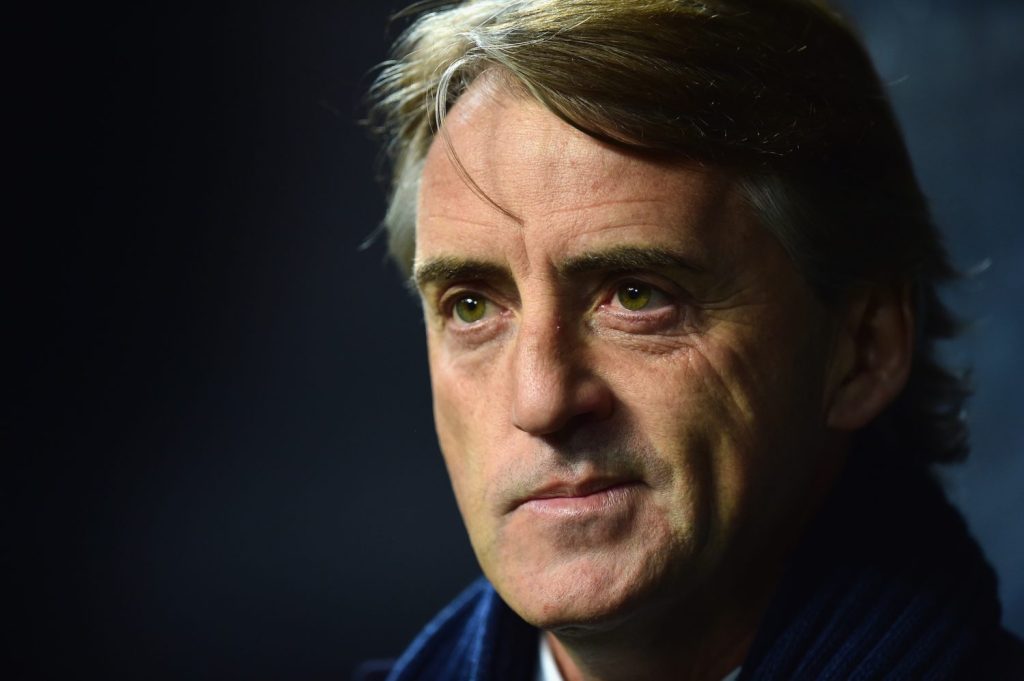
Everyone is entitled to their own judgement on the way Roberto Mancini’s story with the Italian national team ended, just under three years ago. The resignation itself, the timing, the procedures, even the content and geographical origin of the famous certified email sent to the FIGC became the subject of debate, criticism and division. It was a departure that left behind very different interpretations. But if Mancini’s work as Italy coach is judged through what happened on the pitch, rather than through the circumstances of his farewell, then the ending has to be placed to one side. Those who criticised Mancini for leaving the Azzurri bench will inevitably struggle to support his return. Everyone else, however, cannot forget what he achieved during those first three years in charge. Giovanni Malagò’s decision appears to come from the memory of that period.
Under Mancini, Italy won a European Championship, set the unbeaten record for a senior national team at 37 matches – a figure surpassed only recently by Spain – and introduced Berardi, Barella, Kean, Zaniolo, Mancini, Di Lorenzo, Tonali, Locatelli, Bastoni, Raspadori, Frattesi, Dimarco, Retegui and 44 other players to international football. Many arrived very young. Some were still teenagers. Behind those choices was an idea of what Italy could be. Not a collection of players, but a team. A side with an identity. The best footballers available – Verratti, Jorginho and Barella above all – had to be placed in conditions where their qualities could emerge. The result was an Italy side that was technical and ambitious, built around possession but never limited to possession, around verticality, the 4-3-3 and a high defensive line. A team with quality through midfield and on the wings, willing to trust young players from the beginning: Zaniolo, Kean, even the extreme example of Pafundi, before they had become established figures at club level.
Mancini’s magical run – or his fortune, depending on your point of view – ended almost immediately after the deserved European triumph at Wembley. Two missed penalties by Jorginho in decisive matches against Switzerland pushed an already less convincing Italy towards the World Cup play-offs for Qatar 2022. From there, Mancini struggled to move beyond his trusted group of players. In the defeat against North Macedonia, Insigne, Immobile, Barella and Florenzi looked exhausted. Italy missed the World Cup. The way it happened was chaotic and perhaps cruel, but it was not impossible to understand. The coach had made mistakes too. Above all, he had perhaps never fully managed to move on from the success of 2021. The collapse, followed by an uneven eighteen months – the 5-2 defeat in Germany in the Nations League, the 1-2 home defeat against England in the Euro 2024 qualifiers – gradually changed the way Mancini’s time with Italy was remembered. Then came the public disputes, the difficult ending of the relationship and the immediate move to become Saudi Arabia’s coach. The wound became deeper.
Yet Malagò seems to have returned to the beginning. To the first Mancini cycle. To the way he lifted the entire Azzurri set-up in a matter of weeks and matches. To the impact of a project built less on theory than on practice, less on philosophy than on football. Perhaps also influenced by the failure of Maldini’s more visionary and uncompromising approach, Malagò chose certainty. Something familiar. Something already proven. Not as a criticism, but as a description. Among the coaches who have led Italy since Marcello Lippi, Mancini was the most complete: the most intelligent, the most contemporary, and perhaps the luckiest. Not simply because he won, but because of the way he won. Not because he solved Italian football’s problem of producing talent – Mancini himself repeatedly criticised the system – but because he understood how to make the most of what was available. Only up to a point, of course. The second half of his tenure cannot be ignored. But what Italy produced during that first phase was genuinely impressive. Genuinely important. In this sense, Claudio Ranieri’s appointment as technical director – while waiting for the arrival of the “third figure” announced by Malagò – takes on a precise meaning. More than a demolisher, more than a rebuilder, at least in the eyes of the federation president, Italy needed someone capable of strengthening relationships, of restoring balance, of acting as a guarantor: a figure with personality, authority and credibility. In that sense, Ranieri is almost the perfect choice.
There is, of course, another possible reading. For some, Malagò’s move is an obvious sign of final surrender, proof that Italian football is condemned to spend eternity without deep reforms, forever trying to reinvent itself without ever truly questioning itself. That pessimistic view may even contain some truth. But it is also worth remembering that five years ago, exactly at this time, Italy were European champions. They played football admired across the world. They went unbeaten for 37 matches. All of this despite the absence of true first-rate stars, despite the structural problems of Italian football and its clubs, despite a twentieth-century approach to the business of sport. And yet Roberto Mancini was on the bench of that national team. Perhaps that is what Malagò wants back. A return to five years ago. He would like it. It would be enough.