
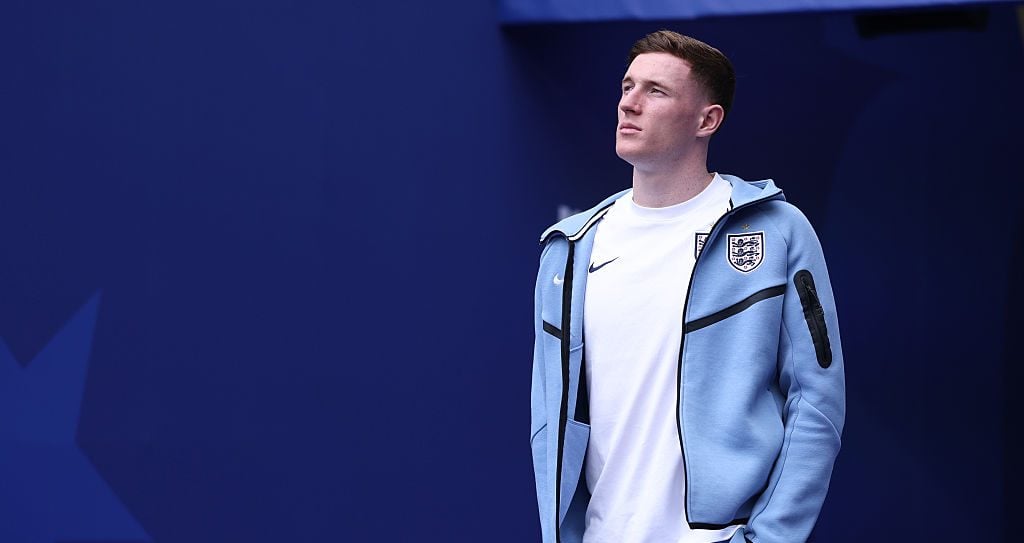
Take Elliot Anderson. One of the summer’s defining cases: a midfielder coming off a World Cup with England, then moving to Manchester City for €135 million. He is an excellent footballer. A complete midfielder, dependable and versatile, the kind of player coaches trust. He was one of the main figures in an England side that finished third in America. But he is not a generational talent. Not a player marked out from the rest. Not a phenomenon who arrives once every decade. And yet the fee says something else entirely. Only a few years ago, numbers like these were reserved for the very top names in the game. Dembélé. Bellingham. Even Cristiano Ronaldo never reached that level. Transfer records were broken for the player of the moment, the one who represented the next leap forward: Bale (€101 million in 2013), Neymar (€222 million in 2017), Mbappé (€180 million in 2018).
Now the market has moved elsewhere. Extraordinary fees are no longer limited to the absolute elite. They have become part of the landscape for players who sit just below that level. That is not a judgement on Anderson specifically. It is simply the direction taken by the market, shaped by the usual forces of demand and supply. The scale of the change is clear even when looking back at the Lentini transfer, the episode recalled by the BBC as an early symbol of football’s changing relationship with money. Torino to Milan, 18.5 billion lire, at the beginning of Tangentopoli. Around €15 million in today’s terms, adjusted for purchasing power. The reaction at the time was extraordinary. The figures were considered offensive, almost indecent, and even the Vatican press described the deal as “an offence against the dignity of labour”. Today, almost nothing produces that kind of reaction anymore.
There may be disbelief. A raised eyebrow. A feeling that something has gone too far. But there is also a widespread acceptance that football’s economic reality has moved into another dimension. Perhaps the market is caught inside a bubble; certainly the question of financial sustainability will become increasingly central for clubs in the years ahead. For now, though, it is still the market that decides the value of a player. The Premier League, naturally, sits at the centre of this new scale. Rogers, Tonali, Anderson, Gordon, Mateus Fernandes, Antony Santos: around €630 million spent on the six most expensive deals alone. To understand the size of the figure, it is roughly half of what the entire Serie A invested across the whole of the 2025 summer transfer window. These are numbers that would once have seemed extraordinary even in England. Now, a club-record sale has become almost an ordinary occurrence. The moral debate has largely disappeared. The more relevant question is whether this level of spending is actually rational for those making the payments.
Because football does not offer certainty. Not even when the sums become enormous. Manchester United’s €95 million investment in Antony in 2023 remains a straightforward example of the risks involved. But this is exactly where the logic of the market lies. As long as someone is willing to pay these amounts, someone else will continue to demand them. The situation becomes even more pronounced when the transfer takes place within the Premier League itself. Domestic deals carry a different kind of security: the player is already known, the competition is familiar, and the adaptation period is reduced. Premier League clubs also operate from a position of unusual strength. Television revenues and commercial income remain incomparable with those of any other league, allowing teams to sell from a position of choice rather than necessity. They do not have to accept the first serious offer. They can wait. They can set the terms. Their negotiating power grows. The result is that transfers rarely happen at a true point of balance between buyer and seller. The final price sits well above that theoretical meeting point, creating significant profit for the club selling and an acceptable cost for the club buying. Both understand the environment they are operating in. Both know that, in another window, their positions may be reversed. And so the numbers continue to rise. Since 2016, total spending in a Premier League summer transfer window has increased from €1.36 billion to €3.75 billion, a rise of 175 per cent. The curve has not stopped moving. Transfers like Anderson’s are simply the latest expression of a market that has changed its own definition of normal.