
For almost thirty years, MLS has been caught between two realities. It is a young, financially stable league, capable of attracting investment and adding new teams with remarkable consistency. Yet it is still waiting for the moment when interest becomes something deeper: a weekly habit, a part of everyday sporting life. The 2026 World Cup in the United States may be the clearest test yet of that transition. The two stories of MLS — growth as a business and growth as a football culture — will unfold at the same time. Expectations were always going to be high. The 1994 World Cup helped create the conditions for MLS itself, which has since developed into one of the world’s strongest domestic leagues outside Europe. The 2026 tournament could mark another turning point. When the league returned after a seven-week break, all 30 clubs joined a campaign with a simple message: Thanks World, We’ll Take It From Here. Twenty-two teams also chose to give new supporters their first ticket, hoping that a single match could become the beginning of a routine.
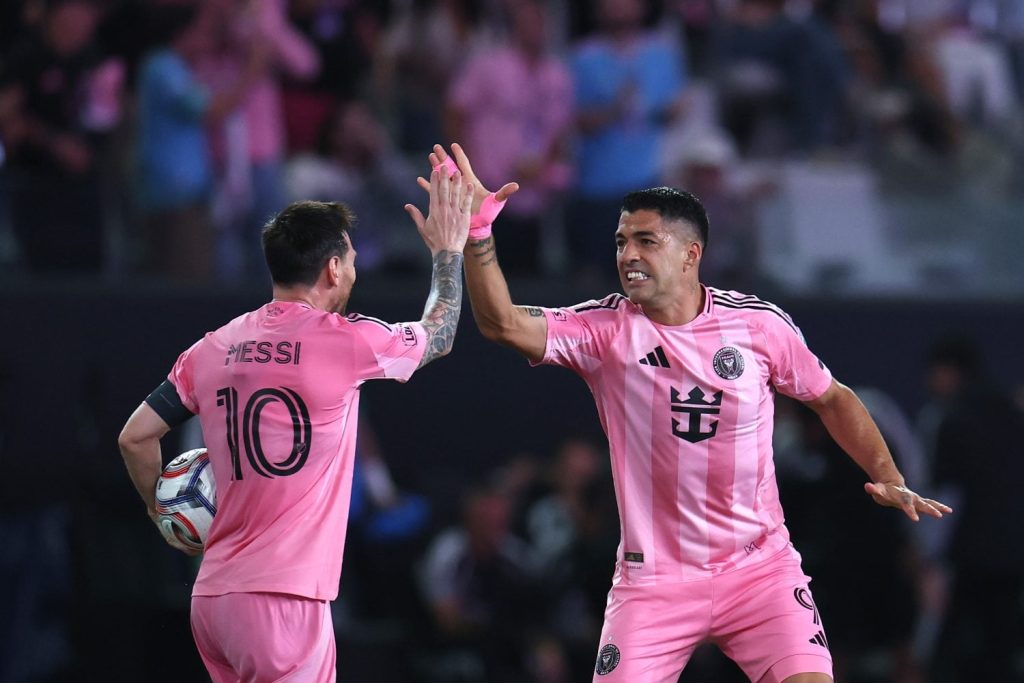
No player sits closer to the centre of that ambition than Lionel Messi. Approaching forty, and leading an Argentina side that is not quite the force it was four years ago, he still reached another World Cup final. Now he returns to Inter Miami, the club that has done more than any other to reshape the global image of MLS. When he arrived in Florida, the expectation was that he would simply enjoy the final chapter of an extraordinary career. Instead, he has continued competing at the highest level, won in the United States, extended his contract until 2028 and turned every appearance into a worldwide event. The league has benefited enormously. Franchise valuations tell the story: in a decade, the average value of an MLS team has climbed from 185 million to 731 million dollars. Sporting Kansas City, one of the smaller markets in American sport, was recently sold at a valuation of around 700 million dollars. Inter Miami, now valued at 1.35 billion, has become one of the most attractive football brands in the world, ahead of several NHL franchises and approaching the value of some Major League Baseball teams. The rise reflects a wider shift in sport: professional teams have become increasingly desirable financial assets. NFL and NBA franchises have become almost impossible acquisitions for many investors, directing new money towards markets such as football.
That growth, however, has brought its own questions. Speaking to Forbes, Alexander Jarvis, founder of Blackbridge Sports, argued that valuations have moved ahead of the underlying business: “Those who made real money in this sector entered ten or twenty years ago. Today, many American investors are simply priced out.” The gap between valuation and revenue is becoming harder to ignore. MLS franchises are being valued at multiples that sit above those of major European clubs such as Manchester United and Real Madrid. The bet is that the league will continue expanding. The risk is what happens if that growth slows. For much of its history, MLS was viewed as the place where famous careers came to wind down. That perception has changed. Son Heung-min at Los Angeles FC, Antoine Griezmann at Orlando City and Robert Lewandowski at Chicago Fire all point towards a league that can still attract elite players. A move to a European-style calendar from 2027 — running from July to May — should make that process easier, aligning MLS more closely with the global transfer market. The league has also grown in physical terms. Twelve new franchises have joined in the last decade, while nine football-specific stadiums have opened since 2018. Inter Miami’s Nu Stadium is the latest addition. New York City FC will soon leave Yankee Stadium for a purpose-built home in Queens.
Those stadiums represent an advantage over many European clubs, where ageing grounds and complicated ownership structures often slow renovation. Premium seating, hospitality spaces and modern training facilities are now central parts of a franchise’s business model. The lack of relegation remains another major attraction. A club’s value cannot collapse after one bad season, as can happen in Europe. But the financial story does not tell everything. Average attendance has fallen to around 22,000 spectators after the record set in 2024 during Messi’s first full season in the United States. Even Atlanta United, traditionally the league’s strongest draw, does not consistently fill Mercedes-Benz Stadium. Television remains another unresolved area. The ten-year Apple agreement signed in 2022, worth around 2.5 billion dollars, was meant to transform the way MLS reached its audience. Instead, the additional subscription required from viewers slowed adoption. Making all matches available through the standard Apple TV subscription has increased viewership, but the next rights cycle will reveal how much that audience is truly worth. The renewal expected in 2029 could become one of the defining moments in MLS’s commercial development.
There are signs of caution elsewhere too. The Vancouver Whitecaps have been on the market since 2024 without a completed sale. The same applies to the San Jose Earthquakes, put up for sale by John Fisher. If those deals continue to stall, it may suggest that buyers are beginning to question whether current valuations can continue rising. MLS has faced this question before. Every four years, the World Cup brings a surge of attention to football in the United States. Every four years, the same question returns: is this finally the breakthrough moment? This time, the circumstances are different. Messi has changed the league’s international profile. Investment in infrastructure is no longer theoretical. The connection between MLS and the global football market has never been stronger. The next step will be harder to measure. It will not come from the 67,000 spectators who fill a stadium during a World Cup match. It will come from the 22,000 who return on an ordinary weekend months later. That is the number MLS still needs to move.