
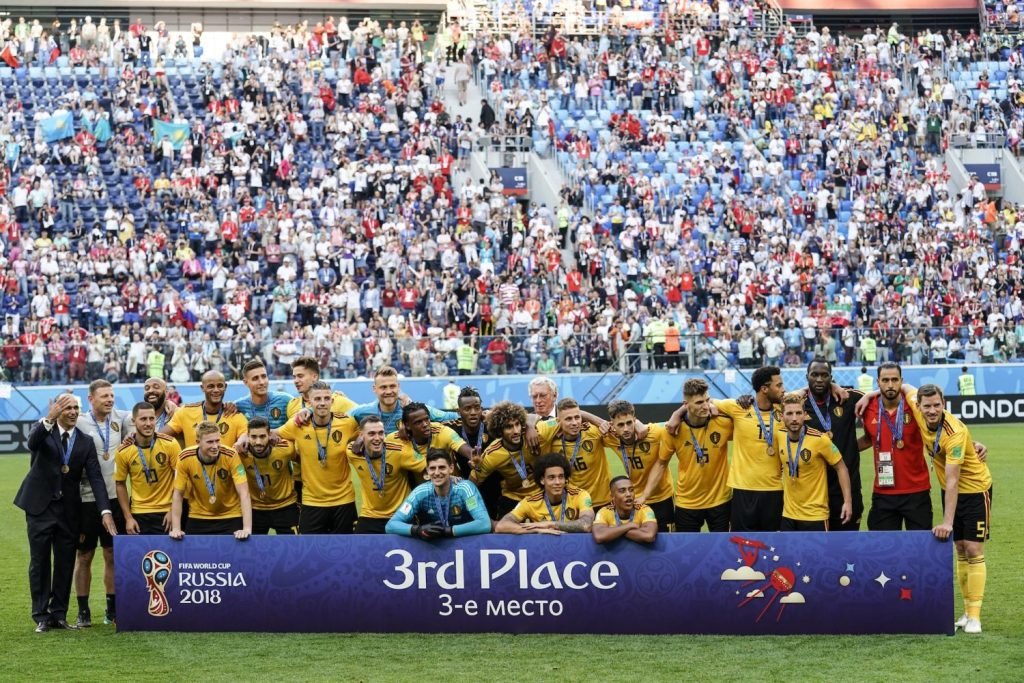
The third-place play-off at the World Cup, the so-called Bronze Final in FIFA’s terminology, is the game that comes after the disappointment, the one nobody wants to be playing. Yet it remains part of the tournament for reasons far removed from the pitch. Every additional match in the final stages of the competition brings revenue, for FIFA and for the host city, through ticket sales and everything that surrounds a major international fixture. The play-off also fills the space between the semi-finals and the final, giving broadcasters another event of global appeal and another chance to sell advertising. The result counts towards the FIFA Ranking too, carrying more weight than any friendly. Alongside the bronze medal itself, a team can improve its position, with possible consequences for Nations League standings and the draws for the next World Cup qualifiers. The third-place finish belongs to an old tradition in international sport, one shared with the Olympic Games, which came before the World Cup and still reserve a place for bronze. For one of the two beaten semi-finalists, it remains a final chance to leave with something.
Still, the match has always divided opinion. Before facing Brazil in the 2014 third-place play-off, Dutch manager Louis van Gaal was clear in his criticism: “I think this game should never be played, I have been saying that for ten years. But the worst thing is that you risk losing twice in a row and, after a tournament in which you have played wonderfully well, you go home as a loser. There is only one prize that matters, and that is becoming world champions.” Perhaps it carried a little more meaning for Morocco in 2022, given the scale of their achievement, but even then Walid Regragui admitted how difficult it was to prepare for the match against Croatia. A fixture without the pull of what had come before: “This game is frustrating to play. Managing disappointment is always complicated. It is difficult to give the match extra meaning, to make it beautiful. It is Sunday’s final (for first place) that we wanted to play.”
Gareth Southgate, usually among the more measured voices in football, felt much the same after England’s semi-final defeat at the 2018 World Cup, when his side went on to face Belgium for the bronze medal. “If we are honest, it is a game that no team wants to play,” he said. The reaction around the squad was telling. After a month of physical and emotional strain, the players seemed ready only to pack their bags and go home. In other sports, and especially at the Olympics, a bronze medal can represent a remarkable achievement. In elite football, the horizon is different. Everything leads towards one match, one trophy, one winner. The World Cup remains the only major tournament that still keeps this fixture. The others have moved on. That probably says enough.