
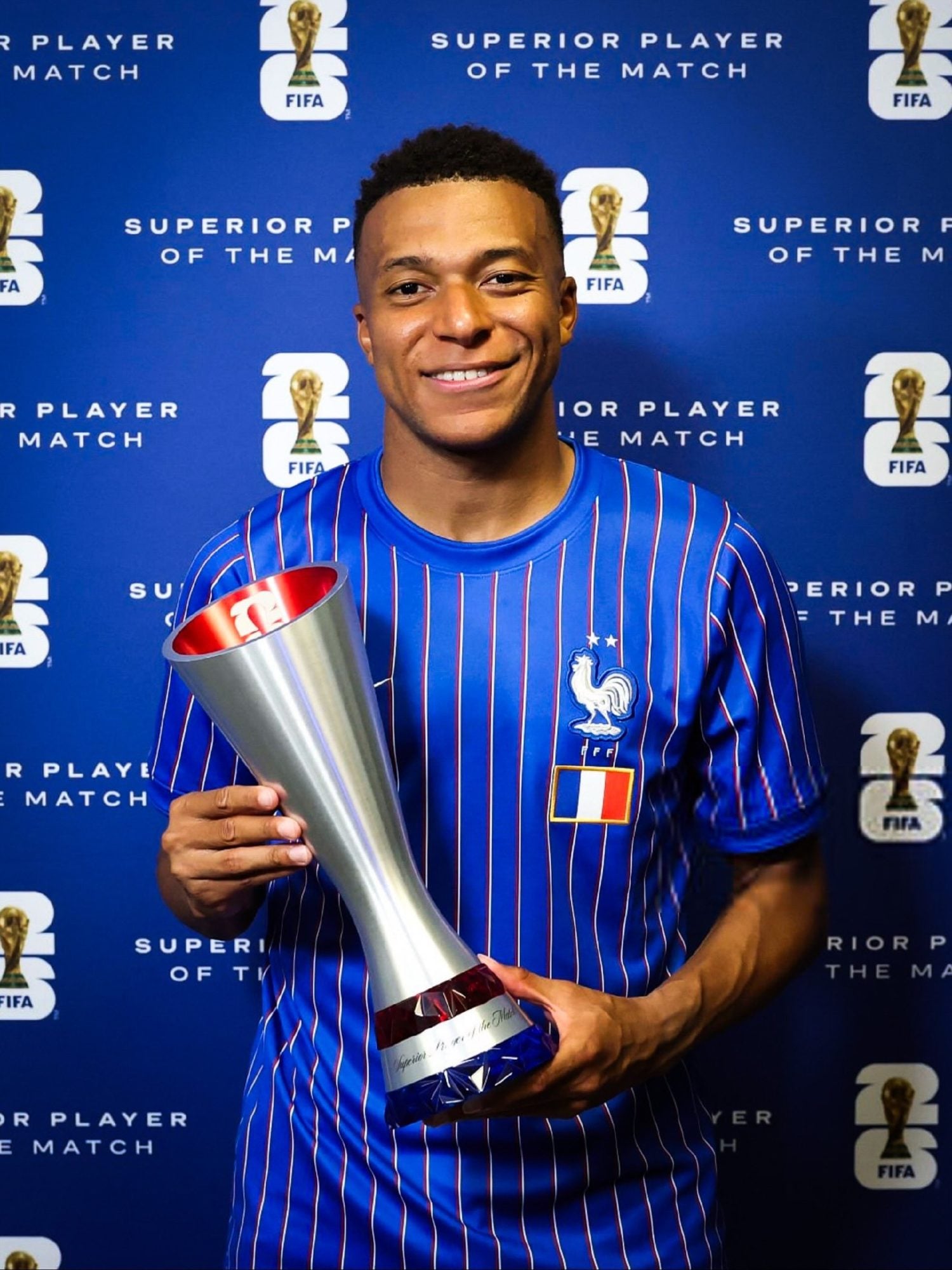
Images of the 2026 World Cup’s Man of the Match award are everywhere by the end of every game. They are rarely especially compelling. Quite often the player holding the trophy does not even look particularly happy to have it. The winner is chosen through a fan vote, which means the award does not always end up with the best player on the pitch. Sometimes it goes to the biggest name instead. Then there is the trophy itself. Michelob ULTRA, one of the best-selling beers in the United States, sponsors the award. There is nothing unusual about that. What is unusual is that the brand’s logo keeps disappearing from the photographs.
That is despite Michelob ULTRA reportedly paying $110 million, according to El Mundo, to have its branding on the trophy presented to the Man of the Match after every World Cup fixture. Yet it often is not there. Across the first 73 matches in Canada, Mexico and the United States, almost a third of the trophies handed over were blank, with no logo at all. The explanation is simple. The player receiving the award was either underage or Muslim, making a photograph alongside an alcohol brand inappropriate or unwanted. Others simply preferred not to pose beside a beer logo. FIFA says the branding is removed in order to “respect the religious beliefs of the players”. In effect, anyone named Man of the Match can choose between two versions of the same trophy: one with the sponsor’s logo, one without it.
The issue is not new. It surfaced at the 2018 World Cup in Russia, when Budweiser sponsored the award, and again at last year’s Club World Cup. Estêvão Willian, now a Chelsea forward, received the logo-free version because the legal drinking age in the United States is 21. Once again, the sponsor was a beer company. Others have made the same decision for reasons of their own. Kylian Mbappé and Virgil van Dijk are among them. Mbappé, in particular, has always been highly selective about the brands he associates with. Betting companies have never made the cut. Neither have alcohol brands.