
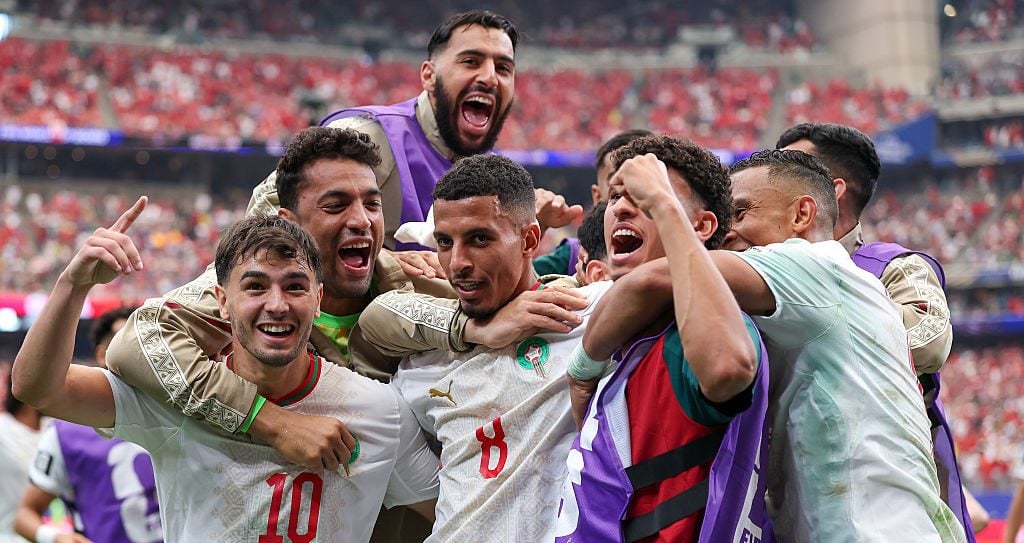
There are Ounahi’s goals, Bono’s saves, Brahim Díaz’s touches. And then there is everything else behind this record-breaking Morocco. The football revolution of the diaspora, coaches and scouts of the highest level. More important still, perhaps, the place where this change found the right conditions to grow: a sports complex “with nothing to envy even Clairefontaine”, as Spanish newspaper AS wrote, placing the much-admired Parisian academy alongside the Rabat facility named after King Mohammed VI – the same place Brahim dedicated Morocco’s victory over Canada to “for the support it gives us”. A tribute, certainly. But not only that. Because it is true that, in recent years, Morocco’s monarch has chosen to push the national team towards a different dimension. Investing heavily, and investing well.
The complex itself, built in 2019, came from an estimated €55 million investment. A figure that reflects the scale of the project: 35 hectares, 11 natural, artificial and hybrid grass pitches, a sports medicine centre, a hospital, hotels and luxury residences for the 27 Moroccan national teams involved – men’s, women’s and youth sides – as well as an auditorium, an Olympic swimming pool and the administrative offices of the Rabat federation. A football citadel, built with the ambition and attention to detail of a leading nation in the FIFA rankings, and the foundation for the rise that Hakimi and his teammates would soon set in motion. Morocco had returned to the World Cup in 2018 after two decades away. Russia was little more than a passing appearance – one point and last place in the group – and for that reason, four years later in Qatar, few were expecting much more from the Atlas Lions.
In the meantime, however, the football oasis had taken shape. And, for an African nation, in a way without precedent, the sporting ambition quickly became a matter of method, structure, planning. The historic fourth-place finish that shook the world was a natural stage in the process, one that would later lead to the Under-20 World Cup title in 2025 and the senior national team’s return among the world’s top eight – even in the most difficult scenario – at the current World Cup edition. Three clues are enough to see the shape of what is happening. An ascent built carefully, in every detail.
The Moroccan model has become a reference for the way it has brought its football diaspora back into the fold (for those who want to go deeper, read this article), alongside a distinctly European approach to the game, beginning with the development of its own coaching staff – including the national team coaches, from Regragui to Ouahbi. But without infrastructure at the highest level, none of this would have been possible in the same way. And speaking of Clairefontaine: tomorrow at 10pm comes the great challenge against France. A match that would have seemed impossible just four years ago. Today, who knows. At academy level, the gap is almost gone.