
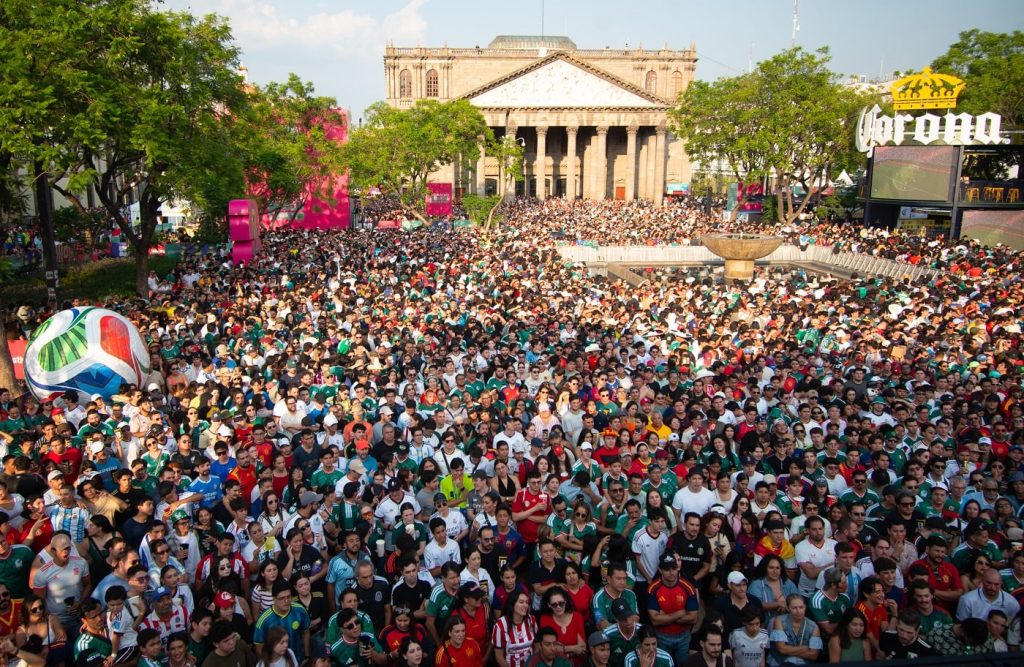
Tension and protest hung over the World Cup before a ball was even kicked in Mexico City. Teachers and retired judges had been on the streets for weeks, calling for higher pay and the repeal of a 2007 pension reform that, in their view, had left the system worse than before. Ticket prices went up, traffic got worse, and the feeling around the tournament never quite settled. For a while it looked as if almost nobody wanted it there. By the end of the group stage the mood had changed. Aguirre’s team had won all three matches and moved into the Round of 32, and the tournament itself had started to look like something else as well. Something that might actually pay for itself. Economists are already talking about several billion dollars flowing back into public accounts.
El País has been tracking the numbers. The effect of Mexico’s run has spilled into the wider economy. Concanaco puts the first two weeks alone at more than 17.5 billion pesos, roughly one billion dollars, already moving through bars, hotels, restaurants, shops. It shows. In the capital’s tourist districts the restaurants barely empty out, even during the day. Some places have taken on extra staff, others just stay open longer and deal with it as it comes. The busiest moment so far came during the match with South Korea.
Before the tournament there were projections. Now they are starting to look conservative. Octavio de la Torre at Concanaco says most of the money is still in the three host cities — Mexico City, Guadalajara, Monterrey — but the spillover is real too. Zacatecas, Oaxaca, Hidalgo, Puebla. Places not meant to be central to this tournament suddenly are. Altogether, the estimate is around 65 billion pesos, something like 3.7 billion dollars, if the pace holds. Monterrey has taken on a different role entirely. There was a worry, before kick-off, that without Mexico playing there the stands would feel half empty, that the city would drift through it. Instead it went the other way. Every match became someone else’s home game for a night.
Japan, South Korea, Sweden, the Netherlands — all of them found noise in Monterrey. Stadiums full, public squares too, flags that weren’t expected but were suddenly everywhere. The Japan–Tunisia match was pushed as a milestone: the 1,000th in World Cup history. South Korea was different again. That connection was already there, built over years through companies, work, daily life across the city. It showed. Hotel occupancy hit 85 per cent in the opening week, with Monterrey hosting its first fixtures. Local chambers talk about two billion pesos of direct impact for Nuevo León, though nobody is really counting in a straight line anymore. Hotels, bars, restaurants all say the same thing — the strongest numbers they’ve ever seen. Visitors, yes, but also locals who stayed out longer than usual, as if the tournament had simply folded into the city rather than arrived in it.