
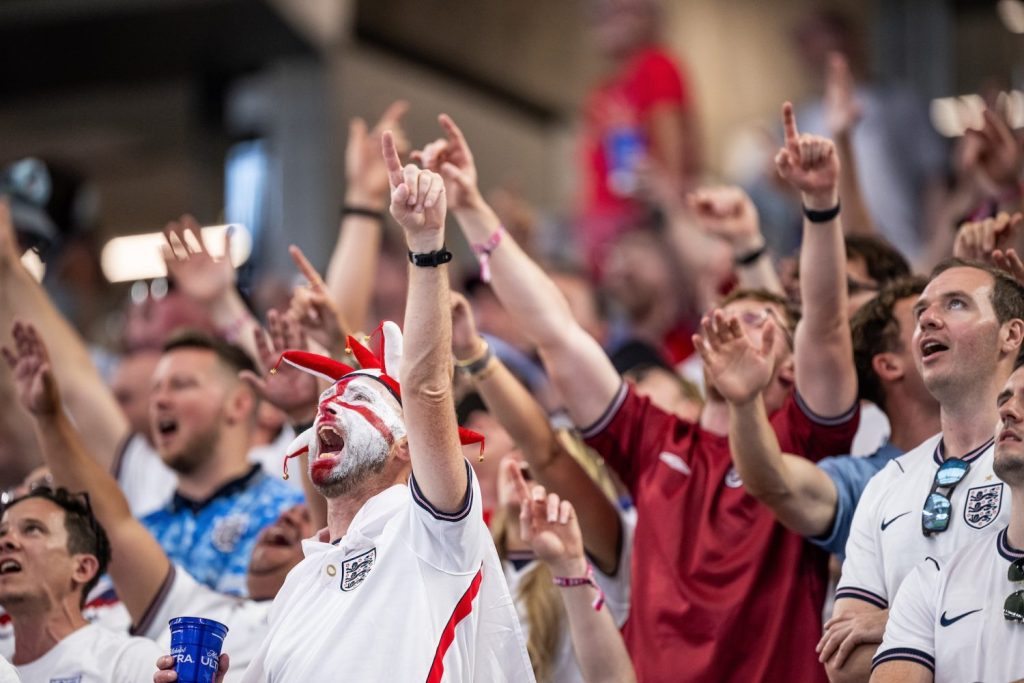
In the recent major summer tournaments, where the national team has played well but still ended up disappointed — two European Championship final defeats in 2021 and 2024, and a quarter-final exit at the 2022 World Cup — English supporters had settled on “Sweet Caroline” as an unofficial anthem. Or rather, the Neil Diamond track sung after matches, marking what had just unfolded on the pitch, thanking the players in white. On YouTube and across social media, countless clips of those moments remain, a song from 1969 finding a second life in that collective euphoria.
Things are not quite the same anymore. England and their supporters now have a new post-match soundtrack, starting in the stands and quickly picked up by the players on the pitch. It is “Wonderwall” by Oasis, which — no offence to Neil Diamond — carries a different weight, as a stadium chant and as a song itself. It followed England’s opening World Cup match, a 4–2 win over Croatia under Thomas Tuchel, the players led by captain Harry Kane lined up in front of the fans, a rare moment of open emotion. Jude Bellingham among them, close to tears:
Not by coincidence, Kane spoke about “Wonderwall” a few hours later, saying that singing it after the match would stay with him, one of the best moments he has experienced in an England shirt, the shared lyrics, the connection with the supporters, something special. Noel Gallagher, Oasis frontman and long-time football presence, also weighed in with a message to TalkSport, calling it a song that belongs to the people, not to him, and adding that almost anything is better than “Sweet Caroline”.
Beyond Gallagher’s tone, and the fact that Oasis — and therefore “Wonderwall” itself — have long been associated with Manchester City, the club supported by the Gallagher brothers, England and their fans have delivered one of the more striking images of this World Cup so far. It has happened before that Oasis tracks — notably “Don’t Look Back in Anger” and “Stop Crying Your Heart Out” — have been linked to England matches, though in more somber contexts: the former during the commemorations following the Manchester and London terror attacks in 2017, the latter tied to England’s exit from the 2002 World Cup. With “Wonderwall”, England will hope the association leads somewhere else entirely.