
It has always been one of those American customs Europeans struggle to understand. The question that comes up almost instinctively is simple: why is 10, 15 or 20 per cent always added to the bill. The answer is straightforward. In the United States, waiters and floor staff are paid less, precisely so they can make up the difference through tips. Leaving a “tip”, as it is called there, of 5 per cent or nothing at all is effectively a way of saying the service was very poor.
For those who travel to the States, tipping has become routine; less so for first-time visitors, especially when the trip is tied to a major event such as the World Cup, where tickets, accommodation and transport can turn into a significant expense. For fans from all over the world, Europeans in particular, tipping remains an irritation. American businesses have responded in their own way.
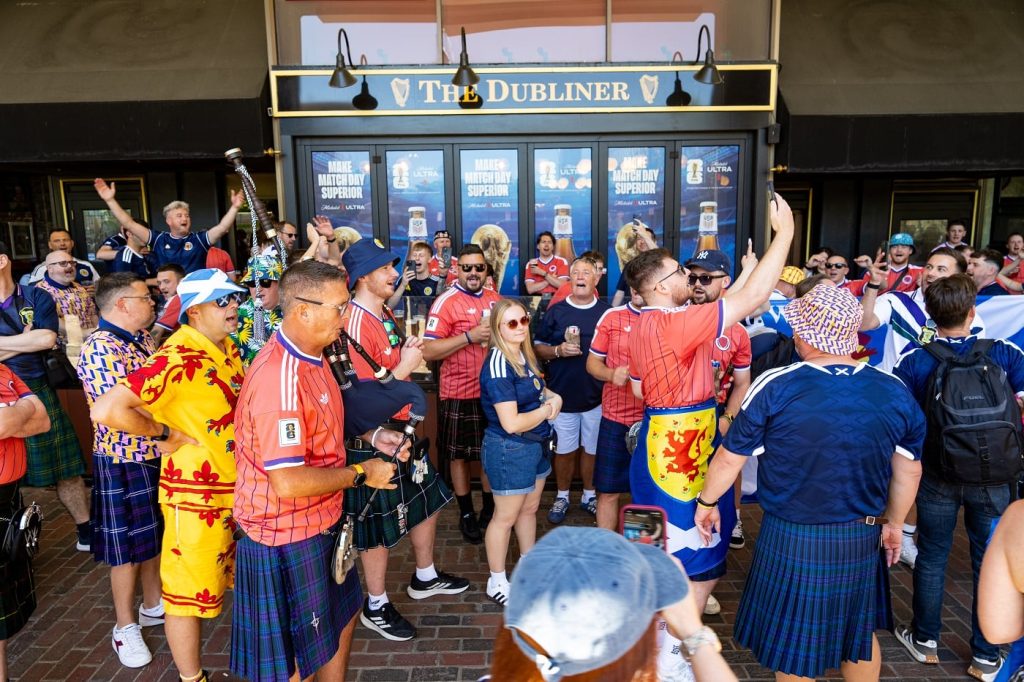
The New York Post carried out a detailed survey on the issue, with striking results. Around 1.2 million fans are expected in the metropolitan area for matches at MetLife Stadium in East Rutherford, New Jersey. Bars and restaurants are seeing unprecedented levels of footfall. Early fixtures, late ones too. Pubs and venues constantly full, rising consumption, record takings.
Yet according to many operators in the sector, tips left by foreign visitors are significantly below US standards. Some restaurateurs in host cities — Kansas City, Atlanta, Philadelphia among them — have introduced an automatic 20 per cent service charge. A measure designed to protect waiters and floor staff, who in the United States rely heavily on tips to supplement their wages, but also to avoid misunderstandings with tourists from countries where service is already included in the final price.
Reporters from the New York newspaper visited several venues to ask staff whether they were in fact earning less. “The problem is that many people don’t understand how tipping works in the United States,” employees at McCarthy’s, a pub on 46th Street, explained. “Many customers ask for clarification when they see the bill.”
Floor staff described tables accumulating bills close to 700 dollars in a single day without receiving an appropriate tip. Still, the atmosphere created by the tournament partly offsets the strain.
Other businesses are also experiencing particularly intense weeks. At 5 Napkin Burger on Ninth Avenue, staff point to a constant flow of tourists. At Hurley’s Saloon, co-owner Anne Calimano describes the World Cup as an event capable of reshaping a season traditionally quiet for the city’s hospitality sector. “Between the World Cup and the excitement around the Knicks, it’s almost impossible to move inside the place,” she says.
Business is booming, though the issue of tipping keeps resurfacing. “Obviously they don’t leave the same percentages we are used to,” Calimano notes. Some bartenders stress the need for understanding, given the cost of following a World Cup. But the debate around tipping has become one of the more curious points of cultural friction. A detail that seems minor, yet in New York it is enough to expose, at ground level, what it means to host a World Cup.