
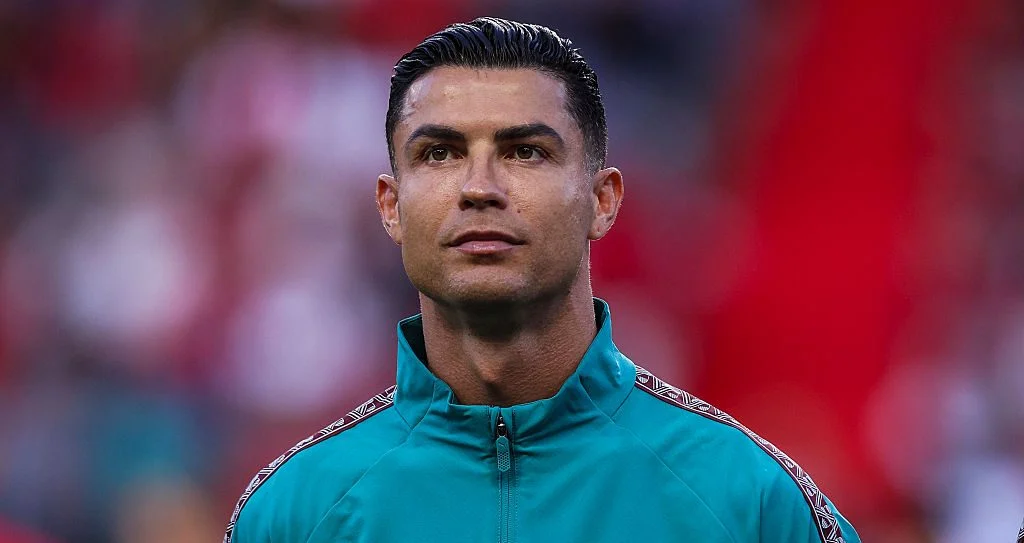
The last time it was played in the United States, Roger Milla was still there, almost mythic in stature. He was 42 years and 39 days old when he scored against Russia for Cameroon: to this day it remains the oldest goal in World Cup history. Records aside, if back then the presence of such a long-serving striker felt like an anomaly, today it is edging towards something closer to normality. Never before have so many players over 40 appeared together across editions of the tournament.
In 2026, the list feels unusually dense: Cristiano Ronaldo (41), Manuel Neuer (40), Luka Modrić (almost 41). But also Edin Džeko (40), Memo Ochoa (41), Fernando Muslera (40), and the less prominent Vozinha and Craig Gordon — 40 and 43 respectively, both goalkeepers for Cape Verde and Scotland, with Gordon set to be the oldest player in the tournament.
How does football end up here, with so much accumulated age at its centre? The expansion of the World Cup to 48 teams plays a part, of course. But not only that. Players between 38 and 40 have become increasingly routine: more than twenty of them, including the almost 39-year-old Leo Messi. Statistically, it is difficult to dismiss as coincidence. It feels more like the outcome of a game that has changed around them — in preparation, in sports science, in the management of effort, and in the way players now adapt their own rhythms to remain relevant at the top. The reference point, inevitably, remains CR7.
“Maintaining peak physical condition around forty depends on a combination of factors,” a Spanish sports doctor told El País. “Training is the first: not more, but better. Workload is controlled through technology, and sessions are adapted to the player’s condition. In recent years, strength work has become central — it is key to preserving muscle mass and reducing injury risk. Until not long ago, players rarely had consistent external support. Now nutritionists, analysts, private trainers: they have become decisive in extending careers.”
It is also true that longevity distributes itself unevenly across the pitch. Five of the eight players over 40 at this World Cup are goalkeepers — and it was a goalkeeper, Essam El-Hadary, who still holds the overall record, appearing for Saudi Arabia at the 2018 World Cup in Russia.
Beyond that, the remaining names tend to cluster in central attacking roles. Not by chance, Cristiano Ronaldo himself has long since moved from the wings into the penalty area, conserving energy and reshaping his game around it. The positions that suffer most are wide players and high-intensity midfielders. The fact that someone like Modrić can still operate at this level only sharpens the sense of exception.
In most cases, though, this is not ceremonial selection. These players are not there out of nostalgia. They are still there because, quite simply, there are no better options available.
That is perhaps the most revealing shift. Roger Milla in 1994 looked like a survivor of another era: the gait, the presence, the smile that had already become part of his mythology. Cameroon lost 6–1 that day, but the image stayed elsewhere.
Today, the over-40s blend into the rest. Nothing about them reads as symbolic. If anything, they look like the logical extension of a profession that has stretched its own boundaries. And maybe that is the point: they are no longer exceptions to time, but participants in its delay.