
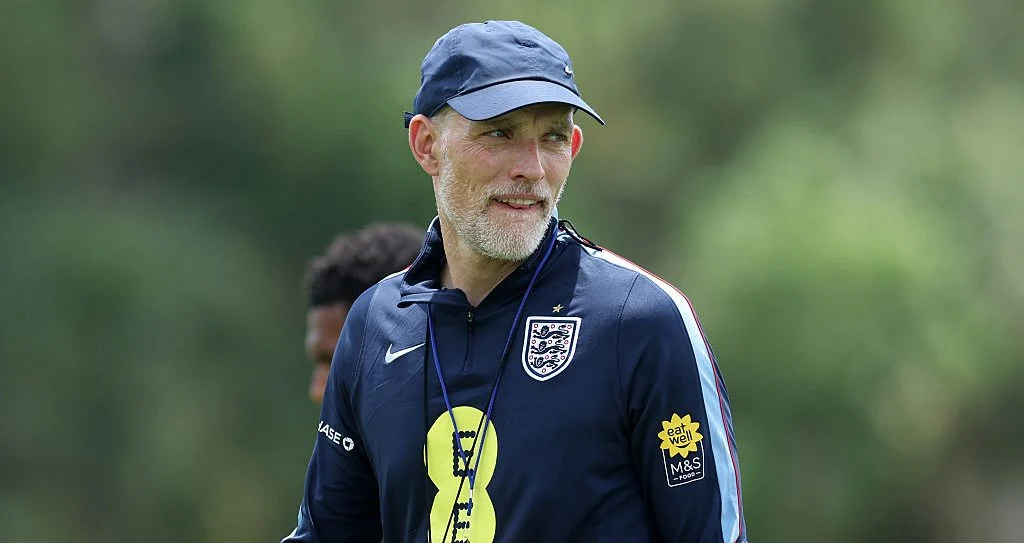
Thomas Tuchel, at the very least, has bought time. Or something close to it. A narrower focus on the squad, too, which not so long ago inside the England setup felt harder to isolate from everything else that came with the job.
He comes across as a stripped-down coach. Almost deliberately so. Ask Harry Maguire, left out without much ceremony. It marks a shift away from the more elastic figure Gareth Southgate represented, a kind of national custodian as much as a manager. England have moved on from that idea, or are trying to. A break that feels obvious in structure, less so in outcome. Sixty years of history sit behind it.
The two eras do not really overlap. Southgate is not just the coach who brought England back into circulation at the top level — two European Championship finals, a World Cup semi-final — but someone who never fully left the system that formed him. Since that penalty in 1996, he has remained inside the national team orbit in one form or another. Under-21s first, then the senior side, building something closer to continuity than reset.
The Athletic, in a recent piece, described it as “a vocation, something greater” than international management alone. And that sense of extended responsibility never quite stopped at the edge of the pitch. It spilled into everything around it.
Tuchel is not built that way. Nor is he trying to be. He has been careful to acknowledge the groundwork left behind — without it, as he has said, there would be no realistic talk of “putting a second star on the shirt”. But once the frame was in place, he stayed inside it. England, in his version, look more like a club side than a national project. Southgate would almost certainly reject that reading.
“I just wanted to stay close to the orbit of the Premier League,” he said recently, reflecting on the role. A way of keeping distance as much as involvement.
From the outset he has been clear: head coach, not manager. Less orchestration, more containment. “The best chances come from keeping attention on the simple act of playing football,” he said. “I can lean on the fact I’m not English, and I don’t speak about everything that happens in this country. It helps keep things focused.”
It is not just wording. It mirrors a shift already visible in English football more broadly. A decade ago, Premier League benches were still shaped by figures who carried the club beyond the pitch — Ferguson, Wenger, the last versions of managerial totality. Now the structure has shifted, with head coaches working alongside sporting directors. A model still settling in parts of English football, but already standard at elite level.
Within that framework, Tuchel’s appointment feels almost inevitable. Familiar, even. Players are used to it. The symbolism of England, meanwhile, has at times weighed more heavily than it has clarified anything.
Tuchel’s reading of Southgate’s teams is relatively simple. They did not fail for lack of organisation, but for moments in which caution became a reflex. A reluctance to step beyond it. At decisive points, they held back.
Bellingham and the rest are expected to move differently now. More direct, more assertive, even physically so when required. The World Cup in the United States will test how far that shift actually goes. Tuchel, as ever, has been thinking along those lines for some time.