
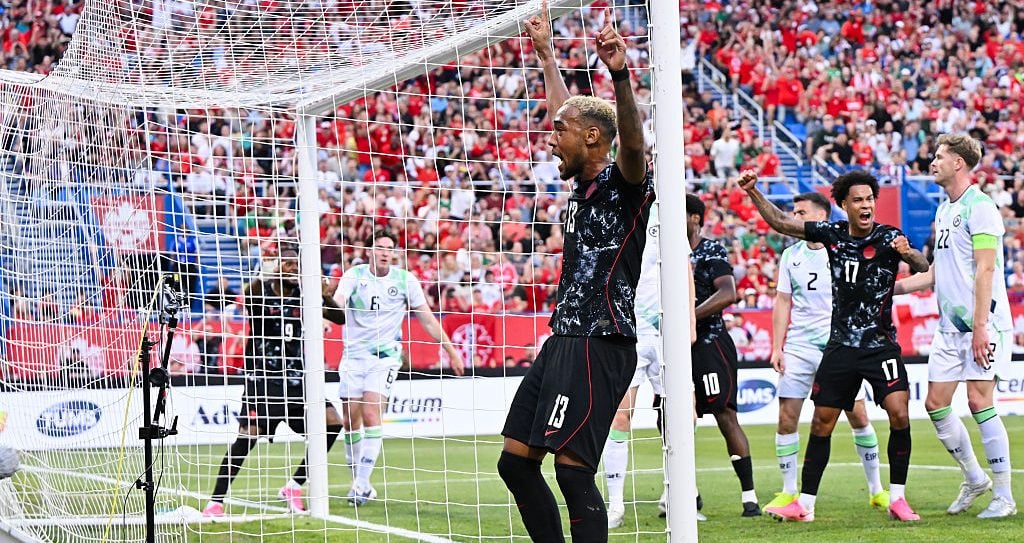
Canada’s qualification target is within reach: advancing beyond the group stage at a World Cup, something it has never achieved in its history across two appearances, the most recent four years ago in Qatar. Should Jonathan David and his teammates manage it, a significant part of the explanation would lie in the steady expansion of football culture across the country, the presence of MLS teams in Vancouver, Montreal and Toronto drawing increasingly established professionals, and the parallel export of domestic talent to Europe. Against the backdrop of Canada’s infrastructure, it would not be a marginal outcome. Despite the country’s vast landmass, there is, paradoxically, a notable shortage of playable pitches. The issue extends into the build-up to the tournament it will co-host with Mexico and the United States.
One figure is particularly indicative: among the 48 national teams participating in the tournament, only two have based their headquarters in Canada. One is, unsurprisingly, Canada itself, which will use the facilities of the Vancouver Whitecaps. The other is Panama, which will train at a sports complex located roughly an hour and a half by car from Toronto. The distribution of training bases is, in itself, a clear signal.
It may appear counterintuitive that a country as affluent and geographically vast as Canada should face structural limitations in sporting infrastructure, yet this remains the case. “There is no doubt: the main issue in our football is the lack of places to play it,” Johnny Misley, CEO of Ontario Soccer, told GOAL. “The sport is developing significantly, growth is underway, but to support the movement we need more infrastructure.”
The momentum around football in Canada is expected to intensify further with a World Cup played on home soil. At present, hockey and baseball still retain a stronger position in overall popularity. Even so, the balance is shifting. In Ontario, the country’s most populous province, accounting for 38 per cent of the national population, there are currently 309,000 registered football players, most of them youth players, compared with 206,000 in ice hockey. Any long-term reversal in hierarchy would appear, at this stage, to be a question of time, although it remains dependent on the availability of adequate facilities.
The shortage of infrastructure is not primarily located at the level of professional clubs, where stadiums are often new and of a high standard. The gap emerges further down the structure. The lower the division, the harder it becomes to find suitable pitches. The issue is particularly pronounced in regions exposed to extreme seasonal variation, where long, harsh winters limit outdoor sporting activity for several months each year. There is also a lack of coordinated funding programmes and development plans for emerging and peripheral communities outside the main urban centres. The outcome is a system in which the country’s football potential is constrained by limited access to basic playing space, in a territory otherwise defined by its scale.
A further difficulty lies in the shortage of coaches required to match the rapid increase in participation, driven by new registrations, expanding youth academies and a broader shift towards football as a priority sport. In this context, coaching staff, often drawn from an older generation, struggle to keep pace with the volume and energy of younger players entering the system. Once again, the constraint is structural: the absence of facilities also limits the development of dedicated technical centres capable of training a sufficient base of qualified coaches. The imbalance is most visible outside the professional tier, where grassroots football develops in parallel to a national team preparing for a World Cup with heightened expectations. Reinvesting tournament revenues, including in coordination with FIFA, would carry implications that extend beyond immediate sporting results, though that remains a point of discussion largely outside the public frame.