
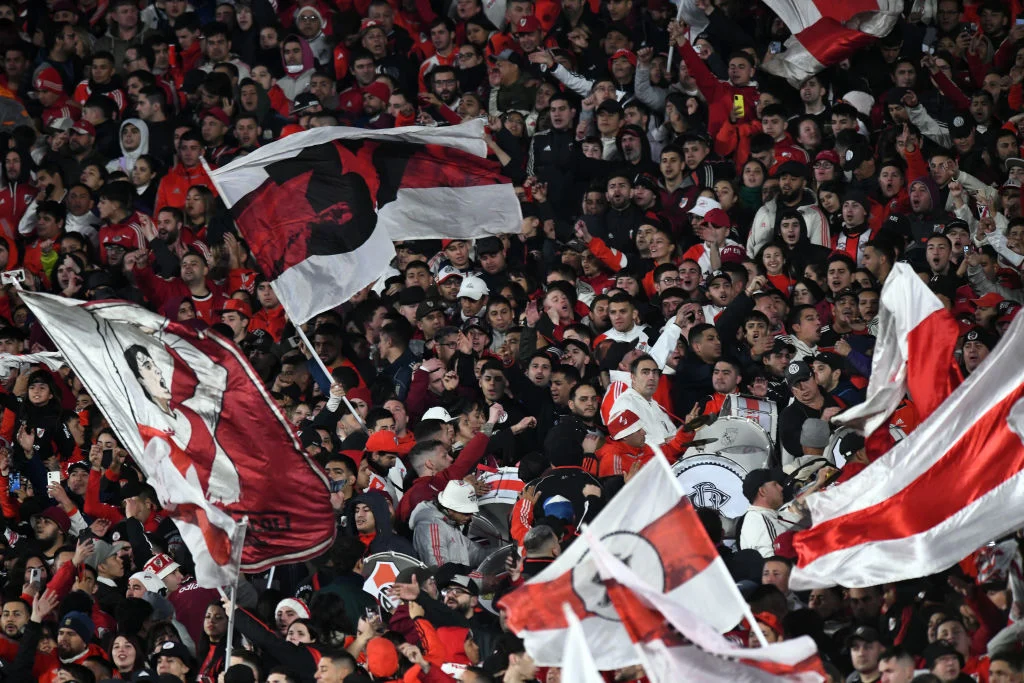
When River Plate suffered the blow of relegation in 2011, it could have marked the beginning of a decline. Instead, it functioned as a reset, initiating a phase that would bring the historic Buenos Aires club back to the centre of the global football map. Today, River also capitalises on this trajectory beyond the pitch.
One figure is particularly indicative. In 2013, the Millonarios counted around 68,000 members. By 2025, that figure had multiplied fivefold, exceeding 350,000. Behind this growth lies a combination of structured planning and occasional intuition, including River ID, a digital platform designed to extend membership and engagement mechanisms. There is also the sustained emotional pull of a club which, in its own terms, has seen its following expand even through periods of sporting difficulty, when results on the pitch were at their lowest point.
The club now speaks of around 15 million supporters worldwide, with roughly one tenth registered on River ID and actively involved in club initiatives, at a moment when River has re-established itself at the top level of South American football. Within this context, investment in infrastructure has followed as a logical step. The Estadio Monumental, already a venue with a capacity of 85,000, is regularly sold out. Demand consistently exceeds supply, and expansion has become part of the club’s planning.
A major redevelopment project is therefore underway, aimed at increasing capacity beyond 100,000 seats. This would place the Monumental among the largest stadiums in the world and, by some measures, the largest in South America.
As David Trezeguet, River ambassador, explained during a visit to Marca, “the passion here exceeds any religion or political ideology.” That intensity has helped establish a self-reinforcing cycle between club and supporters. The expanded stadium is expected to become an additional source of revenue, feeding back into the club structure, starting with its well-established youth system. It is from here that players such as Franco Mastantuono have emerged, now a Real Madrid prospect, observed from Europe as part of a wider development model.
River’s membership base now surpasses that of Real Madrid, despite sharing a comparable global profile and institutional reach. As Trezeguet notes, “In South America, players are born, they grow up, they play for the first team and then the most promising move to Europe. That is a reality that is unlikely to change. It is simply how it is. So we have to work. And in terms of youth development, we need to continue in this direction.”
At the same time, River’s scope for development in Europe is not considered closed. Through marketing structures, sponsorship networks and connections between academies across continents, internal voices point to a framework in which visibility and collaboration could increase mutual competitiveness. Argentina alone is no longer a sufficient frame of reference for the club. In scale and ambition, even Buenos Aires is no longer the limit, reflected in the dimensions of the redeveloped Monumental.