
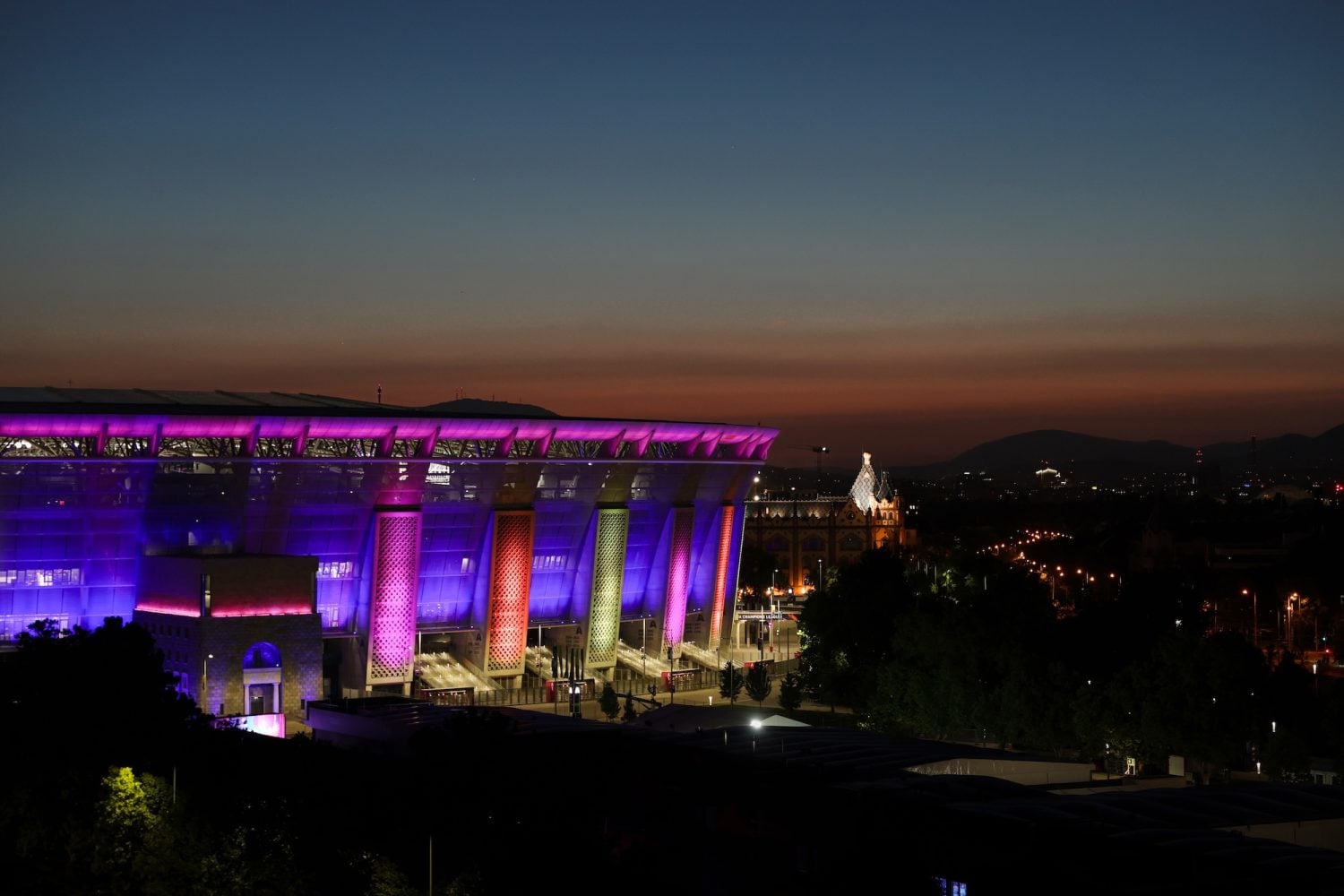
From the top of Gellért Hill, the Puskás Aréna looks like a distant spaceship of iron and steel. This stadium is one of the jewels of Hungarian urban planning and engineering, so much so that UEFA holds it up as a virtuous example and has decided to stage the finals of its two most important club competitions there: the Europa League final in 2023, a bitter Sevilla-Roma for the Giallorossi, defeated on penalties; and then the 2025/26 Champions League final, between Arsenal and PSG.
This very clash between Arsenal and PSG represents the pinnacle of a political and sporting project built over more than a decade through massive public investment and a precise strategy of national image-building. But the great architect of this operation, Viktor Orbán, will not be there to enjoy the fruits of his great commitment. Or, at least, he will not do so as he would have wished: as prime minister. In fact, barely three weeks have passed since the historic electoral defeat of the Fidesz leader, soundly beaten by Péter Magyar after 16 years in power. A political shift that has opened a new phase for Hungary and that makes the Budapest final a paradoxical symbol: the international triumph of a project born under Orbán, but celebrated without him.
UEFA’s choice to award Budapest the most prestigious final in European football is not accidental. The Puskás Aréna, which cost over 500 million euros in public funds, is the crowning achievement of a vast infrastructure renewal programme championed by the former Hungarian premier. In recent years the government has financed new stadiums and the refurbishment of sports facilities across the country, using football as a tool of international prestige and internal political consolidation. A project that, according to many observers, has been central to the construction of Orbán’s political identity. «After an electoral victory, this final would have represented the apotheosis of his international status», explained Professor Zoltan Balazs of Budapest’s Corvinus University to The Athletic. «Instead the spectacle has been completely taken away from him»
Orbán, a great football enthusiast and former semi-professional player, had turned the sport into one of the pillars of his own system of power. Behind Hungary’s footballing rise there is also the figure of Sándor Csányi, president of the Hungarian Federation and vice-president of UEFA, as well as one of the richest men in the country: together with Orbán, Csányi has led a vast plan of financing for football through a controversial tax scheme introduced in 2011, which allowed companies to allocate part of their taxes directly to sports clubs. According to various estimates, over two billion euros are said to have flowed into the project. The main beneficiaries have been the facilities: Ferencváros and Debrecen have built new stadiums, while Puskás Akadémia — the club that represents Orbán’s home village, Felcsút — has become the symbol of the project’s aesthetic and political ambition. The Puskás Aréna, inaugurated in 2019, nevertheless represents the symbolic heart of the entire operation: an ideal bridge between the golden age of 1950s Hungary and the present.
In recent years Budapest has hosted numerous other UEFA events: in addition to those of the Europa League and the Champions League, the Hungarian capital has also hosted the Women’s Champions League final in 2019, the European Super Cup in 2020 and four matches of the itinerant Euro 2021. For Orbán, Saturday’s match was supposed to represent the definitive consecration of his “sport nation project”, the project of identity-building through football. The electoral defeat, however, changed everything. Despite the billion-euro investments, moreover, Hungarian football has not achieved results proportionate to the expenses incurred. Over the past thirty years only two Hungarian clubs have managed to qualify for the main stage of the Champions League: Debrecen in 2009 and Ferencváros in 2020. The national team too, led by Dominik Szoboszlai, continues to live between expectations and disappointments: after the one for Euro 2024, Hungary has also missed qualification for the World Cup.
The heavy home defeat against Ireland, decisive for the elimination, was one of the most bitter nights experienced at the Puskás Aréna. Péter Magyar’s electoral victory has opened deep questions about the future of the system built by Orbán. The new government has promised to fight corruption and waste, also placing under scrutiny the public funding allocated to sport. According to many analysts, the gigantic stadium-building programme may have turned into a political boomerang. Budapest is therefore preparing to host the most important night in European football. But behind the lights of the Champions League remains the long shadow of Viktor Orbán: the man who built the stage without being able to attend, as a political protagonist, its most anticipated moment.