
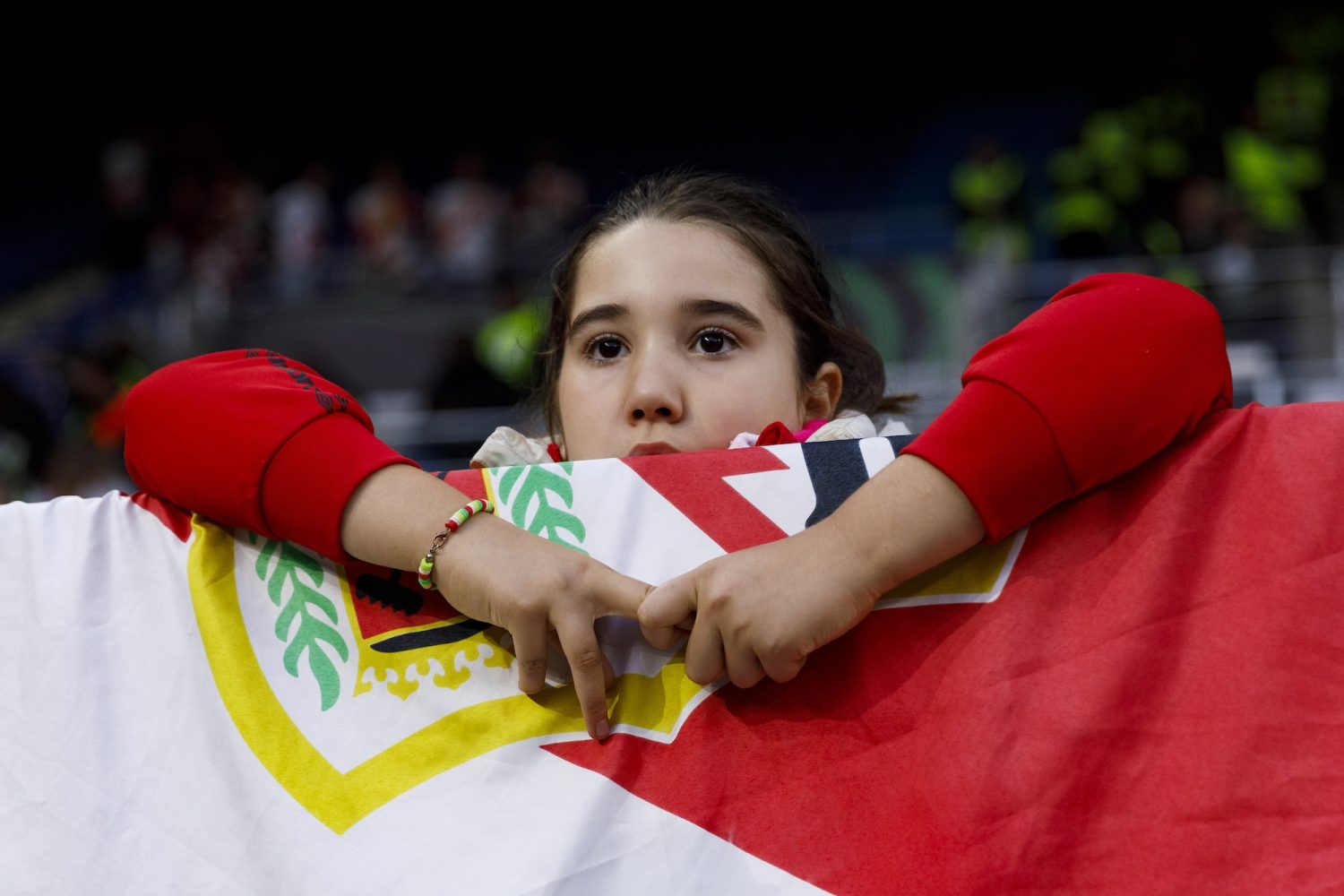
«We hope to win, of course, but if it shouldn’t happen we will celebrate all the same. Having got this far already counts for so much». In Vallecas, a working-class district of Madrid with almost 400 thousand inhabitants, Rayo represents much more than a common sentiment. It is identity, it is the soul of the barrio that breathes around its stadium. The murals recount the history of the club and its faith: a reason for living for many, pure emotion for everyone. «This final is a bit like a gift: it allows you to experience emotions never felt before now», recounts Sergio, 37, in the moments that precede his journey towards Leipzig: the match against Crystal Palace like the last page of a marvellous fairy tale, regardless of its happy ending.
A small reality living its biggest dream, beyond the borders of Spain: a single adventure experienced in Europe, in the 2000/2001 UEFA Cup closed at the quarter-finals, before the Conference League that has given Rayo one of the highest peaks of its history. A club that for years has fought between the Liga and relegation, in many cases a constant dance between life and death. Not by chance, Tamudo’s goal against Granada represents one of the greatest joys experienced in recent years. It was 2012 and the Tamudazo, as well as giving the Franja safety, erased the risk of a final word on the club’s existence, enveloped by uncertainty and economic difficulties. For a team that lives off these vibrations, being able to savour the journey that accompanies the ‘Rayito’ towards the final against Crystal Palace is already worth all the gold in the world: an emotion that has no price, like the passion of this team. Inexplicable.
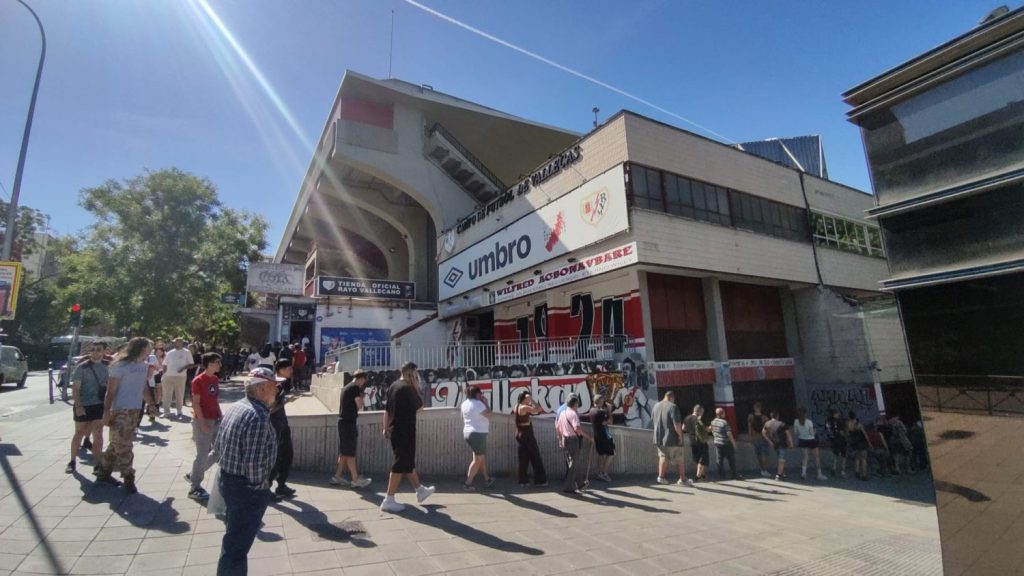
The days that precede the Conference League final in Vallecas acquire, as the hours pass, ever more shades of adrenaline. The metro stations of the district are decorated with banners and adornments that cheer Rayo on. The overall sight on the eve, once you arrive at Portazgo, leaves you speechless. An interminable queue surrounds the stadium of Vallecas: the club has decided to screen the Leipzig final right there, in the home of the Franja. And everyone wants to secure a ticket to be able to share the experience with their lifelong companions. Making it all even more “romantic” is the sale granted only in person: a ban on online purchase, as for the tickets to home matches, a theme that continues to fuel discussions among the fans.
«More than romantic, to me it seems like something from another era, we have been asking for the digitalisation of the club for a long time but every year it is denied to us», recounts Angel, 54, president of Rayo’s small shareholders and a season-ticket holder since he was 16. Identity and belonging mix in his bond with the club: «My parents moved to Vallecas for work. What you experience here with Rayo is not seen anywhere: it is the magic of this barrio. Our people have never been given anything in life. And now we are touching glory». Angel travels towards Leipzig so as not to miss the final. Just like Sergio, who, despite having moved to the North of Spain, continues to follow Rayo. Born into an Atlético Madrid family, he drew close to the club for its ideology: «There are two types of fans: the people of the neighbourhood and those who choose to embrace the cause for the club’s politics and for its ideas». From Bilbao to Barcelona, then Prague and by bus towards Leipzig for the final. And then, right after the match, the same route in reverse to return home. Anything, just to be there on a historic night: «We have travelled to the suburban pitches in the third division. We got excited over Tamudo’s goal and over having faced Real Madrid face to face. This match is like a gift: Rayo is a marvellous exception in sport, it reconciles me with this world. It is pure nostalgia for the football of the old days».
José Luis, 57, and his daughter Sara, 19, pose with the tickets beneath the mural of the Vallecas stadium: they have bought ten of them, for friends and relatives, all summoned for the final in the home of Rayo. «It is the most important match of our history», recounts the father – who cannot contain his emotion. «I have been a season-ticket holder for 15 years, we queued for three hours to get the tickets but yesterday there were even more people». Guadalupe, 40, knows this well; the day before – when the club announced the event at the stadium and opened the sale of tickets – she queued for as many as seven hours, from the morning until well into the afternoon: «I have been a fan all my life, ever since I was born. If I think about this match I get goosebumps: we are all proud of Rayo. We hope to win, but if it shouldn’t happen we will celebrate all the same because we managed to get this far».
Among the most moving snapshots of the eve there is that of Manuel, 58, who accompanies Angela, 56, arm in arm. She, visually impaired, lets herself be guided by the friendly hand and by her cane, on the way out of the ticket office. And once sure of her place at the stadium she explodes with joy: «On Wednesday Rayo will win and we will be here to celebrate it all together, in our neighbourhood». In the days of the eve, the coach Iñigo Pérez and the striker Sergio Camello were asked to trade the victory of the Conference League for a relegation to the Segunda División. «It would be like choosing between mum and dad», jokes José Luis. «The most important thing is to stay in the Liga because it is something that allows you to survive, it gives you food to eat. But it is still a European cup: choosing is impossible». Angel, instead, has clear ideas: «We are a ‘lift’ team, that goes up and down between the divisions. Losing the Liga has already happened to us, winning a cup would be historic».
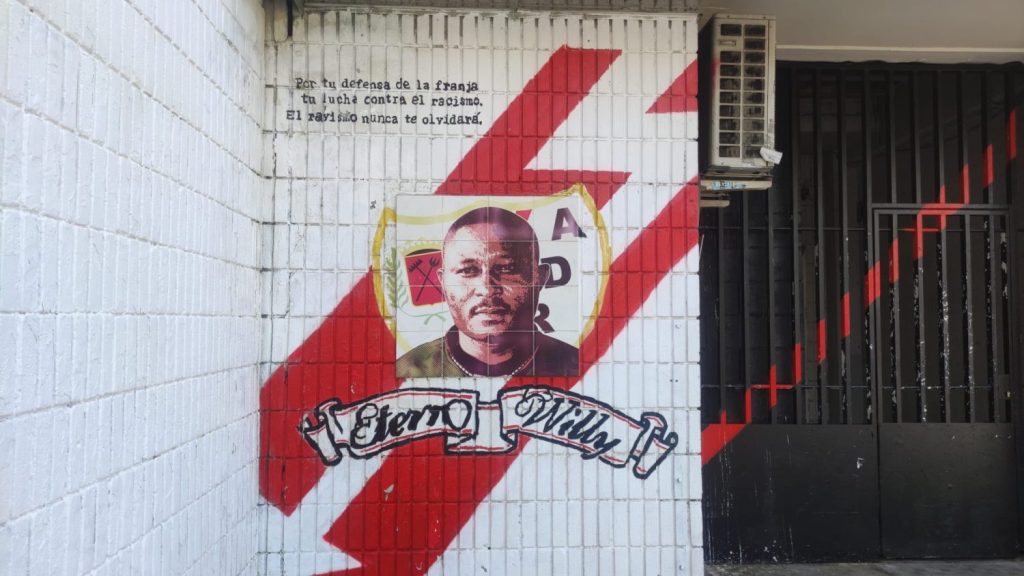
Rayo and Vallecas are united by a very deep bond, founded on progressive ideas and on well-defined values. A club that has always fought against racism – marvellous is the tribute dedicated to Wilfred Agbonavbare, former Nigerian goalkeeper who passed away in 2015, on the wall of the stadium – and that continues to represent a working-class microcosm in the chaos of modern football. Matters of ideals that go beyond football: in the hours of queuing that marked the life of the stadium on the eve, what caught the eye were the shirts of the Bukaneros, Rayo’s organised support. But also those of Ska-P, the band born in Vallecas and which shares its ideals with the club: the track “Como un Rayo” of 1994 is still today one of the anthems of the Franja most loved by the fans.
Two queues surround the stadium: the shorter one leads to Rayo’s store, there where the official shirts have been sold out for a while. «It had never happened to me in my life», recounts the shop assistant while she tries to deal with the constant requests of the fans. On the theme of the logo too there is no shortage of discussions: many prefer to identify with unofficial brands and with the acronym ‘ADRV’ – which stands for Agrupación Deportiva Rayo Vallecano, the historic name of the club – and not with the classic ‘RVM’ present on the current crest, to lay claim to their own identity, authentic and working-class. And to distance themselves, both from the bond with Madrid, and from the official corporate designations. Because in Vallecas football has always been and continues to be working-class: it often happens that you meet the players among the bars of the neighbourhood after matches, in the surroundings of the Mercado de Numancia or among the peñas of the barrio, the clubs founded by the fans. There where, on the walls, the photos with the protagonists of this fantastic European adventure chase one another: above all Isi Palazón, protagonist of the chant “take us to Leipzig” that marked Rayo’s Conference League nights.
The players and the people of Vallecas, together passionately, even in the most difficult moments. From recent days is the news of a scam to the detriment of some red-and-white fans, swindled over the purchase of tickets for the Leipzig final on unofficial channels. The fanbase mobilised instantly, giving life to a collection embraced also by the team, with significant sums. Vallecas and Rayo are this too: passion, identity and values that mix among the streets of the working-class district of Madrid. Beyond any sporting result.