
Even a title won “from the sofa” can make a deafening noise. And Arsenal’s made a lot of noise. Because certain waits end up turning into collective obsessions, especially when it comes to such a prestigious club. And 22 years without a title, in modern football, are practically equivalent to three or four geological eras. When the Gunners won their last Premier League, in 2004, the world was different: smartphones did not exist, social networks were science fiction and, above all, Arsenal were one of the great powers of European football. It was the Arsenal of the Invincibles. The Arsenal of Thierry Henry, Patrick Vieira, Dennis Bergkamp and Arsène Wenger.
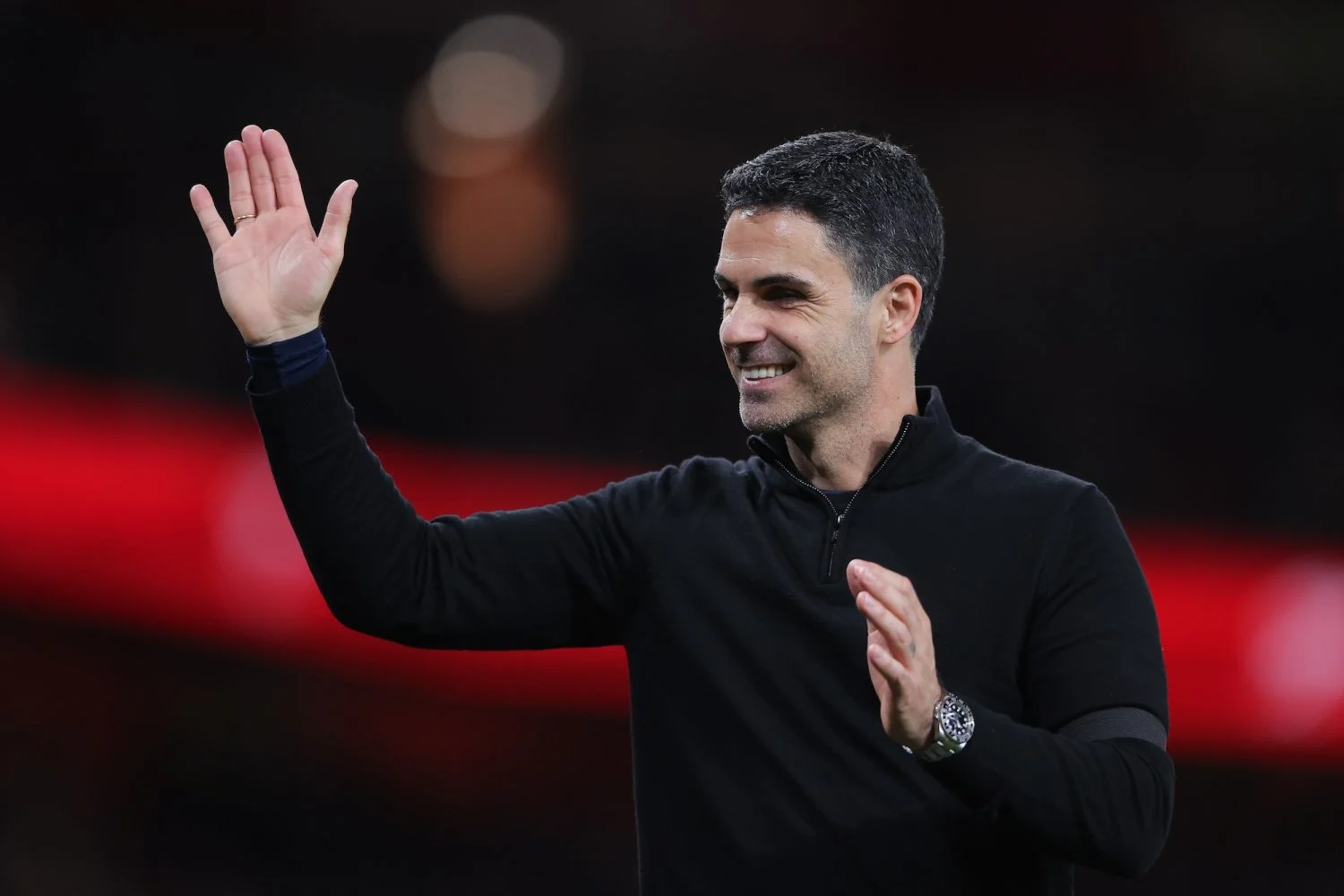
These years have been a long crossing made up of missed opportunities, endless rebuilds that were never completed, broken promises and a slow loss of identity. For many seasons, Arsenal seemed to live only in the memory of what they had been, almost crushed by the romantic weight of their own history. Over time, however, something of that immortal spirit began to be felt inside the club again. And the spark that reignited the fire was lit, there is no doubt about it, by Mikel Arteta. When the former captain became manager, in 2020, many saw the move as a fascinating but risky gamble. Arteta had modern ideas, potentially beautiful ones, but very little experience. What was immediately clear, however, was his total, obsessive, maniacal attention to detail.
It was inevitable that he would behave this way: Arteta, in fact, did not simply want to take Arsenal back to the top. He wanted to refound them culturally. He wanted to build a winning mentality that would be the prerequisite for the creation of a dynasty. To do so, he began right away to build an elite ecosystem. And indeed, a huge part of the credit for this rebirth lies in the construction of a top-level staff. From the arrival of sporting director Andrea Berta, one of the key figures behind Atlético Madrid’s successes, to the choice of collaborators such as Gabriel Heinze, a coach considered one of the most interesting minds in Argentine football, or Thomas Gronnemark, a true creative force when it comes to throw-ins. And then Nicolas Jover, the genius of set pieces. A man who has become almost a celebrity in north London. His routines have turned dead-ball situations into a devastating weapon: in this Premier League alone, Arsenal have scored 22 goals from set-piece situations, around 32% of their total. Impressive numbers that perfectly show how obsessively every detail has been studied.
In fact, obsessive is far too mild an adjective. Because Arteta, during his time at Arsenal, has come up with a great many bizarre ideas, at times even surreal ones, to assert his leadership and his methods. Here are a few examples: a Labrador introduced at the training ground and called “Win”, victory, to get the players used to constantly saying that word and turn it into a daily normality. The consultancy with RAF pilots to study how to manage pressure and tension in decisive moments, or the group of actors who, pretending to be thieves, stole the players’ personal belongings to teach them to remain constantly alert and mentally present. Scenes that elsewhere would have seemed like motivational theatrics, but at Arsenal became part of a much broader strategy.
Naturally, none of this would have been enough without an extraordinary squad. And here Arteta, backed by the ownership, had the courage to make aggressive, expensive and sometimes apparently incomprehensible choices. In five years, Arsenal have invested more than half a billion euros in the transfer market. An enormous figure, often criticised, but one that today looks like the necessary price to truly return to the top. Some moves had made many observers smile, such as the obsession with left-footed players – and especially left-footed defenders. For a while it almost seemed as if Arteta wanted to collect them; in reality, behind that accumulation there was a very precise logic: improving passing angles, the fluidity of the ball progression and positional rotations when building from the back. Once again, a detail became a competitive advantage.
In the end, what Arteta managed to build is one of the deepest and most complete squads in Europe. And this is perhaps the biggest difference compared to the Arsenal of 2004. If the Invincibles had a legendary starting eleven, this Arsenal instead have a group of 18-20 players practically on the same level. A very high level, of course. Those who start on the bench could easily be starters in almost any Premier League team, perhaps with the sole exception of Manchester City. It was this depth that made the Gunners almost unstoppable over the course of a gruelling season, including in Europe. Arteta no longer has a beautiful but fragile team, as happened in the past: today Arsenal are a fierce group, prepared to withstand any kind of battle.
This attitude is also visible on the pitch, in their tactics. Arsenal play football based on possession, immediate counter-pressing and extreme verticality. Arteta’s is a system in which every player knows exactly the timing, spaces and movements. And knows how to interpret several scores, several instructions. You see it by looking at the various shapes the Gunners can take on: in fact, they are capable of dominating the ball but also of attacking space with almost brutal speed; at the same time, however, they know how to put matches completely to sleep, they know how to settle in and let time pass while waiting for a good opportunity. Which often comes from the development of a set piece. In short, Arsenal can do everything and they do it with outstanding players. The fact that they have won the Premier League and still have to play the Champions League final, without wanting to use euphemisms, means that we are talking about a team with enormous guts.
Not by chance, one might say, Arteta and his group have managed to reignite a crowd that, over the years, had slowly faded. The Emirates Stadium, long considered cold and distant, has now returned to being one of the most vibrant stadiums in England. You can once again feel that almost aristocratic pride that characterised the Wenger era, but with a modern ferocity, different and more intense. For this reason, the feeling is that this Premier League does not represent an endpoint, but the beginning of something bigger, of a cycle. Exactly as happened in Wenger’s time. Exactly as happened ten years ago with Guardiola’s Manchester City. Speaking of which: perhaps it is a coincidence, or perhaps not, that the person who brought another cycle, that of City and Guardiola, to an end was one of Pep’s favourite assistants. As often happens in football and in life, the best students, sooner or later, end up surpassing those who trained them. Arteta has managed it for the first time, fully deservedly. And it is clear, very clear, that the Arsenal manager has everything it takes for this not to remain an isolated case.