
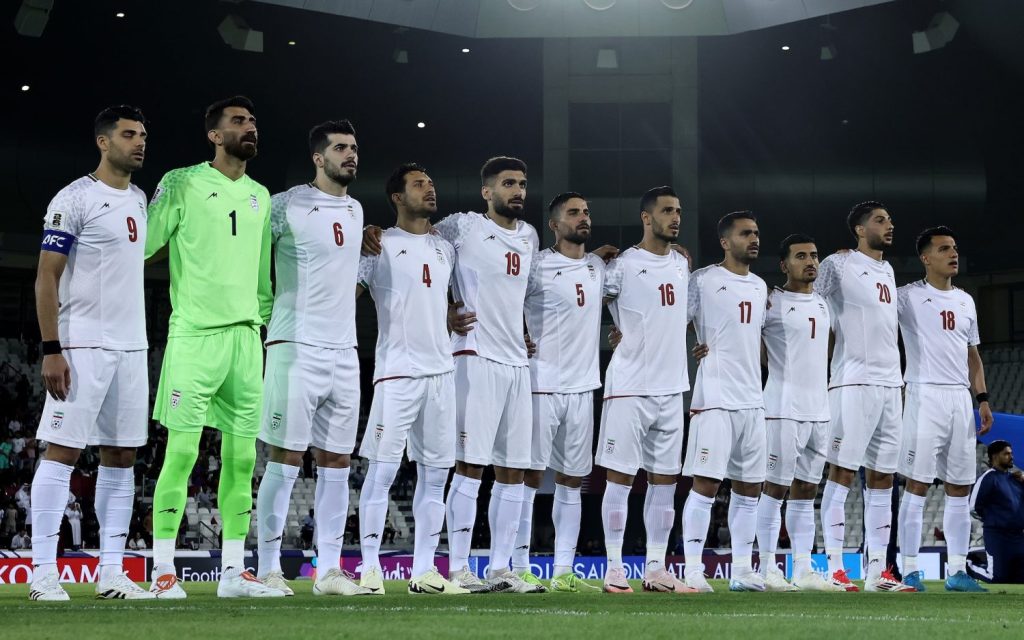
After weeks of whispered rumors, Iran has officially expressed its position regarding the participation of its national football team in the 2026 World Cup. Team Melli has secured its spot to play in the United States – the country co-hosting the tournament with Canada and Mexico – through the AFC qualification pathway, and has been drawn in a group alongside New Zealand, Belgium, and Egypt, with its debut on June 16. Well, with just over a month to go until the first match, the Football Federation of Tehran – through the statements of President Mehdi Taj – announced that it “will definitely participate in the event,” but at the same time clarified that the team and staff will fly to the United States on their own terms, meaning they will not be obliged to “give up our values, our culture, and our beliefs.”
President Taj himself was denied entry to Canada during one of the last FIFA summits due to his connections with the Iranian Revolutionary Guard Corps (IRGC). The ties with the IRGC, which is considered a terrorist organization in Canada and the USA, are part of the conditions/guarantees that the USA must provide to Iran if they want the Iranian team to participate in the World Cup. Taj himself has stated that FIFA has received a list of points that must be respected: first of all, as mentioned, all players, coaches, and officials who have served in the IRGC must easily obtain a visa to enter the country; furthermore, Tehran requests that journalists’ questions do not cross into politics, respect for the Iranian flag and national anthem, and an enhancement of security measures at airports, hotels, and stadiums during the tournament.
The most challenging condition for FIFA to meet concerns past membership in the IRGC. An important case in this regard involves Mehdi Taremi: the former Inter striker (now owned by Olympiakos) is one of the most well-known Iranian footballers in the world, but at this moment the USA could deny him entry since he was part of the Islamic Revolutionary Guards. In such a case, which essentially concerns border checks, FIFA can do little. The same goes for journalists’ questions: in what case could a potential question about fans and their demonstrations, just to give an example, be consideredpolitical? There is no answer to this question, and thus Iran, FIFA, and American politics find themselves facing a very difficult puzzle to solve. Even though, as mentioned, Tehran’s desire is for the national team to participate in the World Cup, it is currently difficult to see how a compromise can be found.