
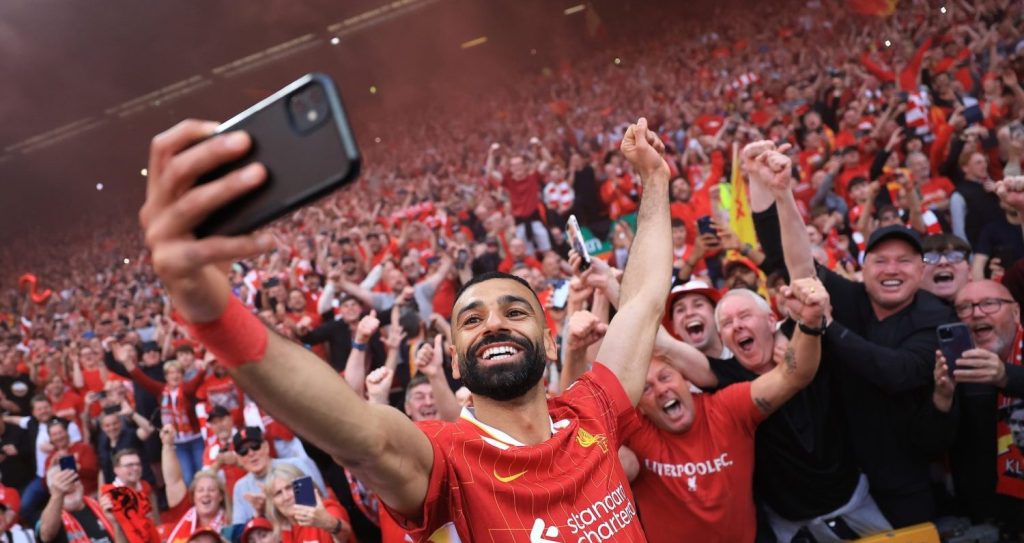
Saudi Arabia does not intend to stop and will continue to invest a lot of money in football in the coming years. The confirmation came from the CEO of the country’s football league, Omar Mugharbel, who announced – speaking at a press conference – the program for the development of the Arab league, the Saudi Pro League. The disengagement of the sovereign fund PIF (Public Investment Fund) from investments in some sports disciplines, such as golf and billiards, had led to thoughts of at least a gradual reduction in spending in the football world as well. Instead, it will not be like that. In fact, Saudi Arabia aims to make its league even more competitive. Some market rumors suggest that, ahead of the upcoming summer transfer window, players like Salah, Lewandowski, and Vinícius Júnior could move to clubs in the Saudi Pro League. Mugharbel did not deny this, rather he left every possible door open: “Our program focuses exclusively on attracting elite players and does not include coaches,” he said. “The arrival of champions is not imposed on the clubs by this program, but depends on the needs and sports logic.”
The construction of a football league and the arrival in recent years of important players like Cristiano Ronaldo, Benzema, Mané, Milinković-Savić, Mahrez, and Theo Hernández is part of a larger project called Vision 2030: a development program launched in 2016 to diversify the economy and reduce the country’s dependence on oil. According to those leading the Saudi Pro League, things are going quite well: “Some wondered if this experiment would be successful,” Mugharbel said. “The current standings of our league demonstrate its high level of competitiveness. In 2023, the league embarked on an ambitious transformation process. The goal was to make it one of the leading leagues worldwide, offering development opportunities for any talent, both Saudi and foreign. We are working to further raise the standards in the coming years.” Mugharbel then emphasized the growth of the Saudi league in recent years: “Al Shabab reached the final of the Gulf Championship (a football competition reserved for the eight nations of the Persian Gulf), Al Nassr reached the AFC Champions League 2 final, and Al Ahli won the AFC Champions League title. We have 45 broadcasting contracts worldwide and have reached some countries through YouTube channels or content creators.”
Mugharbel announced what the next steps are: “The second phase of recruitment begins, which will continue until 2030,” he added. “It will be based on sports performance, commercial success, and viewership from the last three years.” The CEO then dispelled any doubts about the league’s interference in the clubs’ sports choices: “It does not intervene in player selection, their transfers, or negotiations with their agents. It has an exclusively consultative and supportive role,” he concluded. In the Saudi Pro League, something is also moving on the financial front. Some private investors have indeed shown interest in purchasing clubs. The country’s sovereign fund PIF, which supported the main teams in the early stages of the project, recently sold 70% of Al Hilal (the team coached by Simone Inzaghi) to Kingdom Holding Company (a group led by Prince Alwaleed Bin Talal, a member of the royal family), for just over 300 million euros. A sign that investments in Saudi Arabia, at least in football, are not over. And they will continue even beyond 2030.