
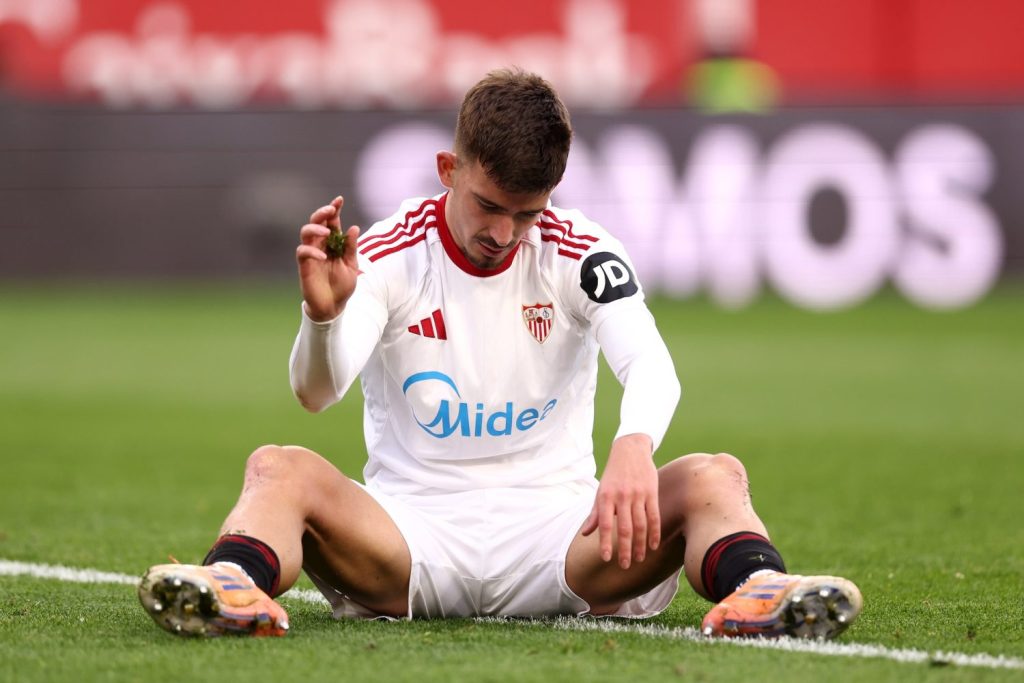
At the Sánchez-Pizjuán stadium, just a stone’s throw from the city center, the fans are as incredulous as they are resigned. As if they have been waiting for a long time for something feared, unspeakable, unthinkable, and yet in the end risks materializing like a boulder: Sevilla relegated to Segunda División. Today, with five matchdays left in La Liga, this would be the verdict without appeal. The Andalusians are third from bottom, with 34 points, in a season where the relegation battle is more heated than ever and it will likely take more than 40 points to escape danger. But, above all, we are talking about a team overwhelmed by fear. Overwhelmed by Murphy’s law, moreover. The latest weekly psychodrama unfolds on Saturday in Pamplona: until the 80th minute, Sevilla is ahead, then they concede the equalizer to Osasuna. After that begins an endless agony. How does it end? It doesn’t even need to be said: a header from Alejandro Catena and 2-1 for the home team. In the 99th minute.
“When I saw the board for the added minutes, I thought: what the hell, so many?”, recounts Luis García, Sevilla’s coach for a month after the sacking of Mati Almeyda. “When we lose, they add three. When we need to hold on, they add nine. And perhaps it is words like these that certify the state of mind of an entire club: the anxiety of having to make it somehow, the paralysis of not knowing how to face an out-of-the-ordinary situation – seven Europa League titles in the trophy cabinet over the last twenty years, let’s remember – and the irrational faith in having to somehow scrape through, because after all ‘we are Sevilla, a giant in Spain and Europe, we must not forget that.’ A flawed reasoning, facts in hand.
In Pamplona, fate played a cruel joke, agreed. However, it must also be said that, after the Andalusians took the lead, in the final push, Osasuna created at least six or seven clear goal-scoring chances. They shot 15 times against eight, on target seven times against two. They clearly deserved to win. Gudelj and his teammates, however, when they were about to do so, were overwhelmed by emotional pressure. The problem is that this happens every weekend, now for months. Aside from the illusory 2-1 victory over Atlético Madrid – with the Colchoneros filled with youngsters, focused on the Champions League challenge then won against Barcelona – Sevilla has lost the last five matches out of as many encounters. The last time they secured three points was even on February 22, 1-0 away at Getafe, playing eleven against ten since the 26th minute: as the Guardian recounts in this long in-depth article, Almeyda reportedly said something like ‘I don’t think we’ll win any more’ (and perhaps this is also why a month later he was sacked, despite a promising start to the season). There is, in short, a shroud of fatalism for better or worse, among staff and players, an irrational inevitability, which is slowly leading to disaster.
Because after the defeat in Pamplona, the images from the locker room were already those of relegation: Gabriel Suazo struggled to speak, Nemanja Gudelj, the captain, kept repeating “it hurts, it really hurts,” while the young players from the academy were left with their hands in their hair. “We are devastated, so very devastated,” Luis García repeats, with words that do not help to ease the tension. “The players are crying, they are locked in there, destroyed. They are deeply hurt, sunk. When you have the match in your hands, you cannot let it slip away: we play for our lives.” A bit too much, perhaps. Especially if you are in an environment already charged with expectations, overshadowed by the grumbling and protests of the fans. But above all, when there are still five matches left and Sevilla is just one point from the relegation zone. Not only that: if they had beaten Osasuna, they would have been just two points behind the same red and blues who are now in ninth place and can dream of Europe. The table is indeed very tight; in the end, it will be those with the steadiest nerves who survive.
Sevilla’s nerves are evidently in tatters, and the calendar is indeed not helping the team: Real Sociedad, Espanyol, Villarreal, Real Madrid, Celta Vigo. It will take a half-miracle, at this point yes. But with the awareness that the players’ faults are limited: due to bloody internal disputes and the financial crisis that has long plagued the club, this year, against 55 million euros in outgoing transfers, only 250,000 have been spent on incoming transfers. And the club’s wage bill is among the lowest in the top two Spanish divisions. Not only that: even in terms of market value, a broader asset parameter – just three years ago Sevilla won their last Europa League – the Andalusians are now eleventh in La Liga. And the eleventh place in the standings is only five points ahead: it is not so much Sow and his teammates who have particularly underperformed, but the situation at the top is collapsing towards disaster, with as many as eleven coaching changes in the last nine years. A total managerial confusion, which so far has postponed a sporting collapse perhaps to the unbelievable. And perhaps, now, closer than anyone could have imagined.