
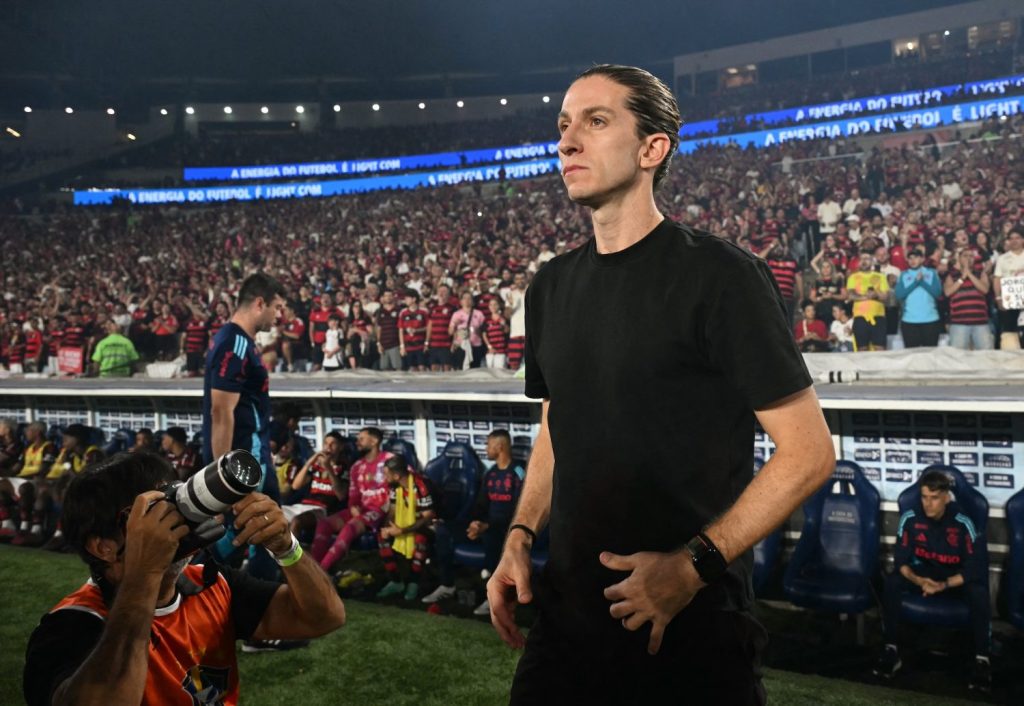
The Brasileirão has just started, with ten rounds in total, yet we are already at ten coaches dismissed. From ten different teams. In particular: Atlético Mineiro replaced Jorge Sampaoli with Eduardo Domínguez, Botafogo replaced Martín Anselmi with Fanclim Carvalho, Chapecoense replaced Gílmar Dal Pozzo with Fábio Matias, Corinthians replaced Dorival Júnior with Fernando Díniz, Cruzeiro replaced Tite with Artur Jorge, Flamengo replaced Filipe Luís with Leonardo Jardim, Remo replaced Juan Carlos Osorio with Léo Condé, Santos replaced Juan Pablo Vojvoda with Cuca, São Paulo replaced Hernán Creco with Roger Machado, and Vasco da Gama replaced Fernando Diniz with Renato Gaúcho.
This list of names may seem of little journalistic relevance, but it actually serves to understand how Brazilian football works. First of all, because Fernando Díniz appears twice, as the coach dismissed by Vasco da Gama and as the replacement for Dorival Júnior at Corinthians. And then because there are coaches like Renato Gaúcho and Tite, who have very long careers and have developed in many different teams. For instance: Renato is in his third experience with Vasco da Gama, and besides the Rio club, he has managed Fluminense (in six different periods), Bahia, Grêmio (in four different periods), Atlético Paranaense, and Flamengo; Tite, on the other hand, has been a professional coach for 35 years and has managed 15 different Brazilian clubs, including Grêmio, Corinthians (in three different periods), Palmeiras, Internacional, and Flamengo.
Thus, the borderline situation of this year is not actually a borderline situation. In the sense that Brazilian coaches have always coexisted with this continuous turnover. Luís Conte, an independent agent interviewed by Diário As, explained that “the dismissals and hiring of coaches in Brazil are linked to the local football culture: fans, the press, and the clubs themselves put enormous pressure on those in charge, results must come quickly, if not immediately. Very few clubs have the patience to build a real medium-to-long-term project.” But not only that: the coaches themselves also contribute to creating an extremely volatile ecosystem: “They also want to grow quickly,” adds Conte. “If a coach gets a promotion or stands out in the lower leagues, the Brasileirão teams will want him immediately, and he will want to leave for a higher salary or to add that experience to his resume. The fact, however, is that results will also be decisive for him.”
But what are the motivations behind this so fickle football culture? First of all, there are structural aspects: in most cases, the boards that lead the clubs are formed after a popular vote, meaning that the executives are elected by the members/fans called to the polls and are therefore perpetually in “campaign mode.” In such a situation, the only way to be confirmed, simply put, is to win matches. Then there is the player market: young Brazilian talents are “stolen” by European (and now also Asian) teams as soon as they show their qualities, making it practically impossible to set up a project with a horizon that goes beyond a single season, if that. Finally, but not a secondary aspect, there is a real spiral effect: since, as mentioned and demonstrated earlier, coaches are continuously dismissed and recalled, clubs do not think much when it comes to dismissing one and keeping him on the payroll. The situation, in fact, resolves itself.
Consequently, inevitably, the contracts signed by coaches are short, lacking termination clauses: an additional incentive for clubs to change technical leadership as soon as a problem arises. Whether it is results-related or compatibility with management or the environment. Filipe Luís, just to give a heavyexample, left Flamengo after winning seven trophies in 103 matches as the first team coach. Those who follow the rubronegro club have said/written that there were disagreements between the coach and the club, but the point is that if you are a coach in Brazil, your job is never really safe. To the point that the case of Abel Ferreira, coach of Palmeiras since October 30, 2020, is considered isolated if not even unrepeatable.