
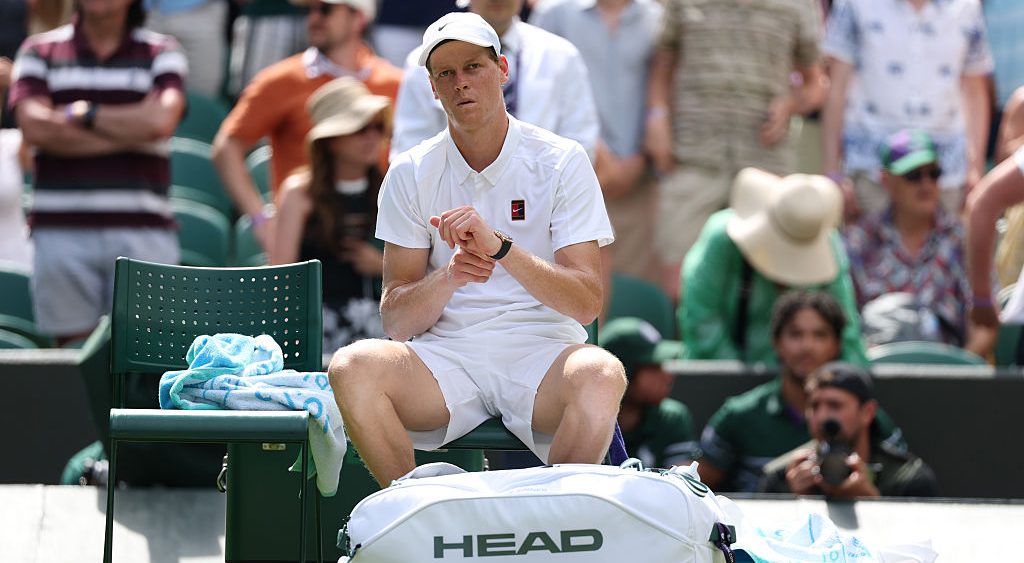
In the end, logic prevails. Starting from the next Roland Garros, tennis players from the ATP and WTA circuits will be allowed to use the so-called wearable technology: special smart bracelets used to measure the physical and athletic performance of the wearer. A few months ago, there was controversy because at the Australian Open, all the champions who used them – from Sinner to Alcaraz, including Aryna Sabalenka who is also a brand ambassador for Whoop – had to comply with a controversial ban, which included the removal of the devices. As if they could alter athletic performance.
The short circuit was all too evident: for years, the WTA and ATP Tour tournaments have allowed the wearing of tracker bracelets. However, the four Grand Slam events were more skeptical about the technology – which in this specific case simply monitors the athlete’s biometric data, from heart rate to blood oxygen and skin temperature: useful also from a medical standpoint, as well as for managing one’s resources. Yet in Melbourne, the veto fell amid the discontent of those directly involved. Thus highlighting the contradictions among the various governing bodies of major tennis events. In short, a reflection on the subject was definitely necessary.
Finally, it arrived on the eve of the French Open: as reported by The Athletic, participants will be allowed – for now on a trial basis – to use the special bracelets. The same test will also be implemented at Wimbledon and the US Open this year. This news was welcomed favorably by the protagonists, who had expressed their discontent over the rigidity of the bureaucracy in recent months. Recording biometric data to optimize performance and recovery paths is an increasingly common practice among tennis elites, especially during matches, as certain conditions of stress and physical effort are impossible to replicate in training. Nothing that could provide an inappropriate competitive advantage. “There are some data that we are interested in monitoring from time to time, it’s not for a live control of the parameters,” Sinner explained at the Australian Open. “The priority is to have a record of an overview at the end of the match, so we can analyze this information and use it in training.”
From now on, the Grand Slam tournaments will join the NBA, NFL, MLB, and professional golf, which have already given the green light to smart devices. And if the Roland Garros final should again be the epic marathon of over 5 hours of play that pushed Carlos and Jannik to their limits last year, this time it will be possible to account for every minor physical fluctuation. Challenging the limits of the human body is a risk that is well worth a supplementary check, especially if it just takes a glance at the wrist.