
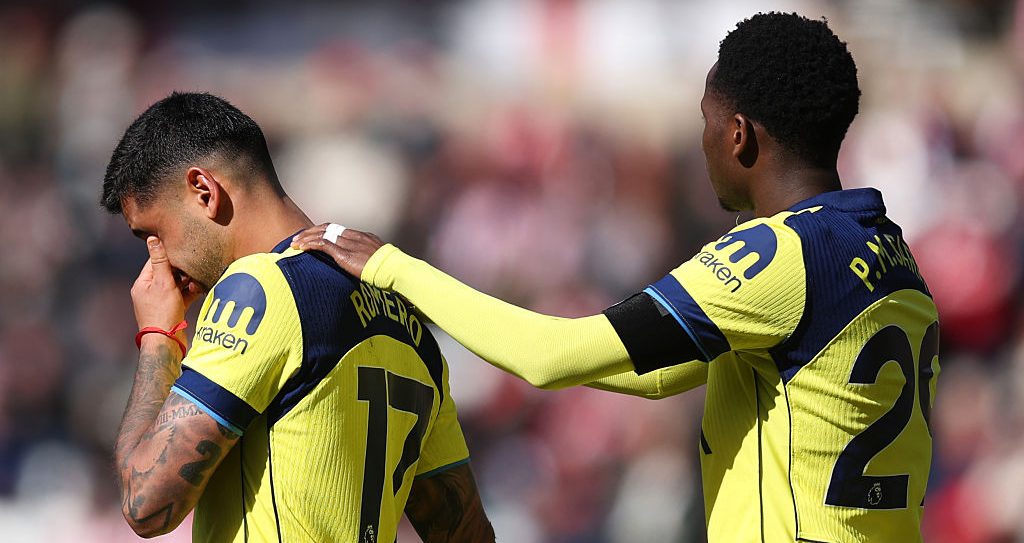
Six matches to avoid an unprecedented failure in modern football history – because being relegated from the top flight with a squad worth over 800 million euros, the ninth richest in the world, has never been seen before. Yet the nightmare season of Tottenham, eighteenth in the Premier League at the time of writing, would root itself in a poorly managed transfer market calibrated on a series of data… simply wrong. Or rather, the Spurs’ executives made a series of choices based on certain statistical parameters they considered relevant, which in fact were not that significant. They overlooked other parameters that were instead fundamental.
The blunder arises from some errors in analytics: today we increasingly rely on data, but it is essential to know how to read them and integrate them properly. As ESPN reports, in recent transfer windows Tottenham has paid particular attention to some basic factors: speed, physical prowess, training propensity. The risk of the modern approach, however, is that instead of quantifying the statistics that lead to victory, there is a tendency to focus on those that scouts and coaches tend to appreciate more. But they represent a specific data point, almost always imperfect, synonymous with a snapshot and not the entire film of the match.
It then happens that Tottenham has fallen into the trap with both feet. Because it is true, there is a clear footballing reason why players of the caliber of Kudus, Xavi Simons, or Solanke are valued as they are – that is, highly: the market value of 13 Spurs players hovers around 30 million euros and above. At the same time, however, assembling a functional team does not equate to the arithmetic sum of individual talents, which might suffice for career mode on FIFA. Real football is also made of match and mismatch, that is, harmonies and disconnections among players that can only be evaluated as a whole. And in this sense, around New White Hart Lane, the insiders have overlooked a matter of glaring importance: passing. A basic parameter for the success of any football project – the precondition for crossing, shooting, managing the rhythm: is there anything more to add?
The glaring paradox is that although Tottenham has one of the best squads in the world on paper, in reality it might barely qualify as such. Because its players, simply and dramatically, cannot pass the ball. Based on this parameter, the best among them is Cristian Romero, captain and center-back: 19th overall in the current Premier League. He is followed by Micky van de Ven, another defender, in 87th place. All the others sink from 150th place downwards. And it is quite incredible that no one noticed this during the transfer market. It would be like assembling a dream Ferrari for Formula 1: top-of-the-line tires, carbon fiber chassis, multifunction steering wheel, aerodynamics crafted to perfection. Then, however, once the Grand Prix starts, one realizes that the engine is that of a compact car.
Tottenham is creating something like this, which justifies the terrible league position of a team that, based on other statistics – the gap between goal difference and expected goal difference – is not experiencing the classic unlucky season, where everything seems to go wrong beyond reason. The Spurs are struggling because they cannot build and pass the ball. Coming up with something from here to the end will be tough, but the fate is still in their hands. Best of luck to De Zerbi. And to the sports management, for the next transfer window.