
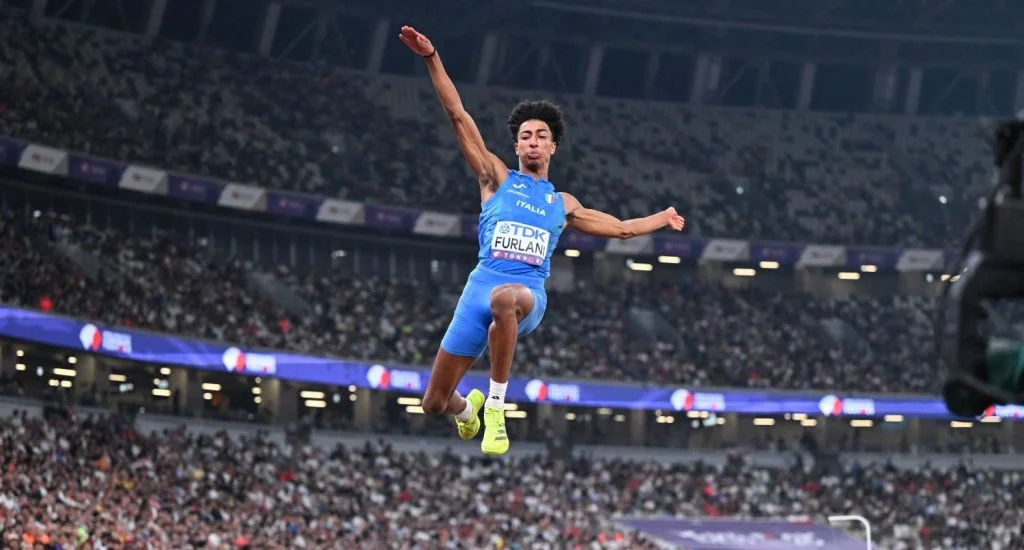
Happiness, unfortunately or fortunately, has no unit of measurement. Especially when it comes to sport. Every athlete, in fact, experiences their successes differently, feels conflicting emotions. Emotions that depend on several factors: what happened during the decisive competition, how preparation went for that competition and for the most important moments in general; then the memory of the past, the pressures of the present, the ambitions of the future can also weigh heavily. In this sense, Mattia Furlani’s situation – who only a few hours ago became long jump world champion, the first Italian athlete to win the world title in the men’s field – was and is quite complex: we are talking about a talent who has been studying and working for years to become a generational phenomenon, a predestined athlete who so far had kept all his promises, a champion not yet complete and fully formed – after all he is only twenty, how could he be? – who, however, had already achieved exceptional results, and who therefore arrived at the World Championships in Tokyo with enormous pressure on his shoulders.
Here, all these feelings dissolved into the joy he showed immediately after winning the gold medal. Which, a note that is not exactly marginal, came thanks to jump number five in the final: Furlani, after a not exactly convincing start, set his personal best (8.39) and pulled away from everyone. Using motorsport jargon, one could say he won in a big way, that is obvious, but on the last corner.
And so, in light of all this, it was nice to be able to ask him: which emotion, among all those that overwhelmed him after such an important triumph, had the strongest impact of all? In a few words: what was the unit of measurement of the happiness of Mattia Furlani, newly crowned world champion? Answer: «I was still inside the competition», Furlani tells Undici, «so the first thing I felt was determination: before the sixth and final jump, when I was already sure I had won the gold, I said to myself: “I have to jump even farther here, is that possible?”. Thinking back on it now, it was as if I still couldn’t believe I had won. I was determined to do well until the very end. And I think that made the difference in the competition».
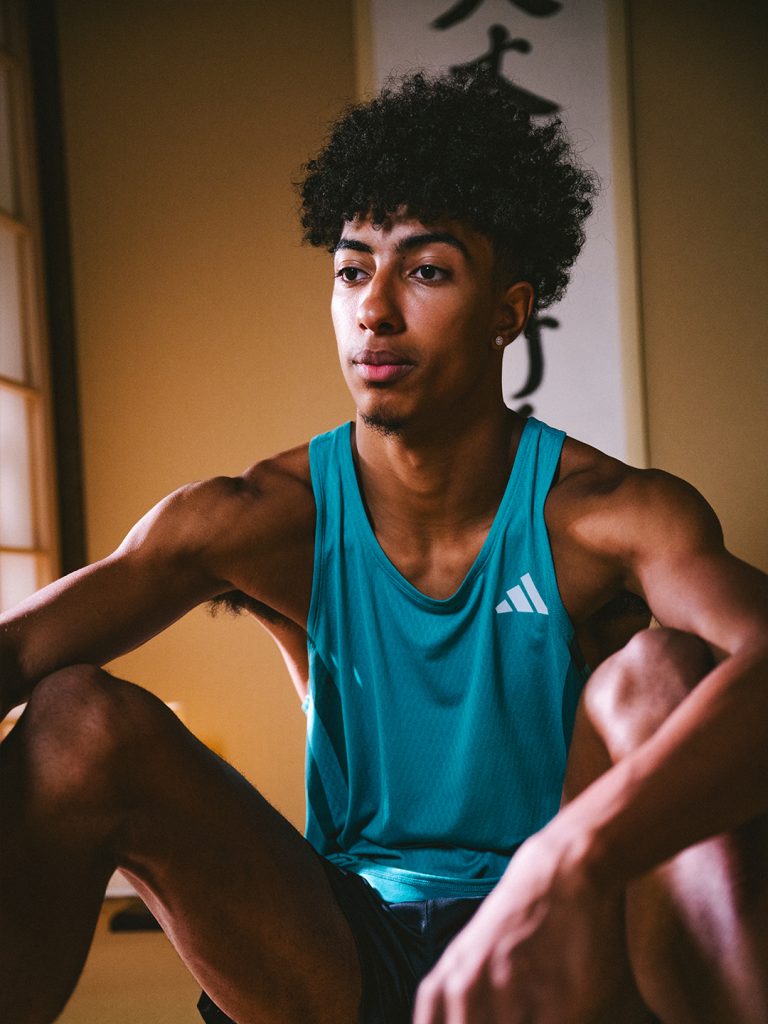
The competition, indeed. Furlani himself described his final like this, in a mixture of joy, pride and disbelief: «I managed it in a particular way, from the very first jump I got carried away by the heat of the moment. The truth is that I started with a bit of anger, with tunnel vision. So I ended up losing my rhythm, I couldn’t calibrate my run-up, my pushes properly: I came in very fast and so I couldn’t jump the way I wanted». Then, however, things changed: «In that moment Mum did an incredible job. She got my head back inside the competition, she told me, precisely, how to interpret the run-up better and how to express myself at my best. She was the key piece of the final, even though I managed it a bit badly at the beginning. But in my sport, one jump is enough to win. My brother too has always said that the fifth jump is the most important of all. He was right: on the third jump I understood how to interpret the run-up and I said to myself “Wait!”. On the fourth I tried and it went a bit better, but I still wasn’t satisfied. Then the fifth came and it went well». Decidedly well, yes.
This is the technical account, but then there is also the emotional one. Because in elite sport, whether one likes it or not, it is practically impossible to win unless the mind moves well together with the body. From this point of view, Furlani says important words, reels off concepts that come from his experience, from his story as a champion in the making: «After everything we did this year, I had too much motivation: I couldn’t leave Tokyo without having given absolutely everything. And without a medal».
At this point, inevitably, Mattia Furlani too melted and melts, lets himself go, starts speaking in terms of happiness. Which is the happiness of an elite athlete who knows he is one, of course, but at the same time it is so perceptible that you can touch it inside his words: «I feel good. Because this very important victory came despite work carried out in the right way; with my team we are respecting my biological growth, we are respecting the stages. In my opinion, and I’m not only talking about competitions, we are managing the methods and timing of the work very well, we are growing in the right way. And winning in this way is an enormous satisfaction».
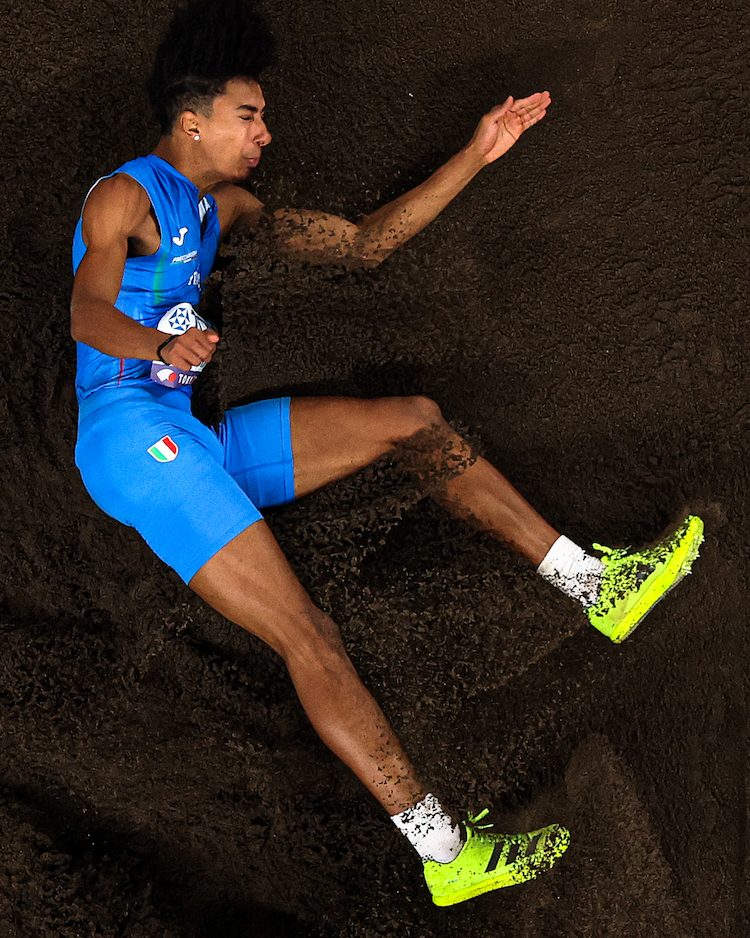
This is another important aspect: as mentioned, Mattia Furlani is only twenty years old – he will turn 21 on February 7, 2026 – and he is the youngest world champion in the history of the high jump. That is not all: for years, in this sense you will remember the interview given immediately after winning bronze at the Tokyo Olympics, he has spoken about the way one should interact with kids of his generation, trying to convey concepts such as patience and respect for personal timing and inclinations, also and above all in sport. To a person like this, well, it is inevitable to ask what it feels like after winning world gold at twenty, how one lives with the weight of pressure and expectations: «I feel good, it is a great satisfaction. Also because I had never felt such high pressure before Tokyo. I have to say that I had created this situation myself, in the sense that without the results I had achieved previously perhaps I would not have had the same stimuli, the same pressures. At the same time, though, I have to say that pressures have to be allowed to flow, in fact they must really be a source of motivation. They have to help you build the heat of the moment, because in any case they are positive pressures, not negative ones. After all, sport is made of performances and counter-performances, so I am truly happy and grateful for what happened yesterday: if the fifth jump had been a foul, today we would be having a completely different conversation. And instead we are here with the gold, and I’m very happy».
Furlani is very happy also because the success came in a city, Tokyo, where Mattia was able to relive his past, even if in a particular way. He tells it himself, and as he speaks his eyes express a different happiness, more serene, more relaxed: «Well, here in Tokyo there is my childhood. It feels like I have always lived here and then clearly that is not the case, but the influence we have from Japan is truly enormous. In my case, I grew up with Doreamon, with Dragon Ball, with Pokémon and other anime, manga. It was nice to win in a context like this». Sometimes it is nice to feel like a child again, even for world champions, even for generational phenomena, even just for a moment.